Shitake Mushroom Risotto

A few months back, I introduced you to my risotto formula, starring Arborio rice and garnet yams.   I explained that I like to do risotto up with a vegetable that either needs to be cooked or is generally more palatable cooked, thus allowing me to consume the majority of my other vegetables raw.

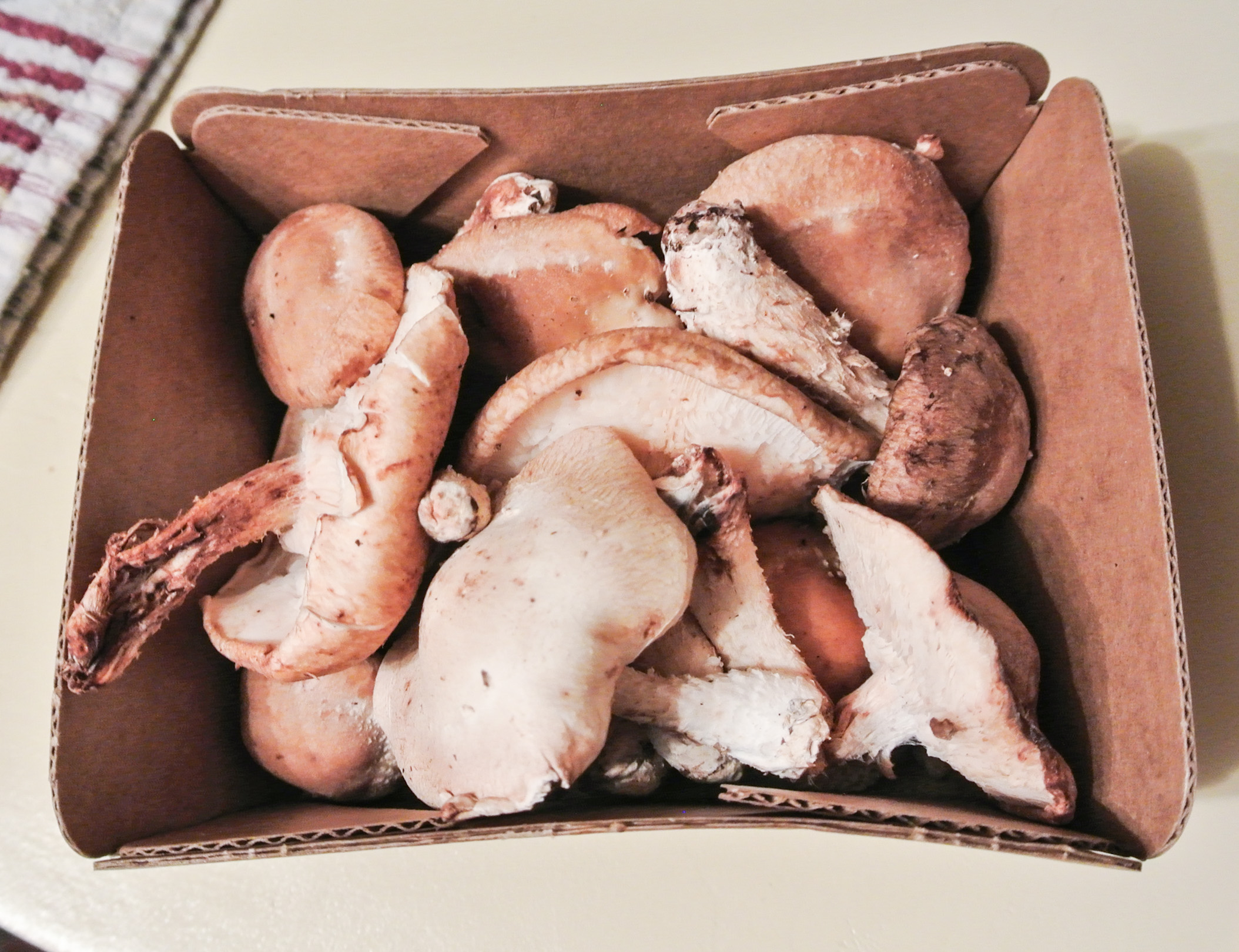
Today’s risotto features shitake mushrooms. These fungi don’t need to be cooked and I actually really happen to enjoy them raw atop salads, but their richness (and meatiness) is certainly more prevalent in a cooked state. Thus, Travis and I typically make our risotto with some sort of potato, mushroom, or both (but of course, you could use any vegetable or none at all).

Shitake mushrooms have been shown to strengthen the immune system and lower blood cholesterol levels. They are also powerhouses of selenium, iron, fiber, protein, and vitamin C. They have been used in China for medicinal purposes for thousands of years, so I’m confident that eating a bunch of ‘em will only serve me well.

DSC_2389

Since I’ve already walked you through how to make risotto, I kept the pictures few and simple for this post. Make sure you check out my previous post if you’d like to see step-by-step visuals for making this decadent dish. Enjoy!

FORMULA BASE:  RISOTTO

Serves 4 (as a meal)

  • 8 cups homemade vegetable stock (or water)* –> I’m using veggie stock. This batch contained beet scraps, so it’s a little on the reddish side. 🙂
  • 2 cups Arborio rice**
  • 1 cup chopped vegetables (optional) –> I’m using shitake mushrooms.
  • ½ cup white wine –> I’m using moscato.
  • 1 small onion –> I’m using white.
  • Several cloves garlic (go with what you like) –> I’m using 3.
  • 2 tbsps oil –> I’m using extra virgin olive.
  • Fresh herbs, spices, salt, and pepper to taste –> I’m using 1 tsp dried thyme, a few turns of fresh ground black pepper, and a ½ tsp pink Himalayan sea salt.

*You may not use it all, but it’ll be close. Have it handy on your stovetop in a pot on low heat, ladle-ready.

**Unlike other grains, do not rinse your Arborio rice before use.

Start by chopping your onion and garlic and sauté in a touch of oil over medium-high heat until they are almost cooked through, but not quite. Then, transfer them to a bowl, return the pan to the stovetop, add a touch more oil, and sauté your vegetables, if using, until almost cooked. Transfer them to a separate bowl and return the pan to the stovetop, this time over medium heat.

Add more oil (about 1 tbsp) to the pan to toast your dry rice. Stir the rice constantly to prevent sticking, toasting it until it has deepened in color slightly, about 5 minutes. Add in half of the cooked onions and garlic, as well as your seasoning of choice, and deglaze your pan with the white wine. After the wine cooks down, add a ladle of your veggie stock and stir fairly regularly over the course of the time it takes for that ladle to absorb completely. You can expect 3-5 minutes between ladles.

You will repeat this process—ladle and stir—many times over the course of 40-45 minutes. When the rice is almost finished, add in the remaining onion and garlic, as well as your veggies (if any), to the pan to finish cooking. From start to finish, this dish will take you 60-75 minutes (depending on how fast you prep and such) and a lot of attention. As soon as the rice is tender, you’re done, so taste as you go.

Garnish with fresh herbs or thinly-sliced green onion. Makes for yummy, comforting leftovers for 3-5 days.

DSC_2391

Strawberry Shortcake Smoothie

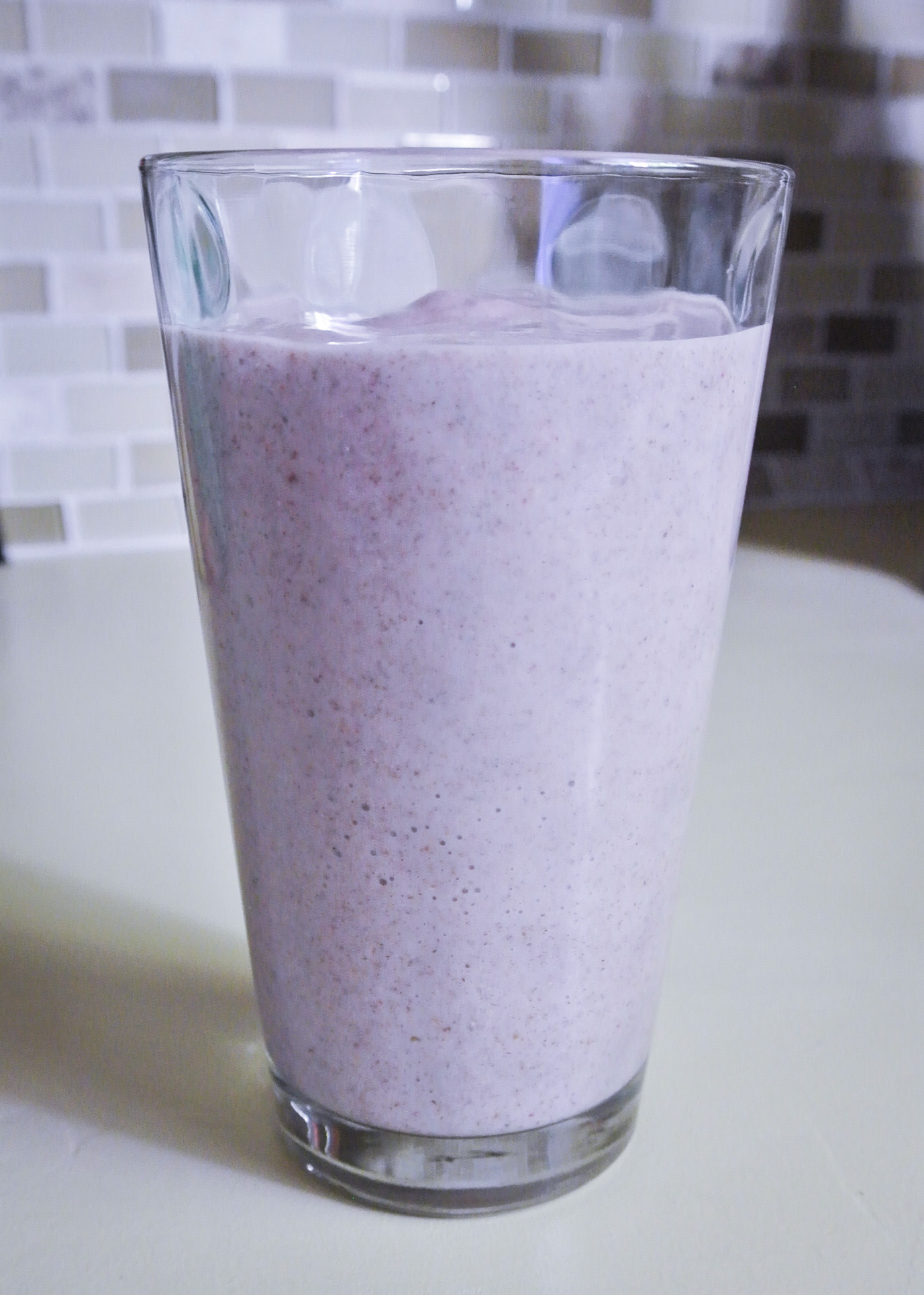
Yes, another dessert smoothie, coming right up! Going on thirty-one weeks pregnant, I still can’t get enough of the sweet stuff. As always, healthy sweets are the goal, and this decadent treat is no exception.

Naturally, the star of strawberry shortcake is the strawberry. This super fruit is loaded with vitamin C, fiber, and antioxidants. I recently stocked up on a bunch in my Bountiful Basket and froze them, as you can see below. Ready for smoothies any time!

DSC_2397

How will I achieve the shortcake portion of the equation? A very basic cake batter includes some type of flour, sugar, fat, liquid, and extract. For today’s shortcake-in-a-smoothie, I’m using rolled oats in lieu of flour (learn more about the health benefits of rolled oats by checking out my granola formula!), medjool dates for sugar, a variety of seeds for fat, almond milk for liquid, and homemade vanilla extract.

DSC_2398

Packed with nutrients, sweetness, and traditional strawberry shortcake flavors, this dessert will check all of your boxes…and you can drink it guilt-free, any time of the day. Enjoy!

FORMULA BASE: DESSERT SMOOTHIE

Serves 2

  • 2 frozen bananas (or fresh bananas and ice) –> Since my strawberries are frozen, I’m using fresh bananas today.
  • ½-1 cup specialty ingredients –> My whole, frozen strawberries equate to about a cup, but if they were chopped fresh, I’d use ¾ cup. I’m also using ¼ cup rolled oats.
  • 1 tbsp chia seeds
  • 1 tbsp ground flax seeds
  • 1 tbsp hulled hemp seeds
  • ¼-½ tsp extract of choice (optional, and amount depends on flavor intensity) –> I’m using ½ tsp vanilla.
  • Pitted medjool dates as needed for sweetness –> I’m using 2.
  • Juice or plant milk until desired consistency (start with 4 oz) –> I’m using almond.

Combine all ingredients in a blender. Taste and adjust specialty ingredients as necessary.

DSC_2400 DSC_2401

Savory Mushroom Gravy, Courtesy of Travis!

For today’s post, my amazing hubby Travis is making a guest appearance. Nearly thirty weeks pregnant, these days, he’s doing more work in the kitchen than I am. Thankfully, he loves to cook and doesn’t view it as a chore. In fact, in the two years that he was working on his MBA, he really missed honing his culinary skills.

…not that they need much improvement! Travis is an excellent amateur chef and has even competed in the past. Like me, he will peruse a few ideas online for inspiration in creating something new and then just go for it. Every time someone tastes one of his dishes and asks for the recipe, he is at a loss because he never measures or writes anything down. His genius comes to fruition through randomly throwing items together.

For today’s savory mushroom gravy, I asked Travis to develop a versatile formula and this time, to record it. 🙂 He did not disappoint and highly recommends listening to Norah Jones during preparation.

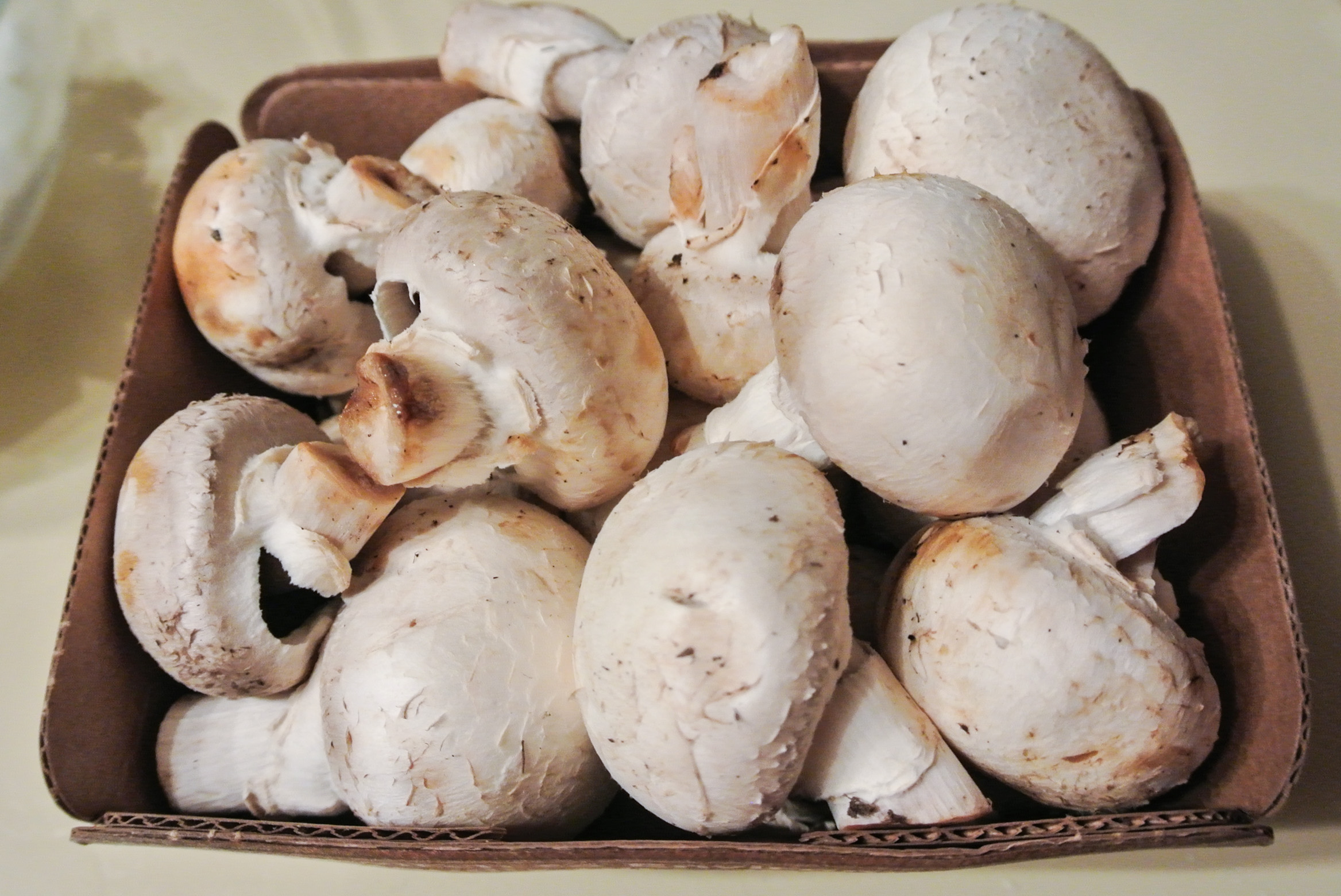
Before we get to cooking, a quick note about one of the star ingredients: button mushrooms. The most commonly consumed mushroom, available year-round, is the white button. Although not as aesthetically appealing as fancier, more exotic varieties, these fungi get the job done. Like many (if not all) mushrooms, buttons develop a meaty texture when cooked and are rich in copper and essential vitamins. Several studies have even show buttons to prevent heart disease, boost the immune system, and treat and prevent some types of cancer. Win!

DSC_2369

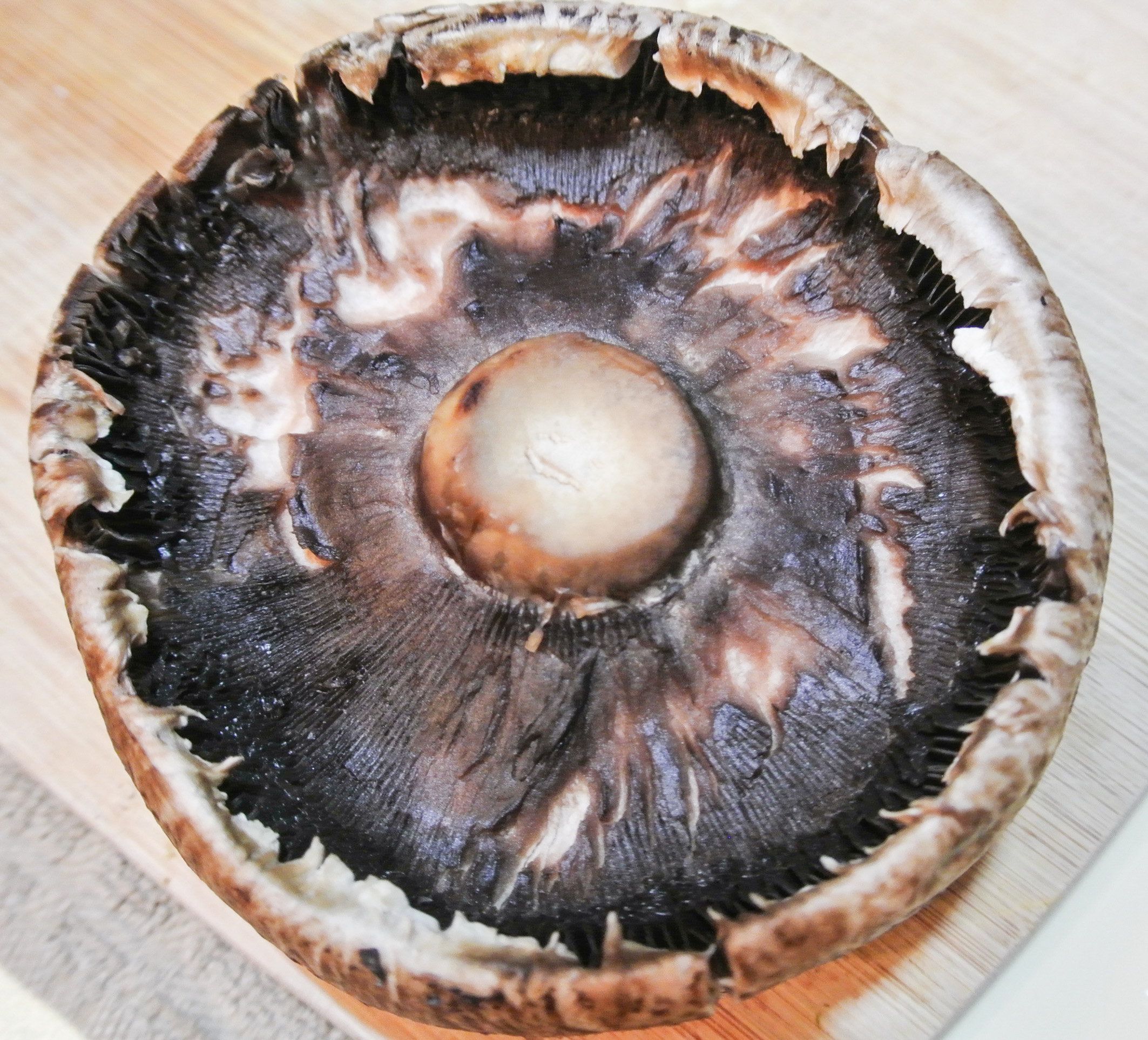
Portobello mushrooms are also featured in today’s adaption of Travis’s gravy formula. You can read more about this in my lettuce wraps post, another delicious way to consume fungus.

One more thing…if you like a chunky gravy, finely chop your ingredients. If you plan to puree the ingredients for a smooth, creamy gravy (which is what we’re doing today), a coarser chop is sufficient so long as the pieces are approximately the same in size for even cooking. Enjoy!

FORMULA BASE: MUSHROOM GRAVY

Yields approximately 2 cups

  • 2 cups chopped mushrooms* –> Trav’s using 1 cup each white button mushrooms and portobellos.
  • 1 cup+ cooking liquid (homemade veggie stock, red wine, water, unsweetened plant milk, etc.) –> Trav’s using stock.**
  • ¾ of an onion, chopped –> Trav’s using white.
  • 2 large cloves of garlic, minced
  • 2 tbsps flour –> Trav’s using whole wheat.
  • 1 tbsp oil –> Trav’s using extra virgin olive.
  • 1 bay leaf
  • ½ tsp minced fresh herbs (or ¼ tsp dried) –> Trav’s using ¼ tsp dried thyme.
  • Salt and pepper to taste –> Trav’s using a pinch of pink Himalayan sea salt and several turns of freshly grated black pepper.

*If you’re using any large caps with lots of gills, remove the gills before chopping and cooking.

DSC_2372

**Remember, we make veggie stock from veggie scraps. This version is reddish because of a beet scrap in the mix. Just FYI. 🙂

Pour your oil in a sauté pan over medium heat. Chop your vegetables. Start by adding the onions only. After approximately 2 minutes, add the garlic. 2 minutes later, add the mushrooms, herbs, and bay leaf and cook for another 6-8. Add the flour and stir until thoroughly moistened.

DSC_2380

Add cooking liquid, a ½ cup at a time and reduce until desired consistency is achieved.

DSC_2381

Add salt and pepper to taste and remove the bay leaf. Pour the entire mixture into a blender and puree until smooth (optional).

DSC_2382

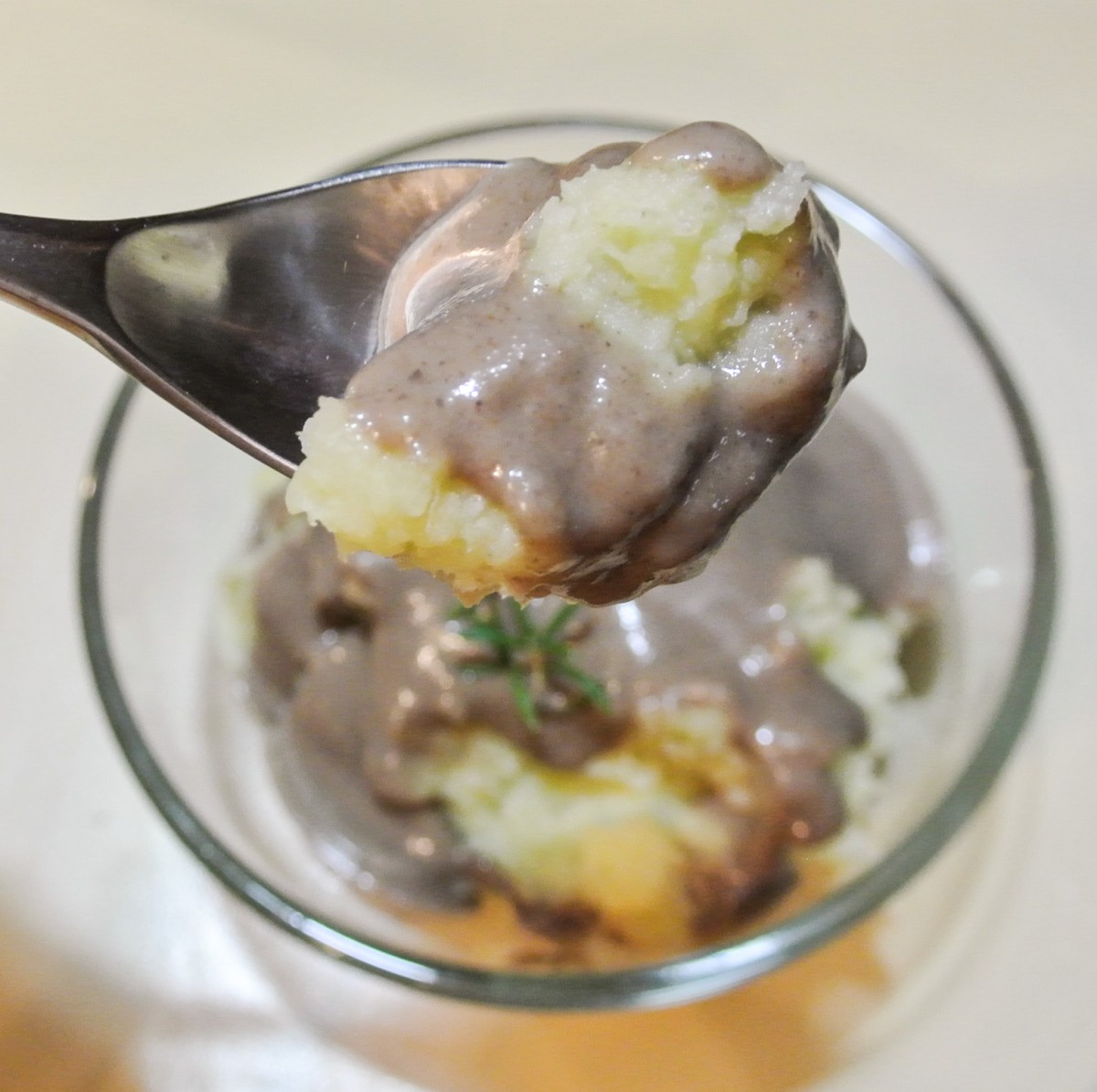
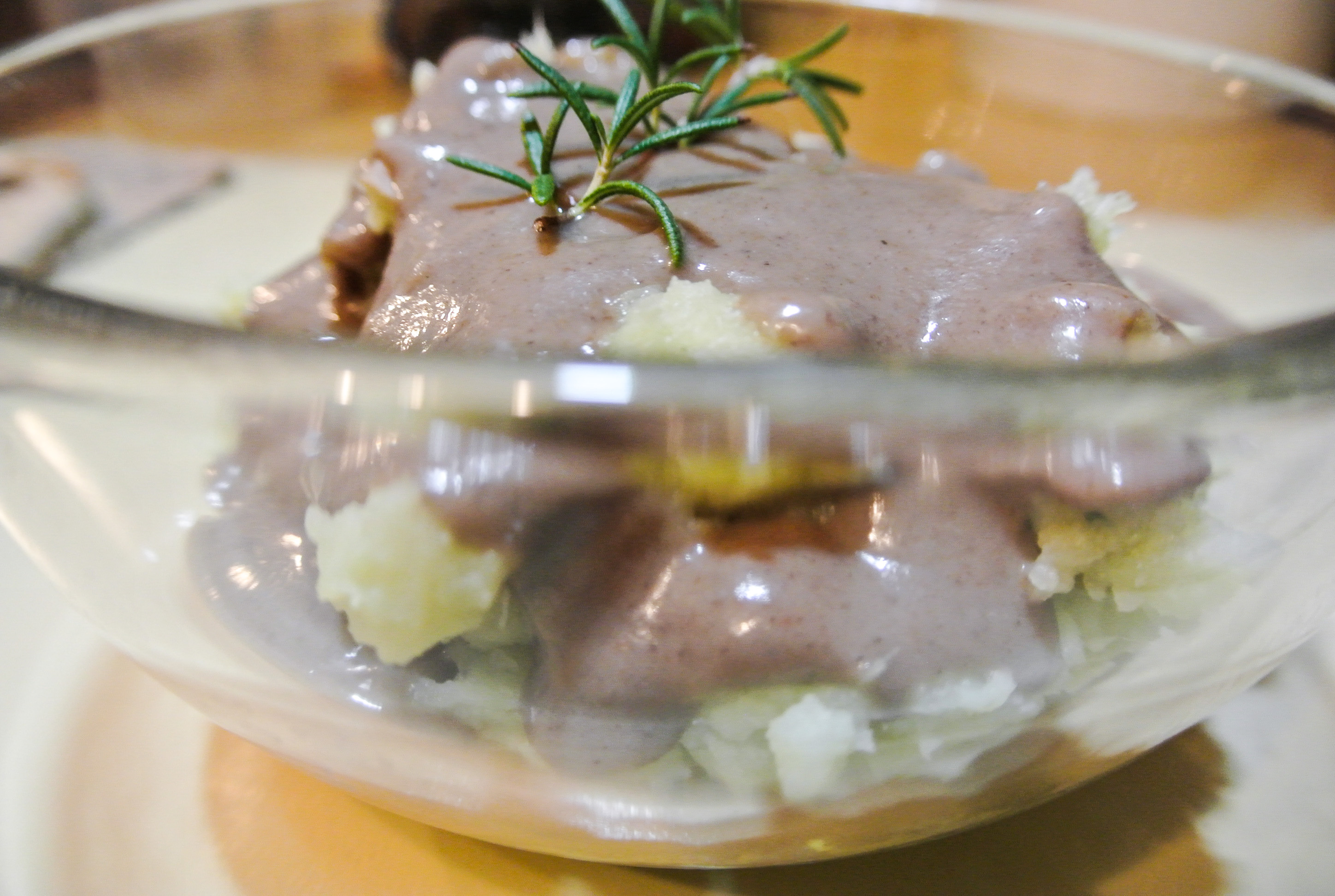
Serve atop classic mashed potatoes, in a vegan shepherd’s pie, or in another favorite preparation. We are serving ours over rosemary mashed sweet potatoes and parsnips: the perfect balance between sweet and savory!

DSC_2387

Travis reported that this gravy tasted best the first day, but can certainly keep for several in the fridge.

Fill-in-the-Blank Salad Sandwich

Chicken, tuna, egg, etc. + mayo = a salad sandwich. These popular combinations make for easy sandwich building, as the protein, produce, and condiments are prepared in one mixture. I have found that you either love or hate a salad sandwich, likely due to your feelings about mayo. Travis detests mayo, so he would only even consider one of these sandwiches if it were practically dry.

I, personally, love the creamy consistency and convenience of a salad sandwich, pending it isn’t soupy or drippy (soggy bread: no no no). Since I no longer eat mayo and don’t like to buy processed, vegan mayo substitutes, I had to get creative. Having already experimented with making my own creamy dressing, pesto, and potato salad, I knew that I really just needed to come up with a suitable protein base.

I have found that beans or lentils + raw fruits and vegetables work best for the ideal texture, but you could also use tofu. Since tofu has so much water in it, you would want to dehydrate it in the oven or on the stovetop first. This will result in a consistency similar to chicken, without the extra moisture to water down the creamy element of your filling.

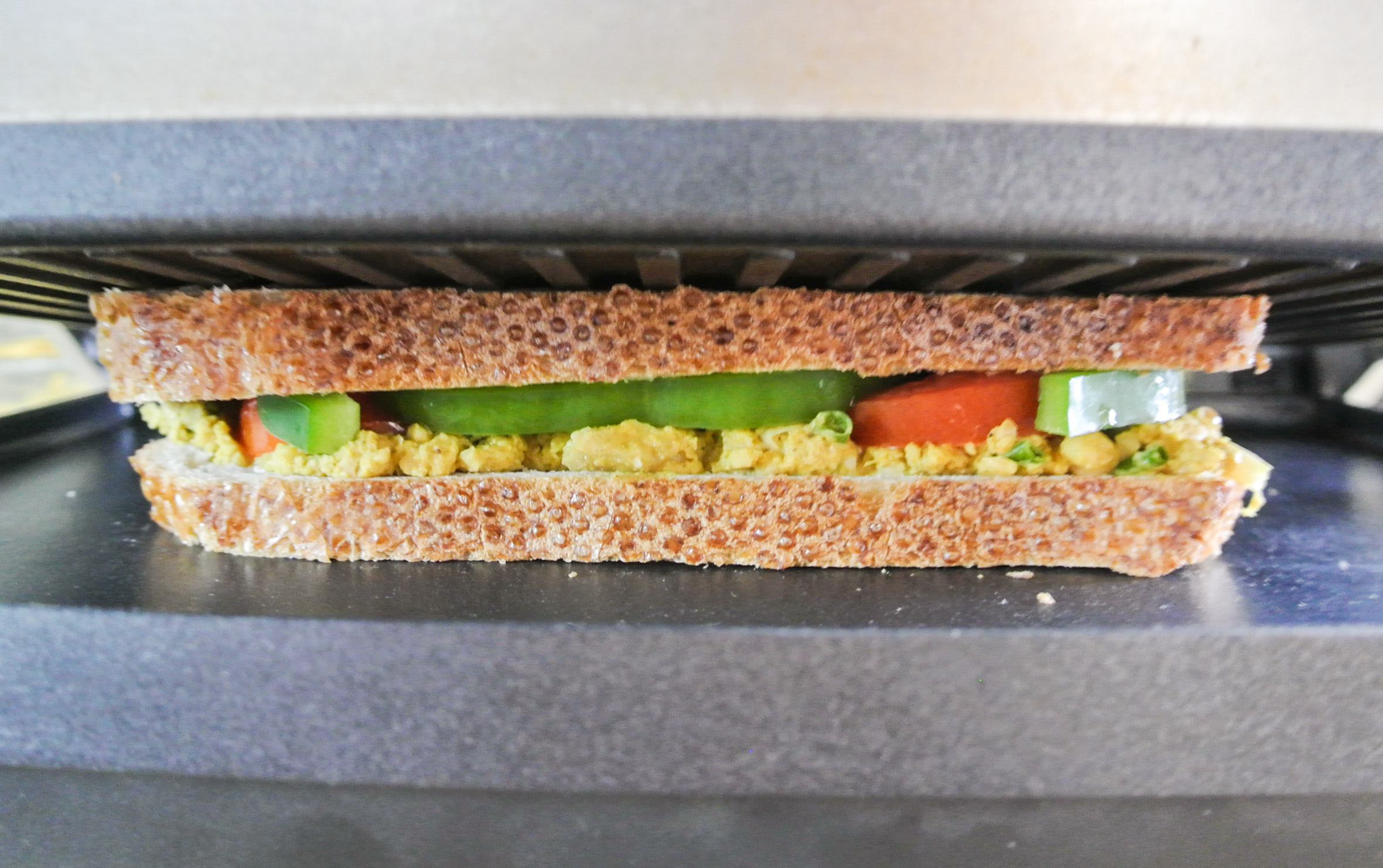
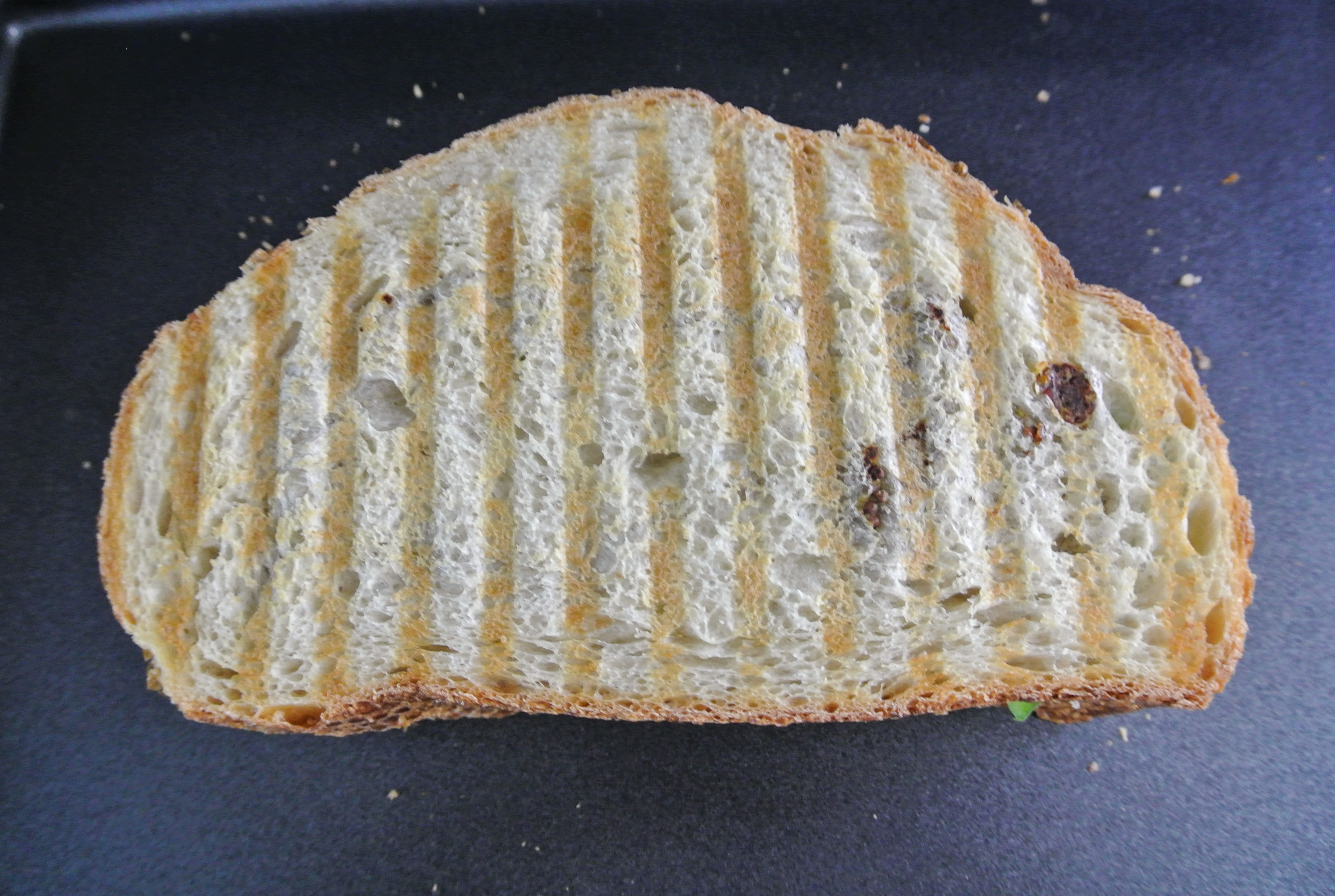
Today, I’ve featured one of my favorite small kitchen appliances: the panini press. Travis and I received this one as a wedding gift over four years ago and it’s still going strong. I love that the plates are nonstick, so coating bread with butter or oil isn’t necessary. As I’m sure you’ve guessed, I’m making my curry salad sandwich (chickpea base) into a panini on sourdough bread, fresh from San Francisco.

DSC_2364

All in all, this formula is pretty simple and keeps well in the fridge for days. You could easily make a big batch to have on hand for sandwiches or wraps all week long and opt either to mix your produce right in or keep it separate (which is what I like to do). This way, you can change up the combinations from sandwich to sandwich to suit the taste preferences of different household members. Enjoy!

FORMULA BASE: SALAD SANDWICH

Makes 4 sandwiches

  • 1 ½ cups cooked protein (beans or lentils, or chopped, dehydrated extra firm tofu) –> I’m using chickpeas.
  • ¼ cup finely chopped onion –> I’m using green.
  • ¼ cup mayo substitute (seed/nut butter, vegan pesto, pureed avocado, etc.) –> I’m using tahini + a few tablespoons of water.
  • 2 cloves minced garlic
  • ¼ cup “crunch” (chopped raw nuts/seeds, unsweetened dried fruit, etc.) (optional) –> I’m not using any.
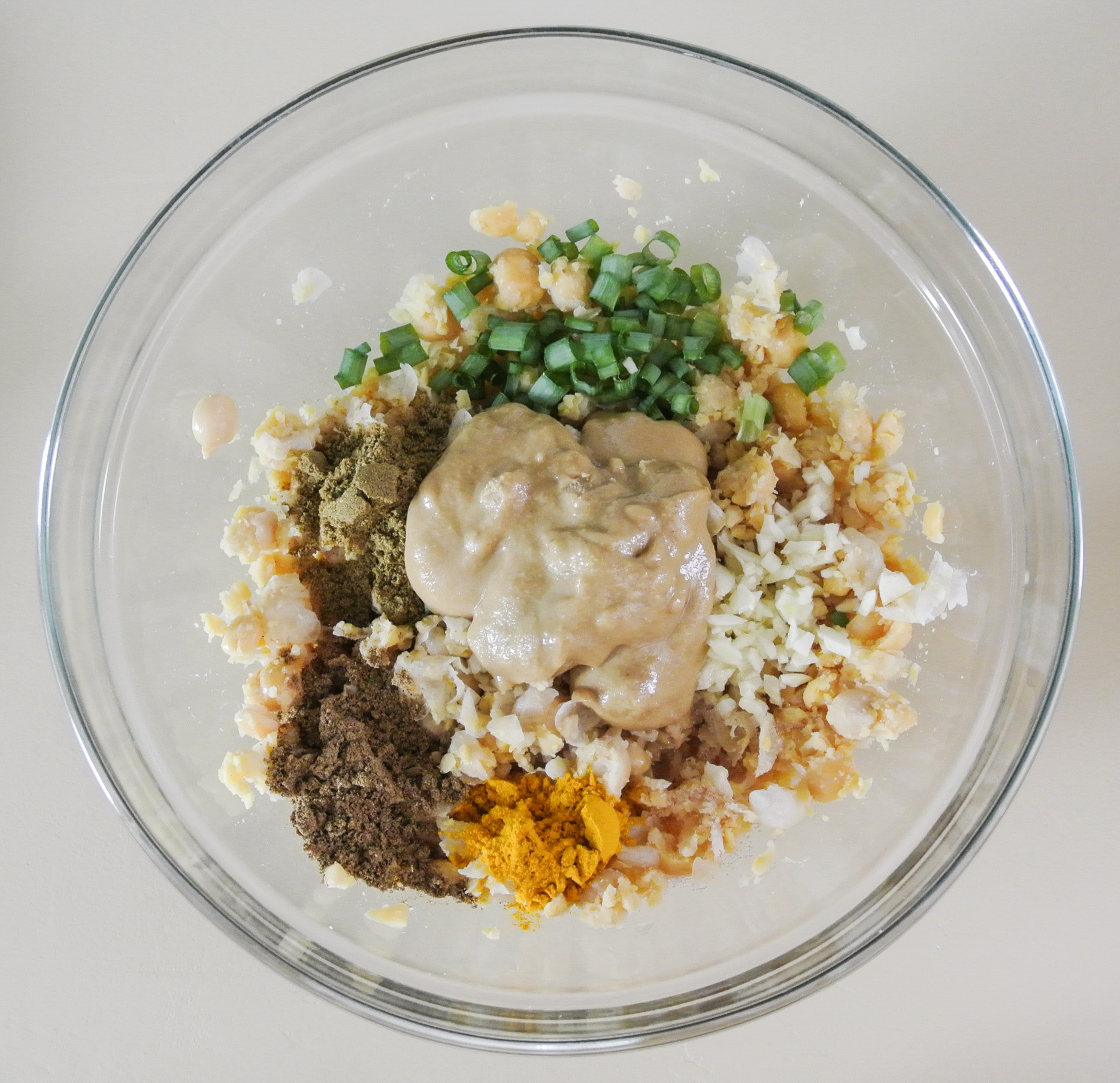
  • Spices, fresh/dried herbs, salt, and pepper to taste (optional) –> I’m using 1 tsp each cumin and garam masala, ½ tsp turmeric, and a pinch of pink Himalayan sea salt.
  • Additional raw fruits/vegetables to mix in or for garnishing –> I’m topping with my salad with a few thin slices of roma tomato and green pepper, and slathering my bread with whole grain mustard.

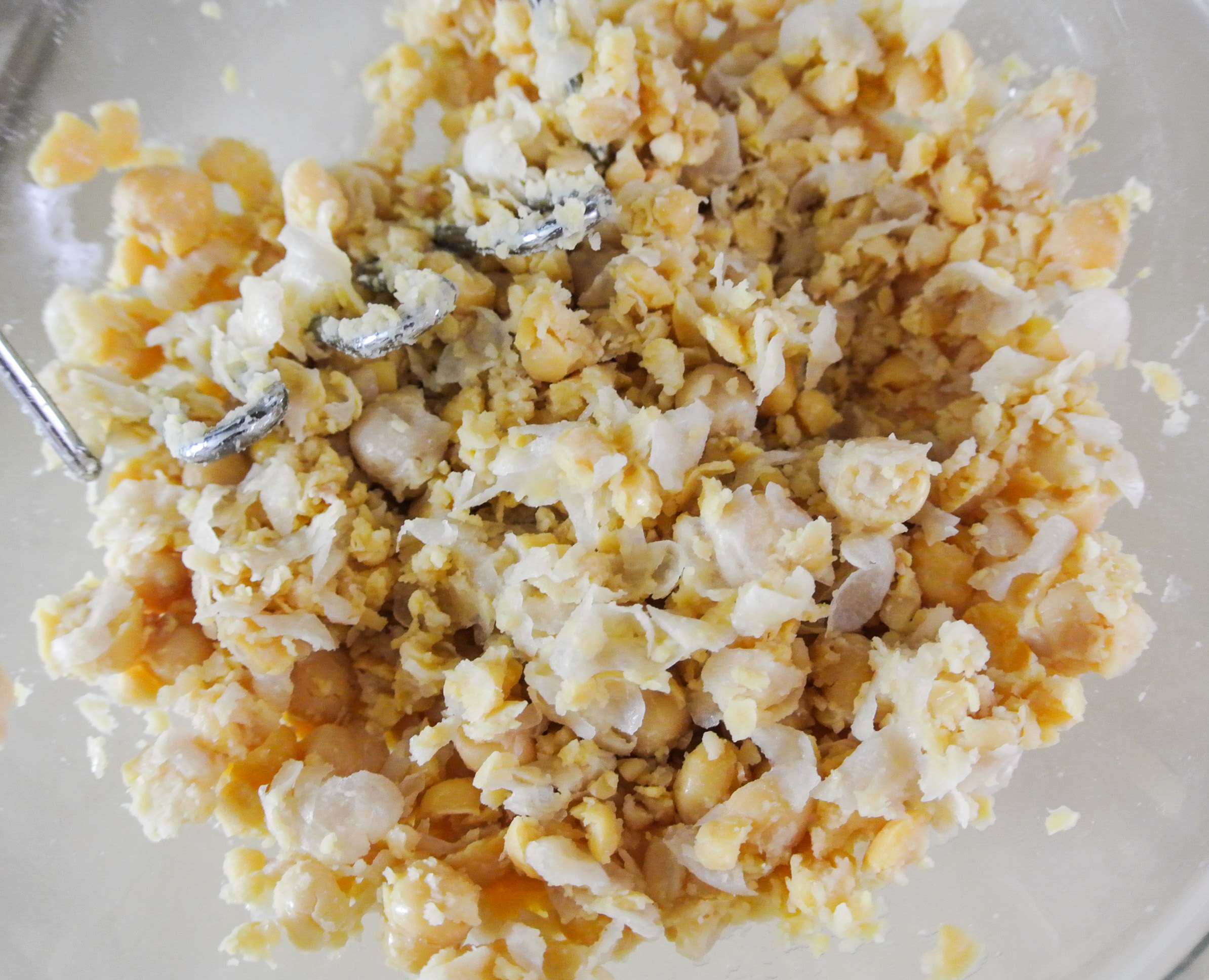
Coarsely smash your beans/lentils, if using.

DSC_2357

Combine all ingredients.

DSC_2358

Assemble with additional produce on bread or in a wrap, if desired.

DSC_2360

I’m running my sandwich through a panini press before consuming. 🙂

DSC_2363 DSC_2366

Plant-Based Entertaining for Everyone

I have many times had friends or family over for dinner and prepared an entirely vegan meal with great success. This was only my second time, however, throwing a large party with an extensive plant-based menu that needed to please guests all of all ages and diets. In attendance, I had several vegetarians, one gluten-free eater, and a whole bunch of standard omnivores.

I tried first, to think of foods that it seems everyone likes to eat: fruit, chips, and sweets. Then I thought about how I could make all of those items vegan (and some gluten-free, too), but tasty enough that my guests would never know it…or at least never miss the animal product varieties.

DSC_2354

Here’s what I served:

Chocolate peanut butter truffles: A play on my power ball formula, I used extra cocoa powder and rolled them in unsweetened shredded coconut. Guests said that they were delicious and rich: exactly what I was going for with a truffle!

Mini-fruit kabobs with cinnamon coconut whipped cream: As you know, I’ve been recently delighted to make and try coconut whipped cream in conjunction with my nice cream formula. I added ground cinnamon to this batch – yum!

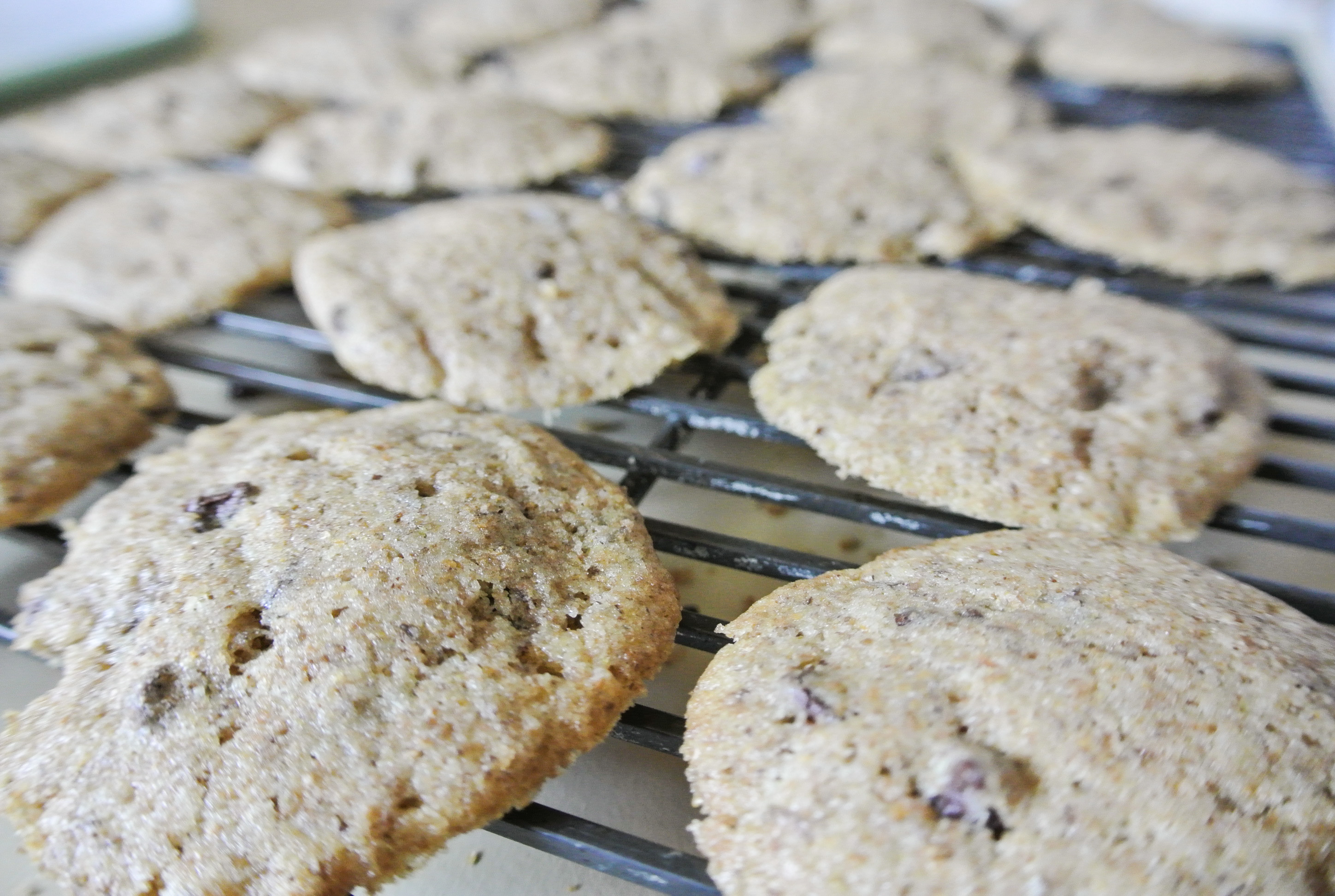
Mini-chocolate chip cookies: A variation of my chip cookie formula, these were tasty, but a bit crumbly. I was surprised since I’ve made them many times before. Maybe my preggo brain forgot an ingredient?! Very possible. 🙂

Tahini dip: My creamy dressing formula kept extra thick for dipping. It was a crowd favorite.

Roasted fennel hummus: My hummus formula with fennel as the star vegetable was a gamble…and I won (or, I should say, my guests won)!

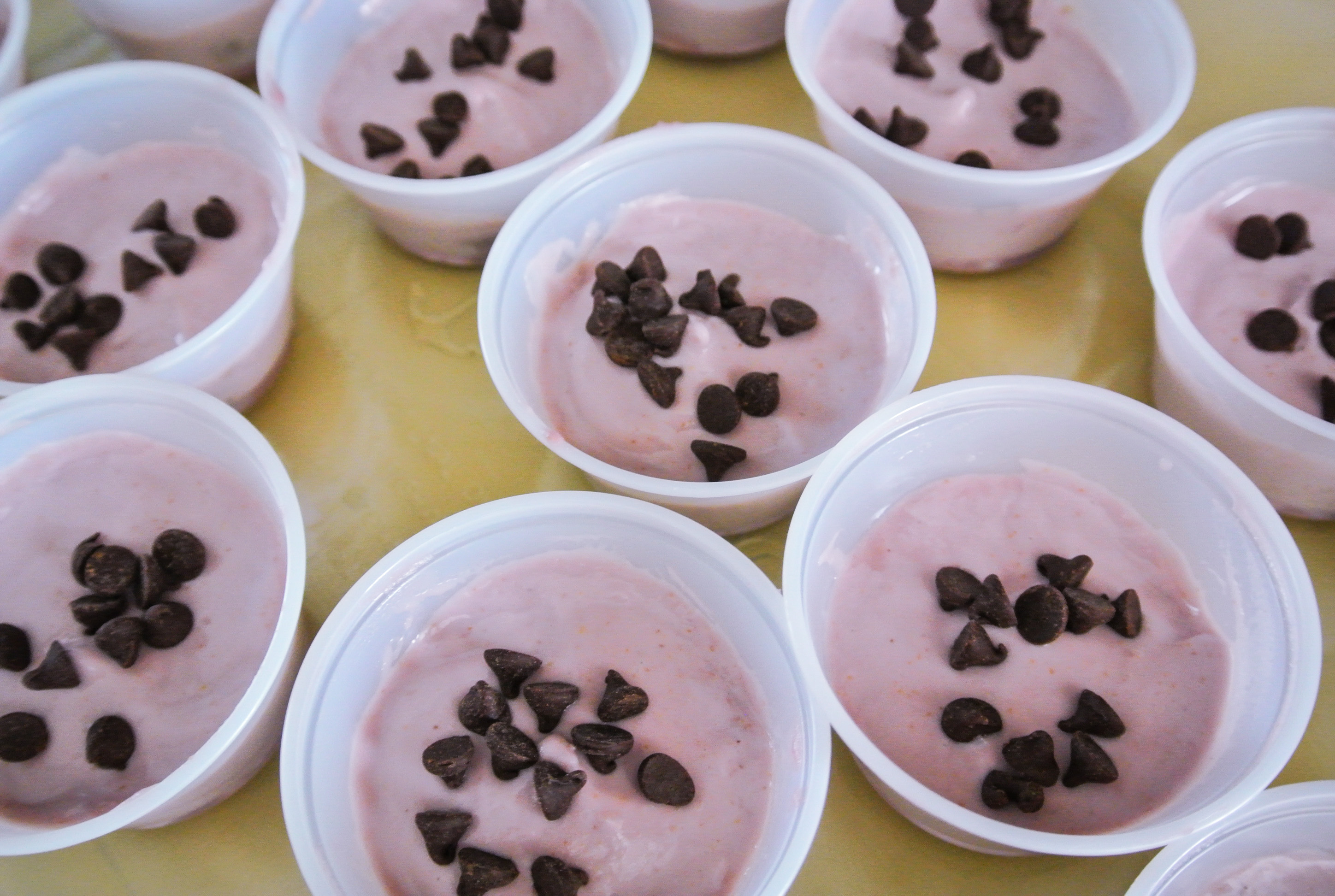
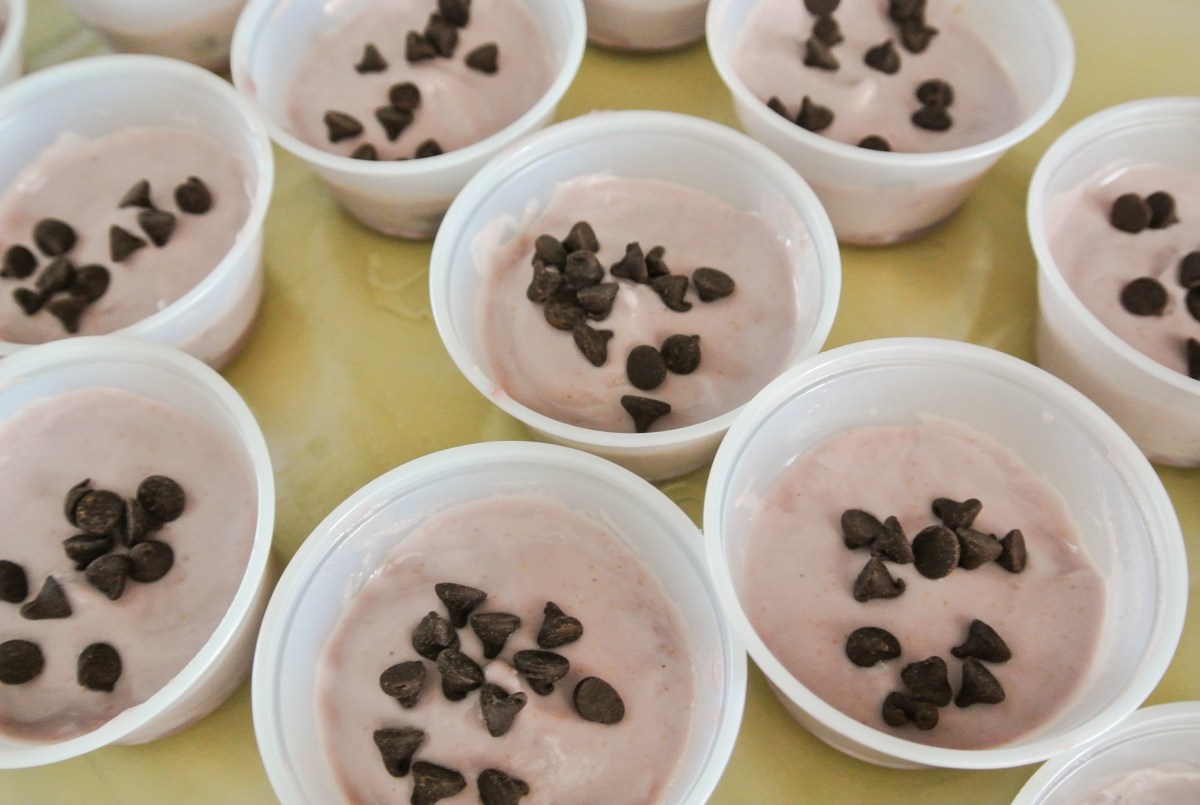
Lemon raspberry cashew mousse: Remember that failed attempt at vegan cheesecake turned mousse? I served these delightful little cups at my party and several people asked me for the recipe. I’d say they worked out ok after all.

DSC_2355

In addition to fresh fruit, I also served raw veggies, organic blue corn tortilla chips, and two different types of pretzels for dipping. I adorned the tables with small bowls of trail mix for extra munching and had beer and white sangria flowing. Guests seemed happy and full.

DSC_2343

As I mentioned when I threw Nolan’s second birthday party, I’m done serving food that I no longer regularly eat. I hate the idea of potential meat and dairy-based leftovers that threaten to throw me off the wagon (I don’t waste food, ya’ll). Stick to your guns in designing the menu for a party. Remember, guests don’t have to eat your food, but they would definitely be missing out if they didn’t!

DSC_2344

In case you were wondering, the party was a diaper party for Baby #2. Since it isn’t customary to throw a second shower, I wanted to have a more laidback celebration for our family’s final installment. Offering food, booze, and a good time in exchange for diapers was a win-win for all involved…and baby is stocked up for the first year or more of his/her life. Just an idea if you’re looking for a fun and easy way to celebrate a second baby or beyond. 🙂

11892050_10107174549417274_4888233493306564042_n

Our DIY Kitchen Renovation

Yea, I know, today’s post is not about food (and it’s pretty long, too). It is, however, about the most important room in my house where all of my plant-based eats are prepared: the kitchen. I gave you a tour of my kitchen early in the life of this blog so that you could get an idea of the food that I purchase and keep on hand to maintain a plant-based lifestyle, so you’ve seen a little bit of it already.

I wanted to share my kitchen renovation with you for a number of reasons. First of all—and most importantly—I’m happier preparing food in a workspace that I can enjoy. Looks aren’t everything, but I grew tired of staring at the 1980’s builder grade Formica splashed all over my kitchen. I found myself depressed at the thought of preparing food on countertops that were clean, but stained and scratched from years and years of use (and surely, abuse…we bought our home foreclosed and in rough shape over five years ago). When Travis was super busy completing his MBA, it was just me in the kitchen…a place I started to resent because it didn’t feel as fresh as the food I was prepping in it.

Secondly, I think that it’s valuable to see how I make the most out of a small space. My sister, Petra—author of 100 Tacks and currently living in Tokyo, Japan—has a series on her blog called Small Kitchen Missions. Her work in a space a third of the size of my kitchen has inspired me to make the most of what I consider a very small American kitchen, at least for someone that chops, blends, and cooks as much as I do. Travis and I always joke that we have the perfect kitchen for people who live on takeout, not people that like to prepare their own food. The sad truth behind the laughs is that a lot of people in a small space probably do get frustrated and resort to too many ready-to-eat meals that are either expensive, unhealthy, or both. Part of why I write this blog is to help people change that.

Lastly, speaking of expensive eating, I wanted to show you just how inexpensive a perfectly workable, presentable kitchen renovation can be, thus motivating you to do more food preparation at home. As I’ve mentioned before, plant-based living is not cheap when you’re striving for organic, non-GMO, fresh, and non-processed foods. You know how I live by Bountiful Baskets and am otherwise as thrifty as possible, so the place where all of the consumption magic happens needed to align with how I spend my money.

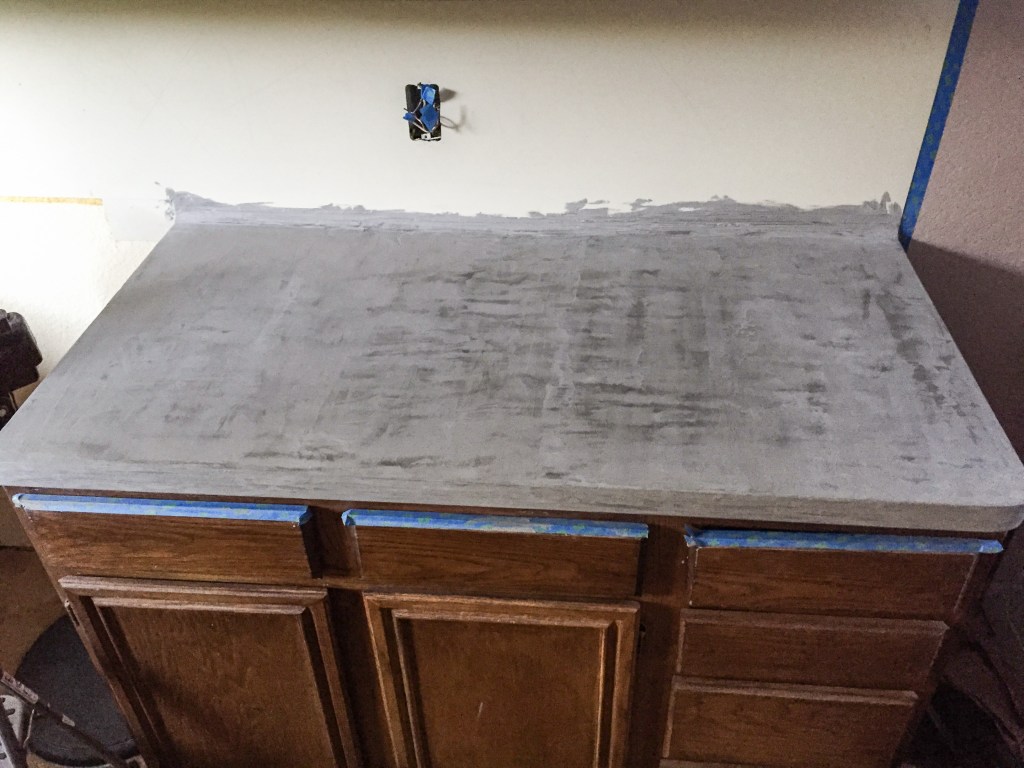
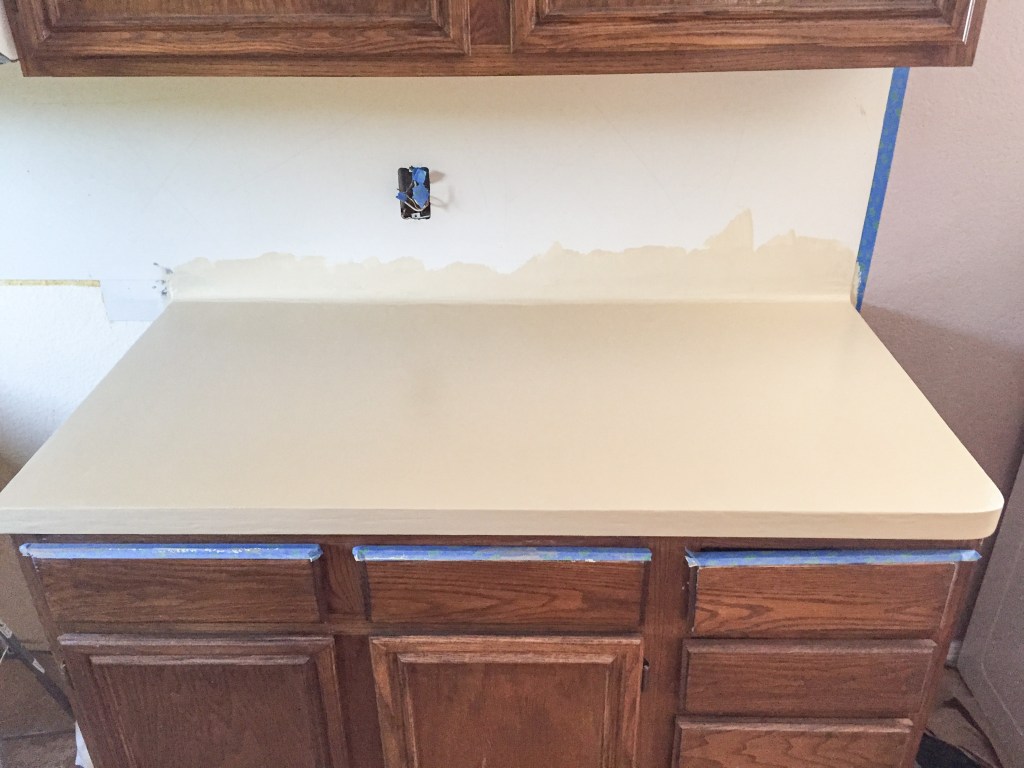
So, what exactly did we do to spruce up our dated space (pictured below)? When we first moved into our home in 2010, we removed all of the cabinets, sanded, and stained them. We were able to remove/cover years of wear and tear and ended up with a refreshed, darker, richer color than what came with the house. Are they my dream cabinets? No, but they look so much better than they did when we moved in. After completing that tiring, but inexpensive project, I wanted to keep going on the rest of the kitchen (we didn’t have kids yet, ha!), but the budget at the time—I was a seventh grade teacher and Travis was a college student—just didn’t allow it.

Before IMG_5253

Flash forward five years and we found ourselves expecting Baby #2. I cannot explain what the popular term “nesting” is from a biological perspective, but I am TOTALLY in the mode. I have a seemingly endless list of DIY projects to complete before the baby arrives and have been cleaning even the tiniest crevices of my home to ensure the best possible environment for he/she to come home to. I decided—okay, so my husband had a little input—that now was the time to finally finish the kitchen we started renovating five years ago…and we did it for just $300!

A friend and neighbor of mine did concrete countertops in her kitchen a while back and I was seriously impressed with both the appearance and the cost. She said that she poured, spread, sanded, stained, and sealed the concrete right on top of her existing Formica and completely transformed the look of her kitchen. I did some research online about how to complete the project and found this helpful article, which I followed step-by-step. I even bought the same materials to increase my chances of achieving an outcome similar to what I saw in the pictures.

One Saturday, Travis and I sent Nolan over to Mimi and Papa’s for the day and got to work. We cleared out the kitchen, scoured the existing countertops and backsplash (to allow for better adhesion), removed all of the switches and outlets, and laid and sanded three layers of concrete all in about a ten-hour period that included food breaks and showers, too. The next day, we sent Nolan back to his grandparents’ and spent another eight hours or so applying three layers of concrete stain, two layers of seal, and one layer of waterproof wax, and hanging an entirely new backsplash.


IMG_5256 IMG_5257 IMG_5258 IMG_5262

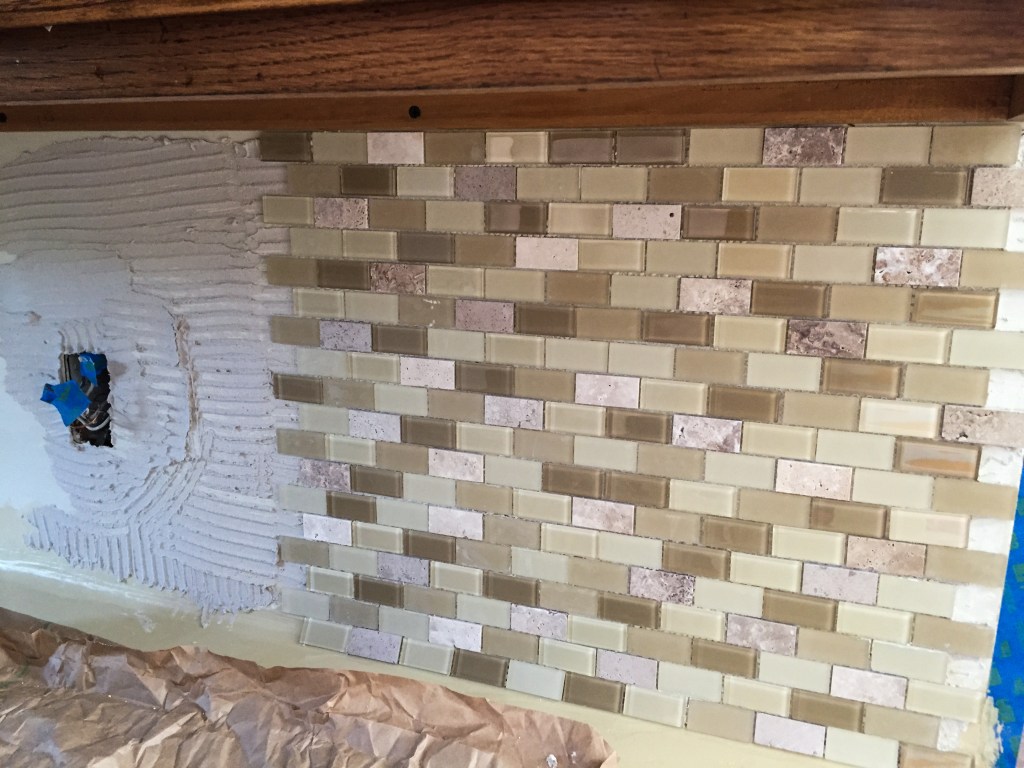
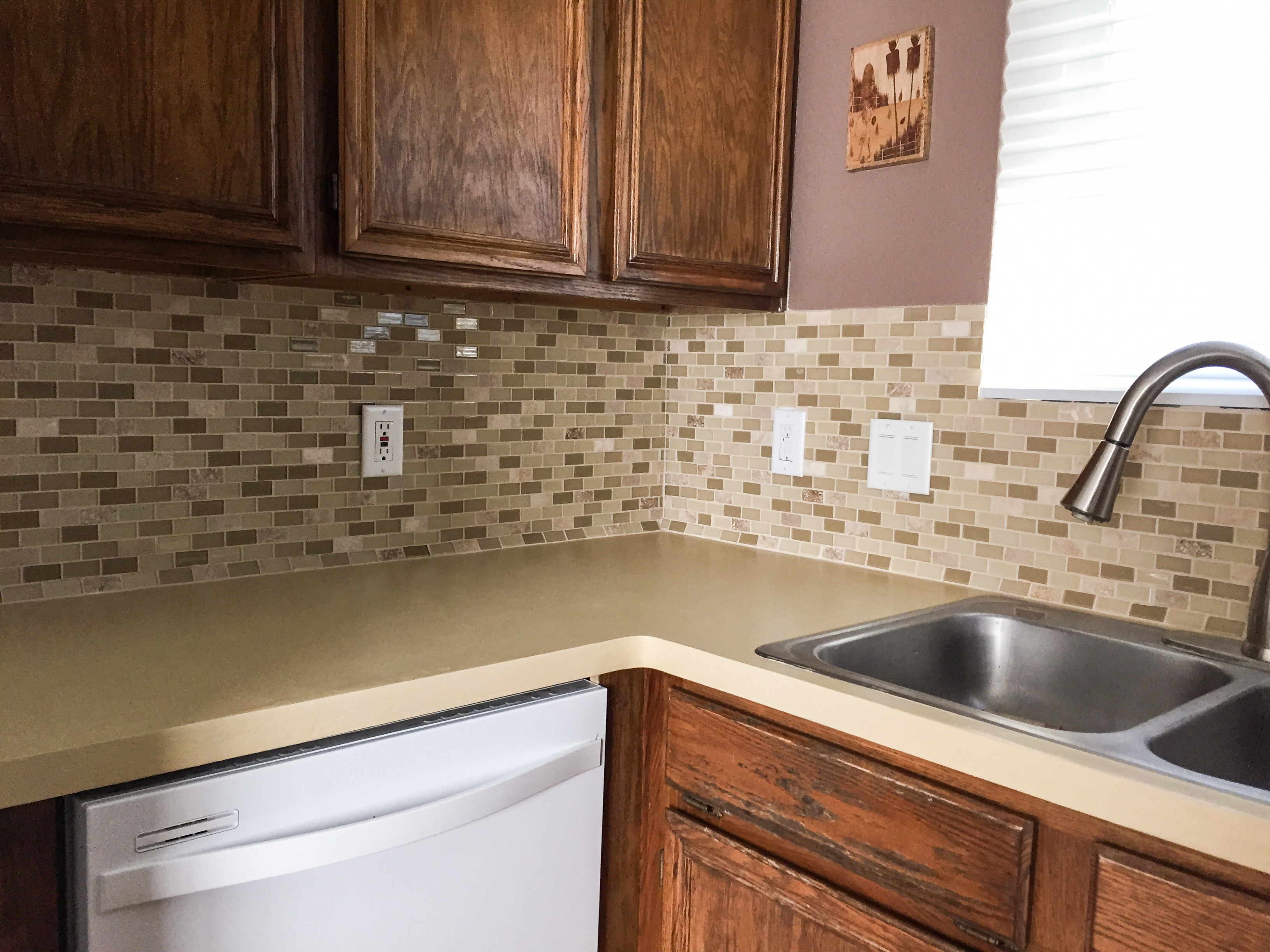
We found a great backsplash that is a combination of glass tiles and natural stone for $3.99/square foot and used almost thirty-eight square feet for our space. Travis learned how to cut, affix, grout, and seal tile from YouTube videos years ago when he renovated his parents’ shower. Neither of us has any background in construction; we just like to save money and get our hands dirty now and again.
IMG_5265

The following day we grouted the tile, a process that took almost two hours, including all of the wiping that needed to occur. The next couple of days, whenever we had a few minutes to spare here and there, we chipped away at any dried grout that we missed in the wiping process and then sealed the backsplash. Sealing took about ten minutes and we let it dry overnight, just to be on the safe side.

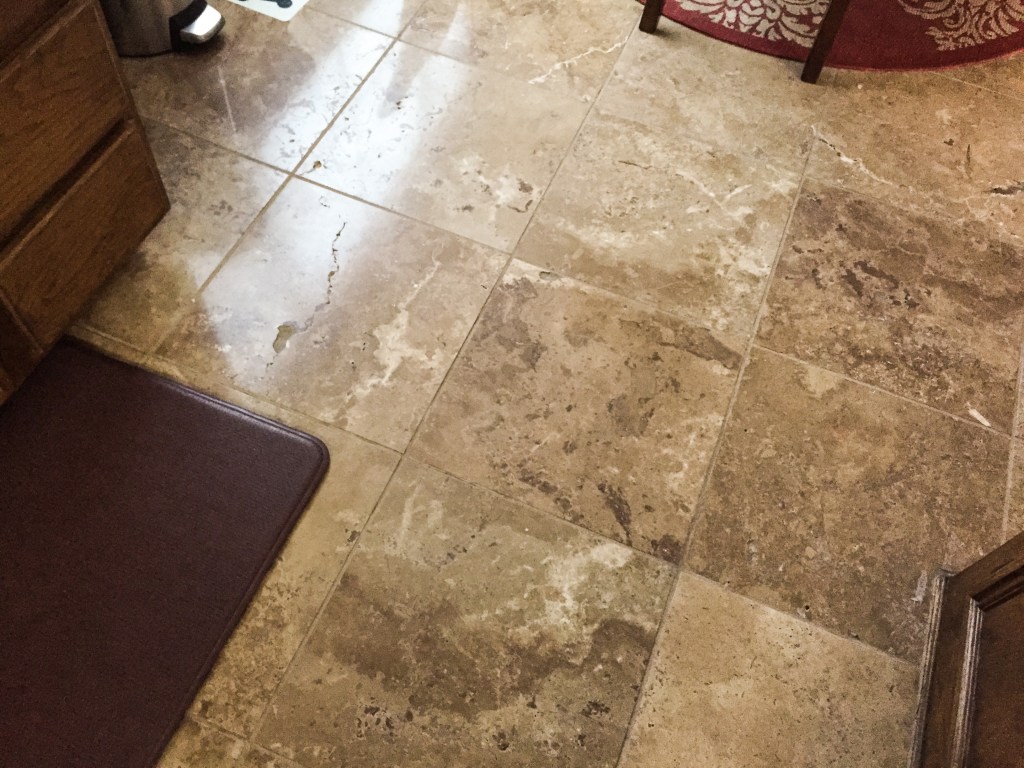
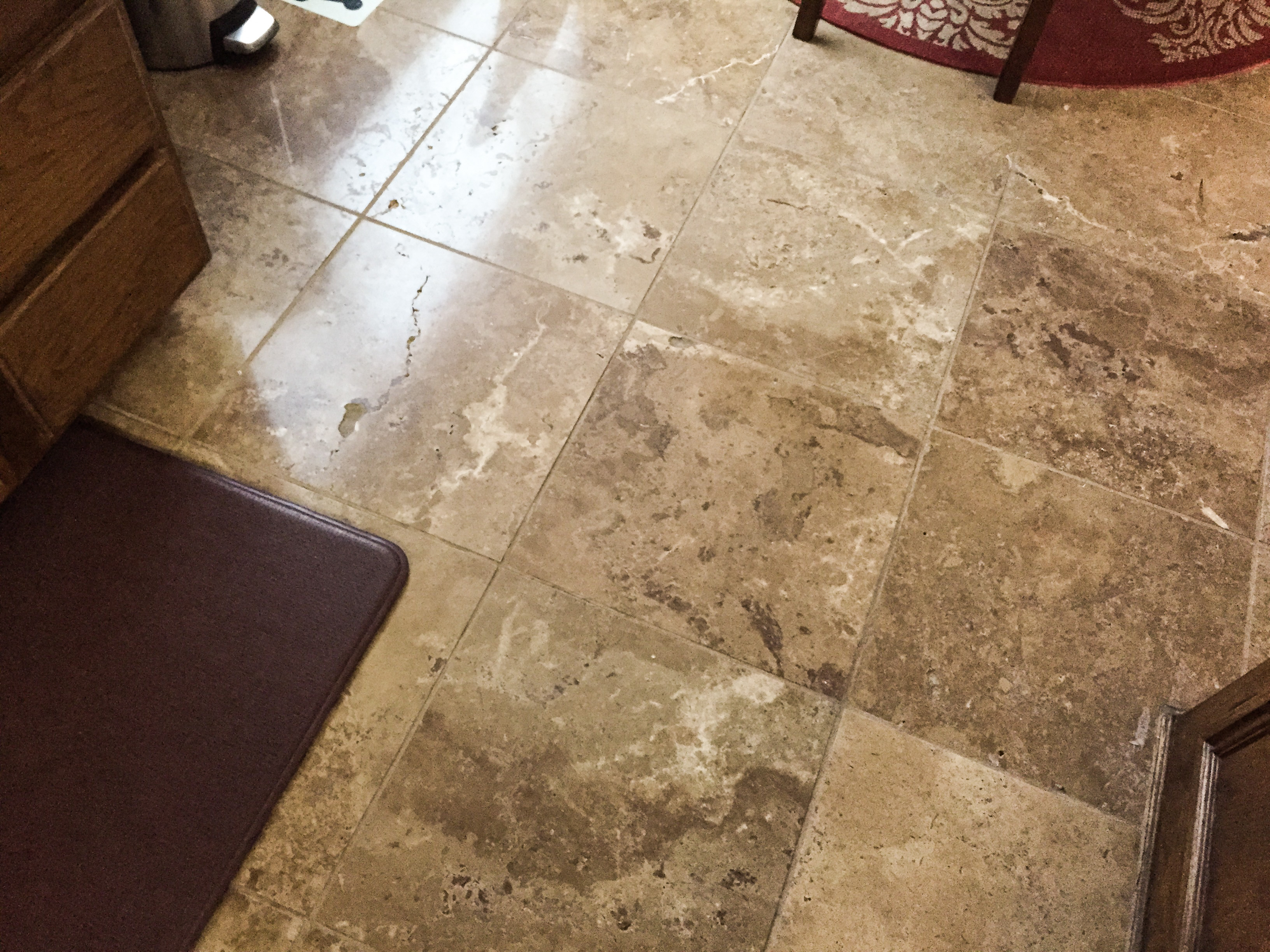
The last step, which took another couple of hours, was installing new, crisp, clean, white outlets and switches. Travis finished this in time for the baby’s diaper party (future post) and the look we were going for was finally realized: a noticeable, inexpensive upgrade that complimented our travertine floors. If you’re not familiar, travertine is an expensive natural stone. It was in the house when we moved in and every kitchen decision we’ve made has centered on those gorgeous tiles.
IMG_5397

When we went to place all of our usual countertop clutter back into the kitchen, we reduced we had and found new homes for some of the items—like cookbooks—that really didn’t need to be sitting on the countertop 24/7. Our small space got a little bit bigger, motivated by a long-awaited facelift. We didn’t want to cover up everything we worked so hard to create, so in the process of aesthetically improving our kitchen, we also obtained a slightly larger one.  🙂

What do we leave on the countertops? Two appliances that we don’t have any other space for: the toaster oven (which honestly isn’t used often) and the extremely heavy KitchenAid stand mixer. We also have a knife block, three jars of baking goods (e.g. flour, etc.), a paper towel holder, a typically empty cookie jar (sad, but good for the body, folks!), a couple of bottles of infused oils for cooking, salad dressings, etc., a wire vessel in which we collect wine corks (woo!), and a large basket for produce that need not be refrigerated. This might sound like a lot or a little, depending on your kitchen, what you do in it, and how big it is, but this is the best we could do with limited cabinet space.

In a nutshell, we now have a kitchen that feels bigger and is more enjoyable to work in, all for a little sweat equity and about $300 (countertop materials, backsplash, and electrical upgrades). If you’re willing to put in the time and effort, you can find amazing deals and learn a lot, too. Someday, I’ll have a professional chef’s gourmet kitchen with luscious countertops and high-end appliances. For now, living simply is providing us everything we could want or need. Good luck with your next DIY project!

IMG_5340

Cheesecake Fail Turned Happy Accident

As I mentioned in my nice cream post, cheesecake is a popular dessert among vegan cooks, chefs, and bloggers right now. Many that I follow are experimenting with recipes to create a dairy-free version of this classic dessert and are taking it up a notch by making it no-bake and sometimes, raw, too.

Turns out, a successful vegan cheesecake is not easy, and I have yet to join the ranks of those who have successfully gone before me, despite seemingly knowing my stuff. When I develop a new Fresh Formula, I do so through either through experimentation in my own kitchen, research among other vegan cooks, or a combination of both. From those that I follow, I learned that the “cheese” in such a vegan concoction is made possible with cashews and sometimes, coconut cream, two ingredients that I’ve been obsessed with of late (see my potato salad and nice cream formulas).

I developed a formula that I saw as the right balance between sweet, creamy, and decadent without going overboard in any one flavor profile. I tasted the filling as I went, making adjustments as necessary, and came up with a final product that I was sure was the cheesecake winner.

Well, everything was fine until I went to thaw my mini-cheesecakes (all of the recipes I researched stressed the need to freeze and then thaw them to secure the desired shape) and they melted. 😦 Somehow, other vegan cooks have figured out how to make these beauties hold their shape, just like a dairy cheesecake. I, however, have to yet to find success in form. What did happen, though, was amazingly delicious: mousse!

As you know, I already have one mousse formula that is tofu-based. This is a trusty standby for me as it holds its shape well and is jam-packed with protein. I’m not doing away with that mousse rendition; now, I just have more options! And, as far as protein content is concerned, nuts can hold their own, too, so I’m not “missing out” with my new formula.

This mousse formula—which I’m calling “Fruit Mousse,” as the other one is chocolate-based—does, however, contain more fat and sugar. These are natural, cholesterol-free fats and sugars, but two ingredients I try to use sparingly nonetheless. Point is, make this as a special treat and serve it at a party where you will no doubt impress the omnivores in attendance, too (that’s what I did and it was a huge hit…more to follow on that). I would recommend serving in individual containers since this mousse won’t keep its shape when sliced as a pie.

A quick note about citrus zest…You’ll notice that I’m using lemon zest in today’s mousse, in addition to lemon juice. Isn’t the juice enough? The zest packs a ton of added flavor and to me, is actually even more flavorful than the juice. Plus, I’m a huge fan of using as much of the fruit as possible, so there’s that. Finally, lemon zest, in particular, contains five to ten times more nutrients than the juice of the fruit, providing health benefits, too. Be careful when you zest not to grate your citrus fruit down to the white pith, which is bitter.

DSC_2350

All-in-all, while I don’t have a cheesecake in my fridge (I will keep trying!), I’m pretty happy with how my unexpected mousse turned out. One person’s fail is another person’s victory?! In this case, both of those people were me. J Enjoy!

FORMULA BASE: FRUIT MOUSSE

Makes 24 mini-cups

For the crust (optional):

  • ½ cup unsweetened dried fruit (no added oil) –> I’m using 5 pitted medjool dates.
  • ¼ cup raw, unsalted nuts/seeds –> I’m using pecans.
  • 1 ½ tbsps oil or nut/seed butter –> I’m using coconut oil.
  • ¼-½ tsp seasoning (spices, salt, etc.) –> I’m using ¼ tsp cinnamon and a pinch of pink Himalayan sea salt.

For the filling:

  • 1 ½ cups raw cashews, soaked in water overnight
  • 1 cup raw fruit –> I’m using ¾ cup raspberries and the juice of 2 lemons.
  • ½ cup coconut cream
  • ½ cup liquid sweetener –> I’m using raw agave syrup.
  • 1 tbsp oil* –> I’m using coconut.
  • ½-1 tbsp combination of spices, extracts, fresh herbs, etc. (optional) –> I’m using the zest of my 2 lemons and a quick splash of almond extract.
  • 2-4 tbsps garnish (raw seeds, nuts, herbs, spices, citrus zest, dried fruit, chocolate chips, etc.) (optional) –> I’m using mini-semisweet chocolate chips (vegan).

*I only used oil because all of the cheesecake recipes I researched called for some oil. I don’t know that it is essential to mousse, so you may be able to opt out of it. I won’t know until I try making this again at some point!
If using, put all of the ingredients into a food processor. Pulse until well-combined, but sticky. Press into your individual serving vessels of choice. I originally planned to make these in a mini-muffin pan and pop them out frozen to thaw, thus why you see them that way here. Later, when I realized that the mousse would not maintain a mini-pie shape after being popped out of the pan, I transferred each mousse to an individual plastic cup, which is where I would have started my crust to begin with, had I known what was going to happen. 🙂  Place crusts in the freezer to firm up.

DSC_2347

Drain and rinse your cashews. Put all of your filling ingredients (except the garnish, if using) in a blender and puree until silky smooth. Pour over prepared crusts, garnish, and place in the fridge to chill. Again, knowing what I know now, I would not use the mini-muffin pan! Make sure your individual mousse cups are in a container that you can put a lid on. Remove from the fridge when you’re ready to serve.
DSC_2352

Last-Minute Hummus, Two Ways

In small quantities, I’m all about raw onions – which promote skin elasticity, among other things. There’s something amazing, however, that happens to onions when they are sautéed or roasted that makes them just absolutely sweet and delicious. Today, I’m caramelizing them to puree in a fresh hummus.

A couple of days ago, I made some semi-last-minute plans to first, have a girlfriend over for some standard catching up and gossiping, and later, to take Nolan to a friend’s house for dinner. Always one to provide or contribute nosh and drinks, I had to think fast. What was in the pantry? The fridge?

With Travis out of town this past weekend, we forewent our typical weekly Bountiful Basket run on Saturday morning (I’m too preggo to lift all that produce at this point!), so I was surprisingly low in plant stock. I do, though, always have beans, onions, and garlic on hand, so I knew that I could throw together a quick appetizer for both of my events. Having bought tortilla chips for an upcoming party we are hosting (blog post to follow), I was ready to make hummus. I can always buy more chips before the weekend. 🙂

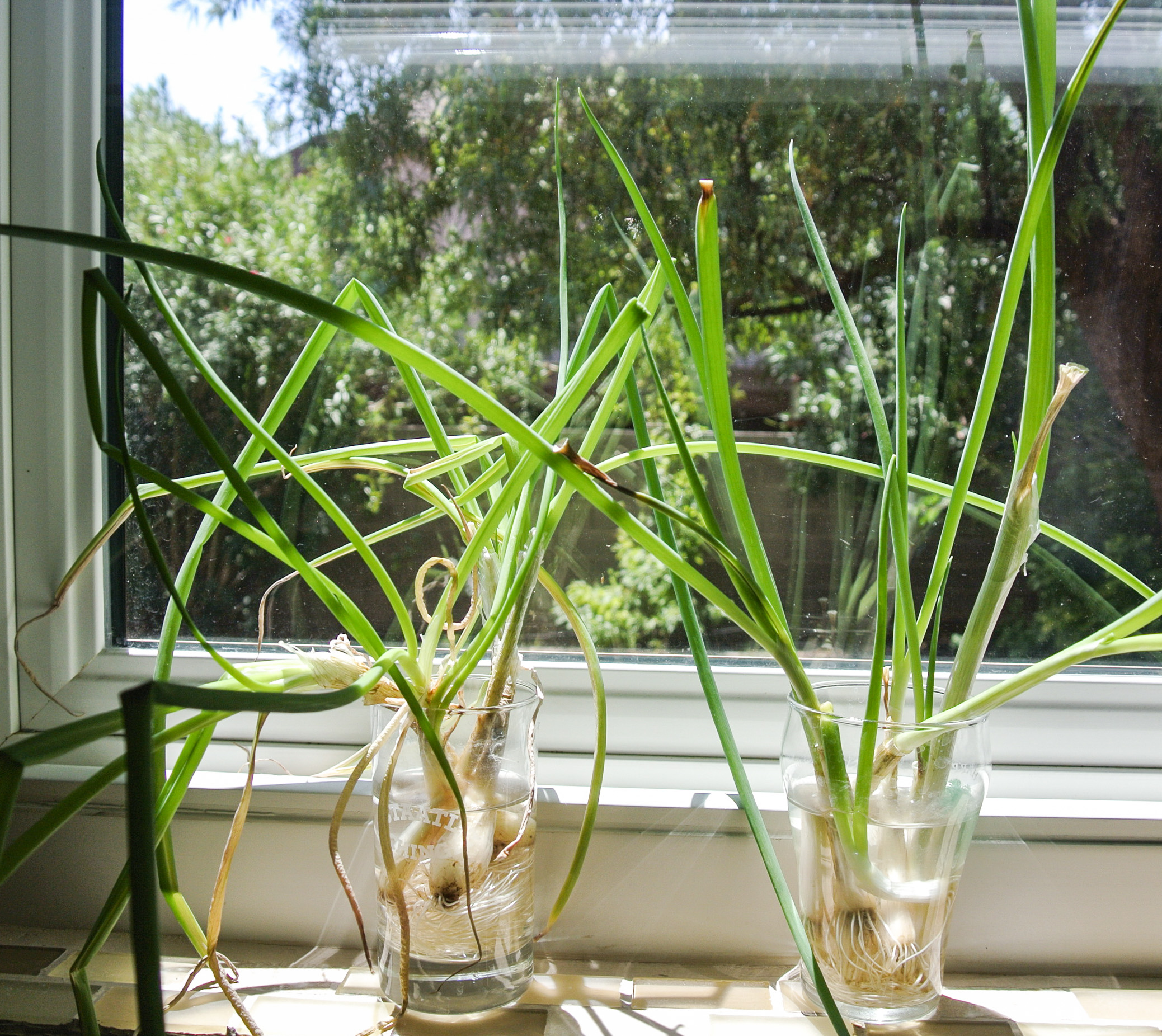
Another win found itself in the green onions that I noticed had blossomed to great heights on my windowsill. Remember when I shared my lettuce wrap formula with you? I encouraged you to save your green onion roots in a cup of water and watch them grow back. A month and half later, check out the jungle I have in my kitchen! I instantly thought of using these to garnish my hummus.

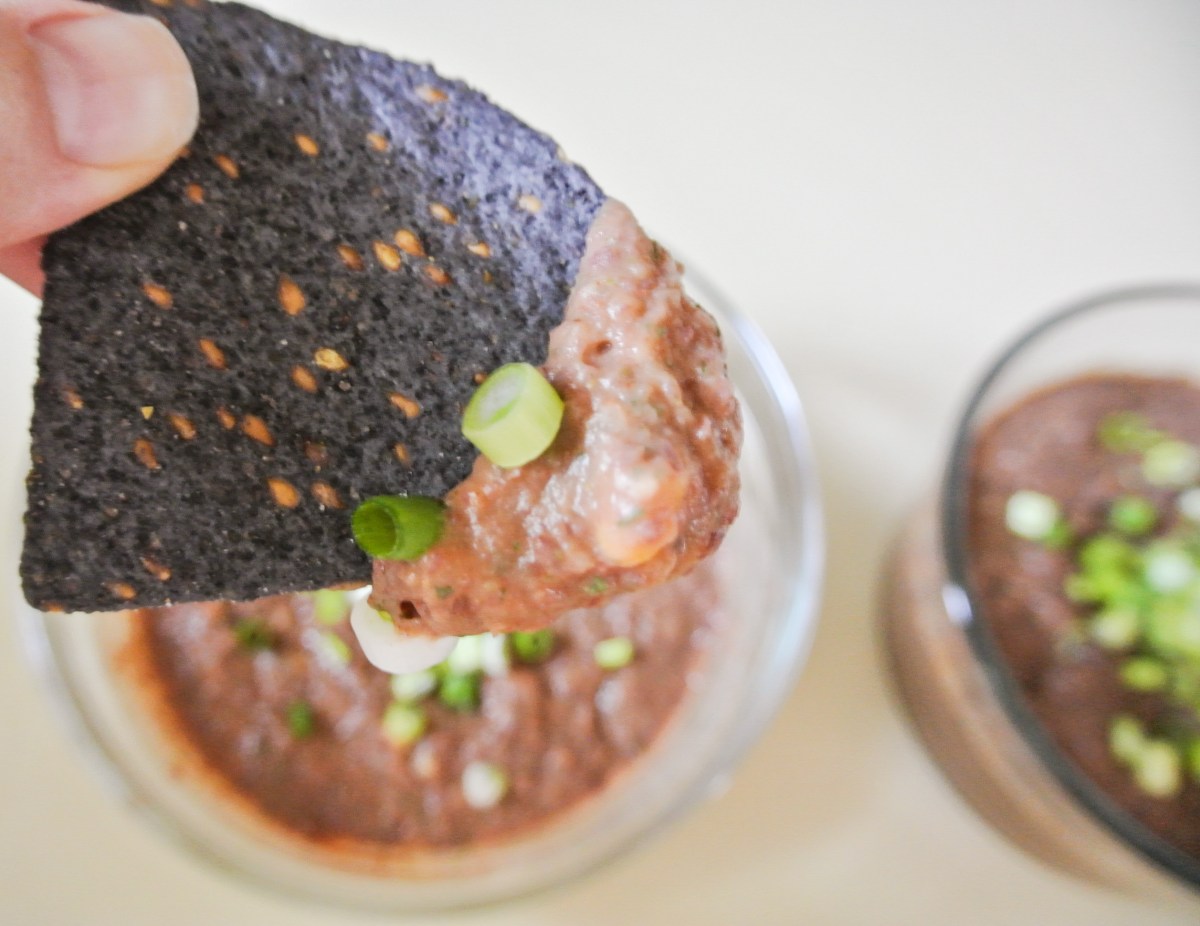
DSC_2330There’s nothing new or incredibly exciting to report in today’s post other than that I created two amazing hummus dishes with the sweetness of caramelized onions in less than 20 minutes with ingredients I already had on hand. Check out what you have, get creative, and a scrumptious result just may surprise you. Enjoy!

FORMULA BASE: HUMMUS

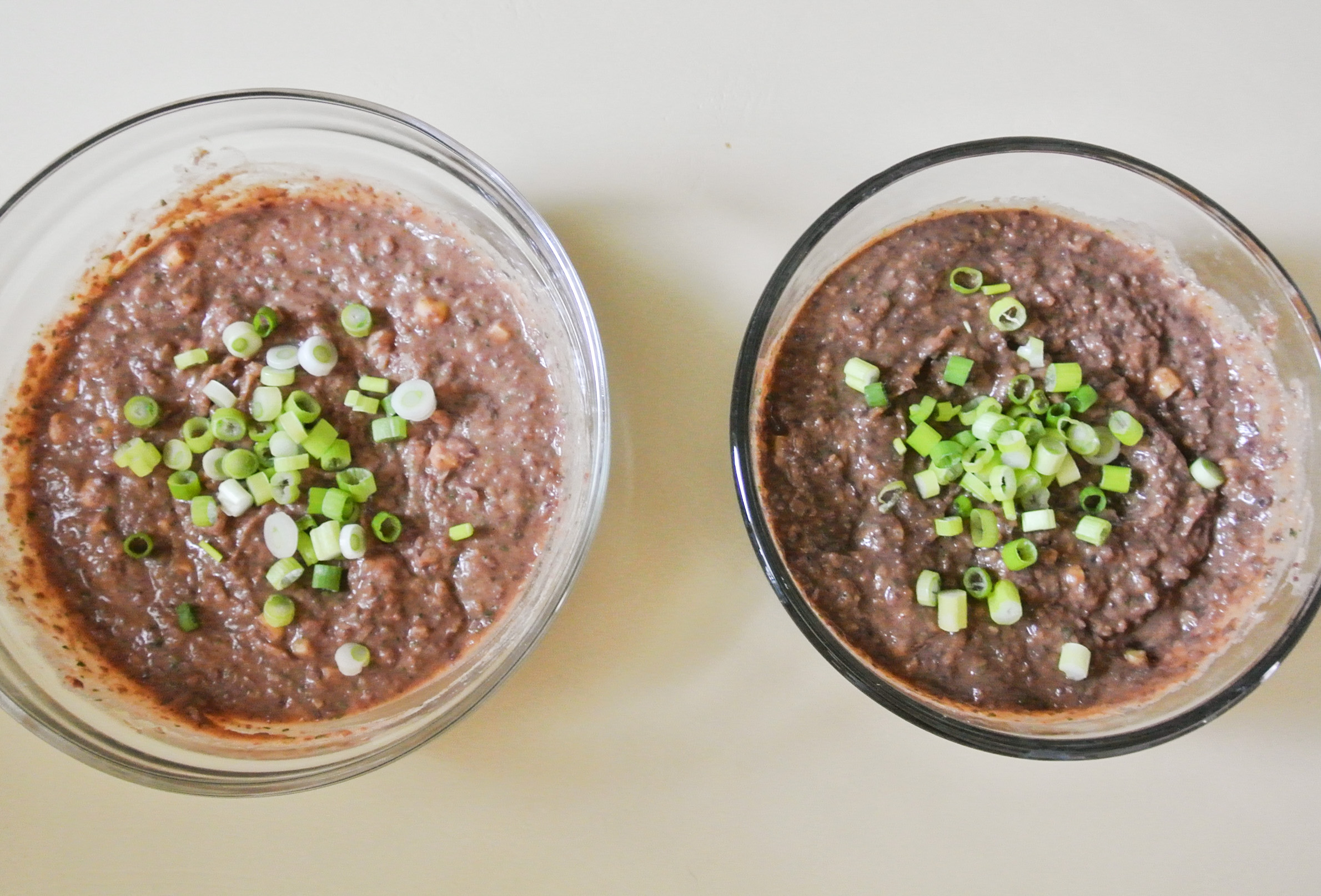
  • 2 cups cooked beans or lentils –>  I’m making two mini-batches of hummus, so I’m using a heaping cup of black beans for one and kidney beans for the other.
  • 2 cups cooked vegetables and/or raw herbs (or more beans and lentils, if you want to keep it simple) –>  I’m using ¾ cup coarsely chopped onions and ¼ cup frozen corn in both batches.
  • Approximately 1 tbsp oil, if including roasted/sautéed vegetables –>  I’m using coconut.
  • 2-4 cloves raw or roasted garlic –>  I’m using 2 cloves in each batch.
  • ¼-½ cup citrus juice –>  I’m using the juice of 2 limes in each batch.
  • 1 tbsp tahini (optional) –>  I’m not using it for this particular recipe.
  • Spices, salt, and pepper to taste –>  I’m using 1 tbsp dried cilantro, 1 tsp chili powder, 1 tsp paprika, ½ tsp cumin, and a pinch of pink Himalayan sea salt in each batch.
  • Liquid (water, oil, vegetable stock, vinegar, or more citrus juice) as needed until desired consistency is achieved –>  I’m not using any.
  • SPECIAL ADDITION:  thinly-sliced green onions

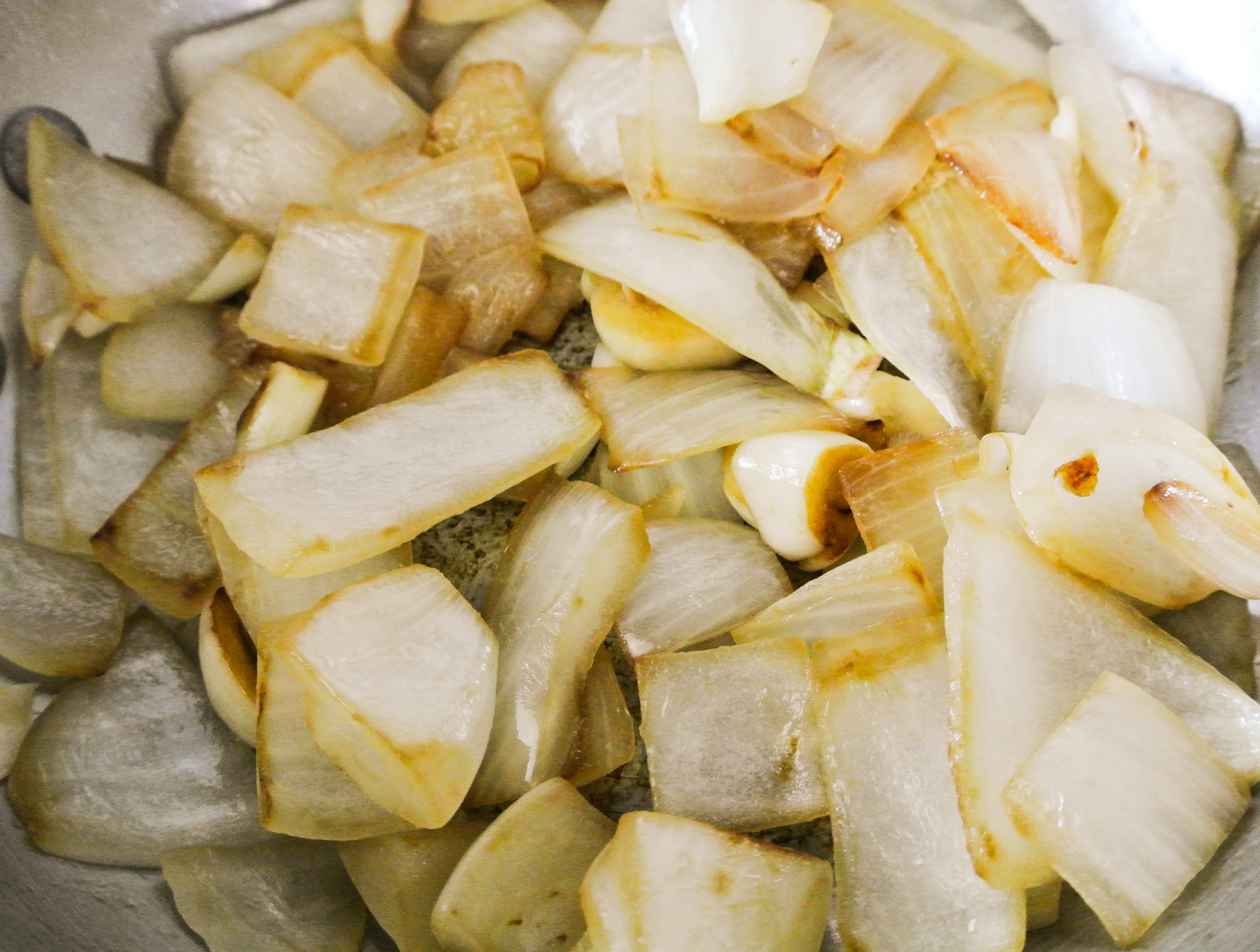
If using, peel if necessary and coarsely chop your vegetables. Decide on a cooking method that works best for the particular vegetable(s) you’re using and have at it. Today, I’m sautéing my onions and garlic.

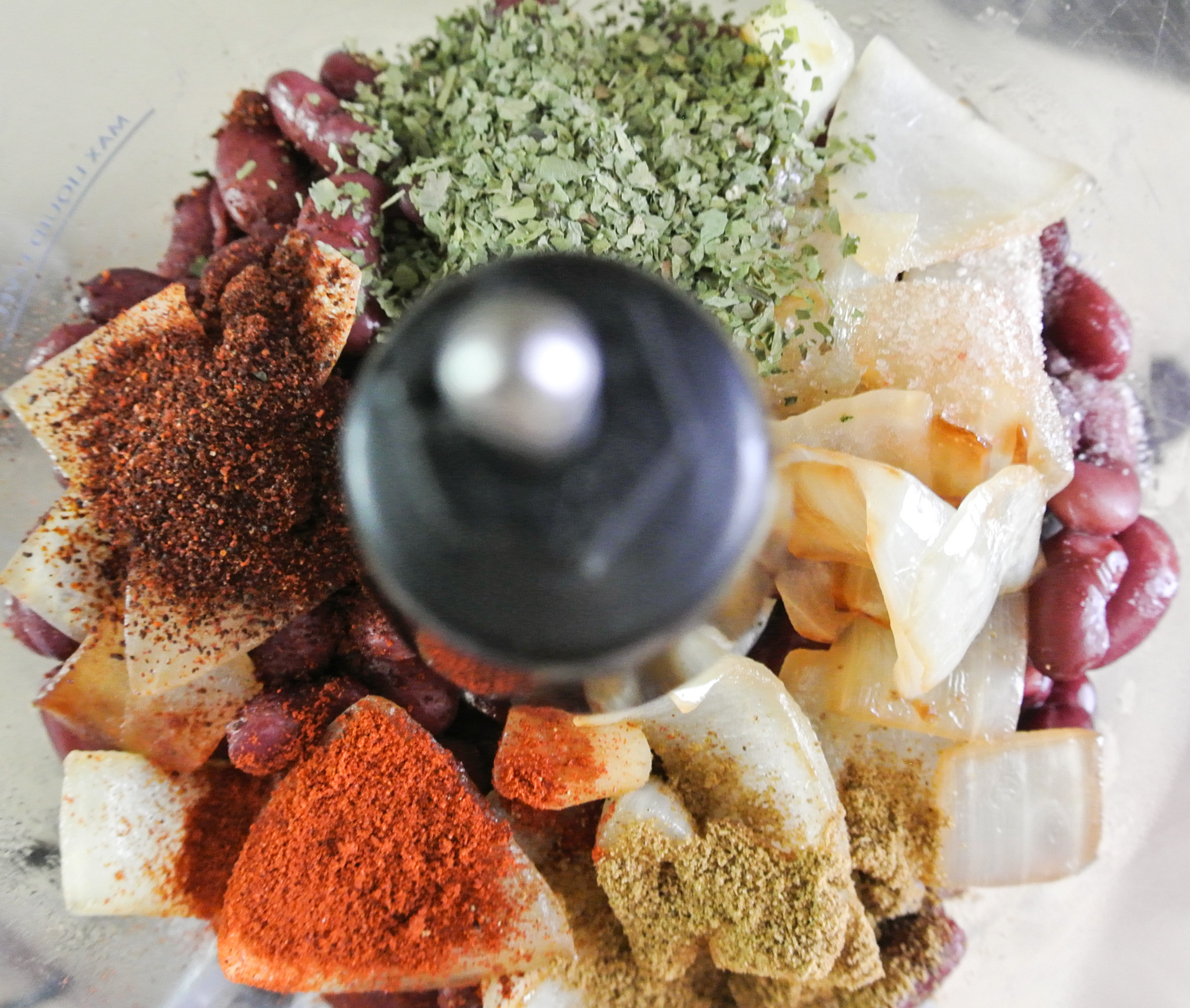
DSC_2332When the veggies are finished, put all ingredients (except the corn and green onions, in today’s rendition) in a food processor and puree until smooth.  Today, I had to repeat this process for the second batch.

DSC_2334

Stir in the corn and garnish with green onions. Chill for an hour and serve as a dip or use as a spread (just like my pesto or creamy dressing formulas).

Store in the fridge for 3-4 days. Hummus has a tendency to dry out and/or thicken the longer it sits. Enjoy!

DSC_2339

Eggplant As You’ve Never Seen It Before

Oh, eggplant. I’m sure I’m not alone in stating that it isn’t my favorite vegetable. Up until recently, I’ve only been able to think of a handful of ways to make it truly delicious and appetizing. One of those methods includes breading and frying it in classic eggplant parmesan. Totally scrumptious, yes, but this popular Italian vegetarian dish contains so many unhealthy components that the benefits of the eggplant practically become negated.

When Nolan was just beyond eating only pureed fruits and veggies and on to soft whole foods, I thought that eggplant would make for a unique sauce. Since I was so used to pureeing it for him anyway, I imagined that flavoring it up and pouring it over pasta would make it more appetizing for me, too.

I’m happy to report that that early kitchen experiment was a success. When I had leftover cashew cream from last week’s potato salad, I got creative in taking my original eggplant pasta sauce up a notch. The addition of the cashew cream provided for a dairy-like richness that reminds me of an alfredo, sans all of those animal products.

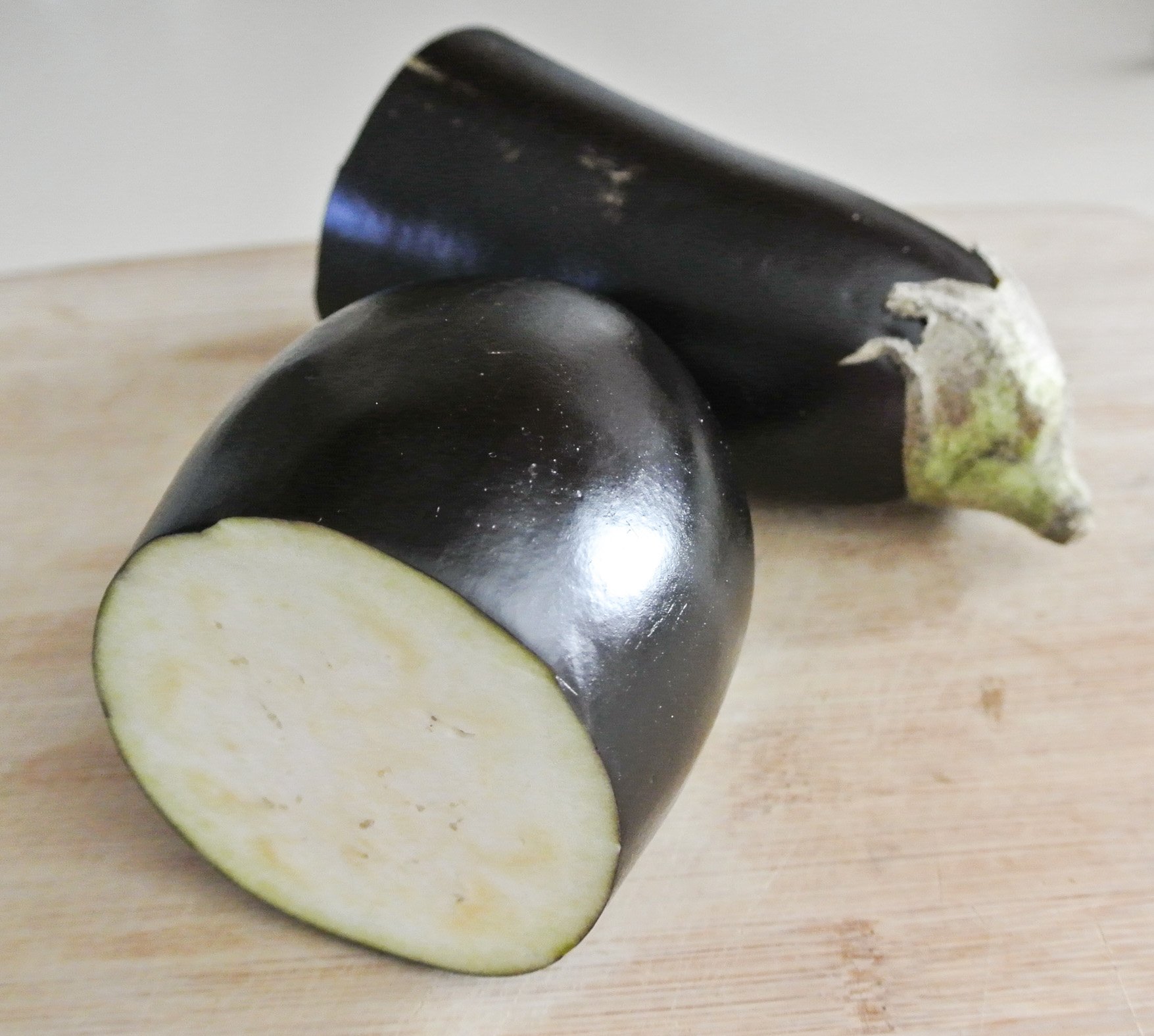
If you, too, are struggling to make the best of the mysterious purple vegetable that, in fact, is nothing like an egg at all, today, you are in luck! While an appealing flavor and texture transformation might be reason enough to make this pasta sauce, the eggplant contains a whole host of health benefits. First, it contains cholorogenic acid, known to prevent healthy cells from mutating into cancer cells and also a key player in lowering bad cholesterol. Secondly, it is low calories, but high in fiber, vitamins, and minerals. Its blandness—like the russet potato—is an ideal blank slate for something like a pasta sauce.

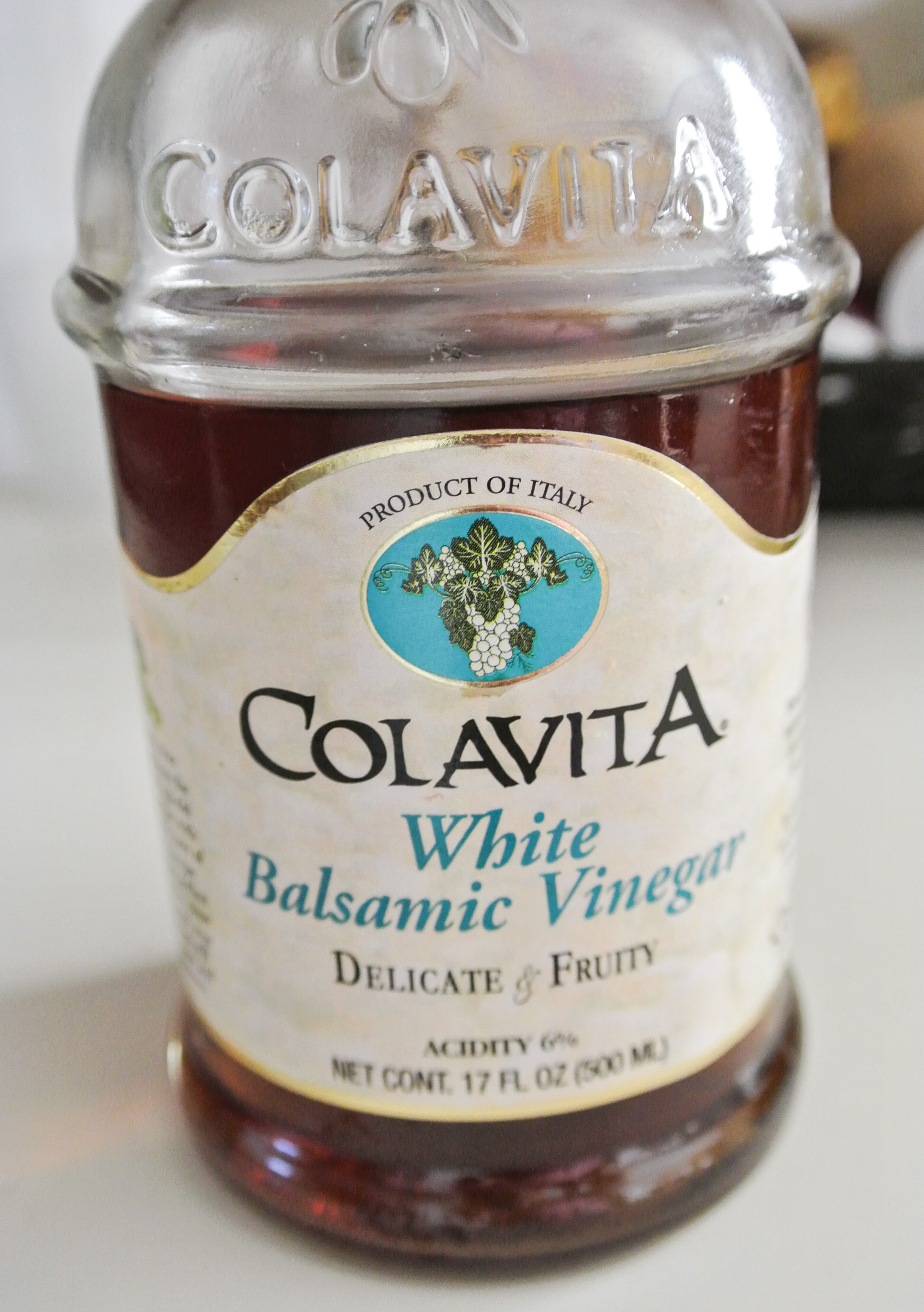
DSC_2323In other news, you’ll see that this formula calls for some type of acid. I have found that just a touch of something acidic really brightens the sauce, resulting in a creamy pasta experience that won’t leave you feeling heavy and bloated. Today, I’m using white balsamic vinegar; white, simply to maintain that alfredo-like, off-white color. Check out my multi-grain salad formula for more info on the health benefits of vinegar and this brand, which is my go-to:

DSC_2325Truthfully, this formula is in its newborn stages and I’m not sure how it would hold up to substituting different vegetables, but I imagine that it’s the cashew cream that brings it together. Point is, if you pureed nearly any cooked vegetable with the cashew cream, I think that you would achieve a similar sauce (in consistency, at least). Try this out with eggplant first and see how it goes with another of your favorites that you have been fruitless in repurposing. Enjoy!

FORMULA BASE: VEGETABLE PASTA SAUCE

Yields sauce for one box of pasta

  • 2 cups coarsely chopped raw vegetables –> I’m using eggplant.
  • ½ cup cashew cream (soak raw cashews overnight, drain, and blend with just enough water to form a thick cream)
  • 2 tbsps nutritional yeast
  • 1 tbsp acid (i.e. vinegar, mustard, citrus juice, etc.) –> I’m using white balsamic vinegar.
  • ¼-1 tsp seasoning (i.e. fresh/dried herbs, spices, etc.) –> I’m using ¼ tsp ground nutmeg.
  • Pink Himalayan sea salt and fresh ground pepper to taste –> I’m using approximately ½ tsp salt and several turns of pepper.

Peel (if necessary) and chop your vegetables. Steam, roast, or boil (I’m steaming) to cook. The Baby Bullet Steamer: not just for baby food! 🙂

DSC_2324While your vegetables are cooking, bring a pot of water to a boil and prepare your pasta of choice. When the vegetables are finished, combine with all other ingredients (except the pasta, of course!) in a blender and puree until smooth and creamy.

DSC_2326

Pour atop your pasta (or use in another application) and enjoy immediately for most desirable consistency. It will keep just fine in the fridge, but will dry out a bit.

DSC_2327

If You Like Piña Coladas…

This post and the next will feature creative uses for leftovers. Truthfully, we don’t often have leftovers of anything in our house—plant eaters consume a lot—but there are occasionally quantities remaining of something we used for a specific, measured application. Today, I’m using leftover coconut whipped cream from my pistachio nice cream sundaes.

If you know me—or at least if you read about my curry formula—you know that I don’t like coconut. Not the flavor, not the texture, not the scent. Well, pregnancy does weird things to a girl and right now, I can say that I have a small affinity for this tropical fruit. I’m not running out to the store to gobble up all things coconut, but I have enjoyed a few coconut macaroons and couldn’t believe that I voluntarily topped my pistachio nice cream with coconut whipped cream the other day and enjoyed it! (I made it for my husband and son and just thought I would give it a try. Unexpected yumminess!)

Because I don’t typically like coconut, I would never order a piña colada. Pineapple, coconut, and rum are the primary flavors in this classic cocktail; two out of three are okay by me, but I find that when you don’t like something, it’s all you can taste. Given my newfound—albeit, possibly temporary—appreciation for coconut, I all of a sudden knew what I wanted to make with my leftover coconut whipped cream: piña colada dessert smoothies (virgin, of course)!

Despite being high in saturated fat (consume sparingly), coconut cream has many health benefits that might help you to justify the occasional splurge. This decadent plant-based treat is high in fiber, vitamins B, C, and E, and many essential minerals. You can add it to your favorite recipe right from the can or beat it and store in the fridge for several weeks. Days after whipping up a batch, I was amazed to see my coconut cream even fluffier than it was on the first day!

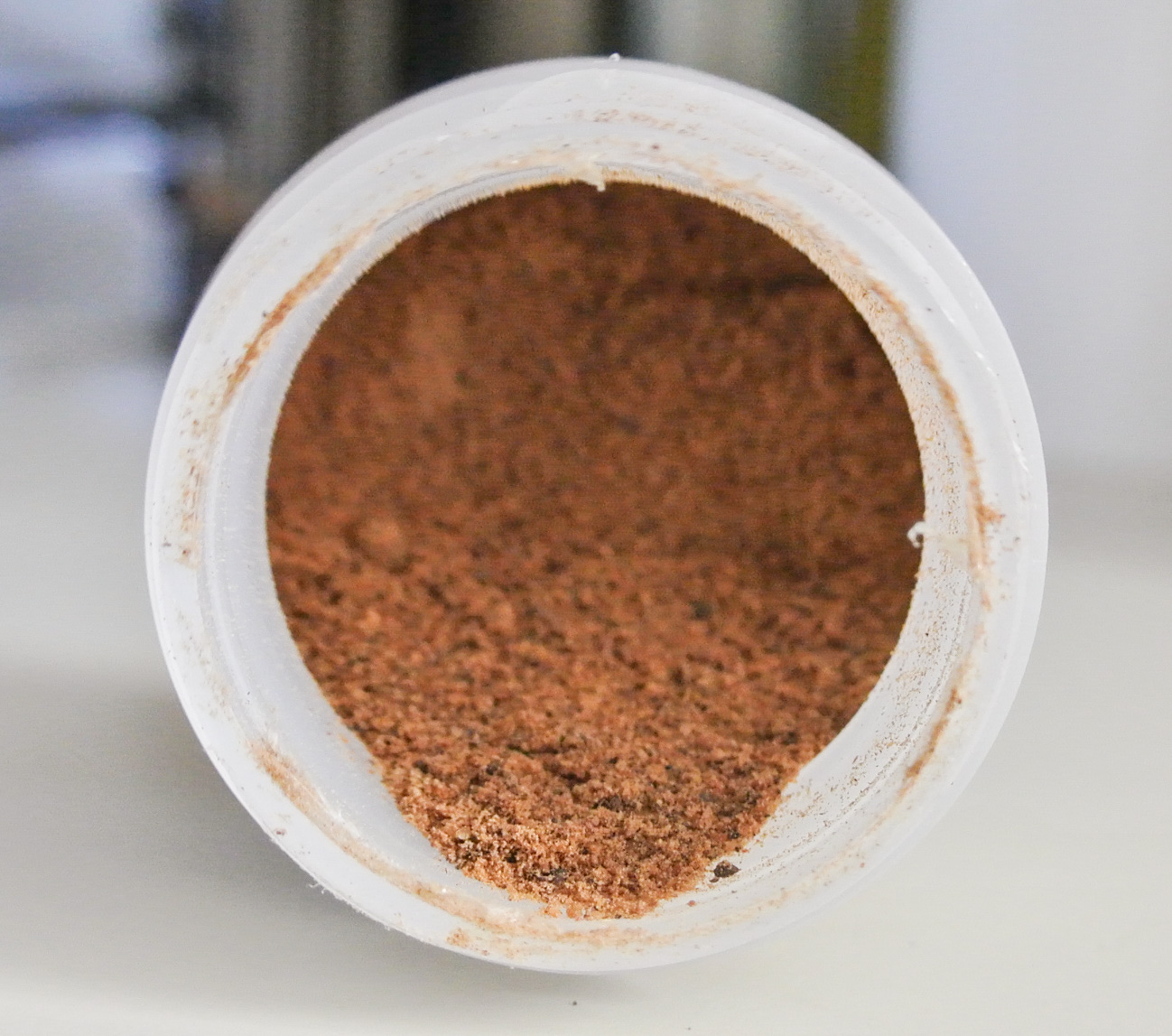
Fluffiness, of course, isn’t really important when it will be blended up in a smoothie, but I still found it pleasantly surprising. Another pleasant flavor component in the traditional piña colada is a garnish of ground nutmeg, which I am also using to top today’s smoothie. Nutmeg is high in fiber, copper, and manganese and has a truly unique flavor. I once heard Rachael Ray describe this wonder seed as that ingredient that makes your taste buds go “Hmmmmm.” It is even tastier freshly ground.

DSC_2317While I’m definitely missing the rum (and the wine and the beer and…), I’m happy to cool off with a piña colada that my whole family can enjoy!

FORMULA BASE: DESSERT SMOOTHIE

Serves 2-3

  • 2 frozen bananas (or fresh bananas and ice)
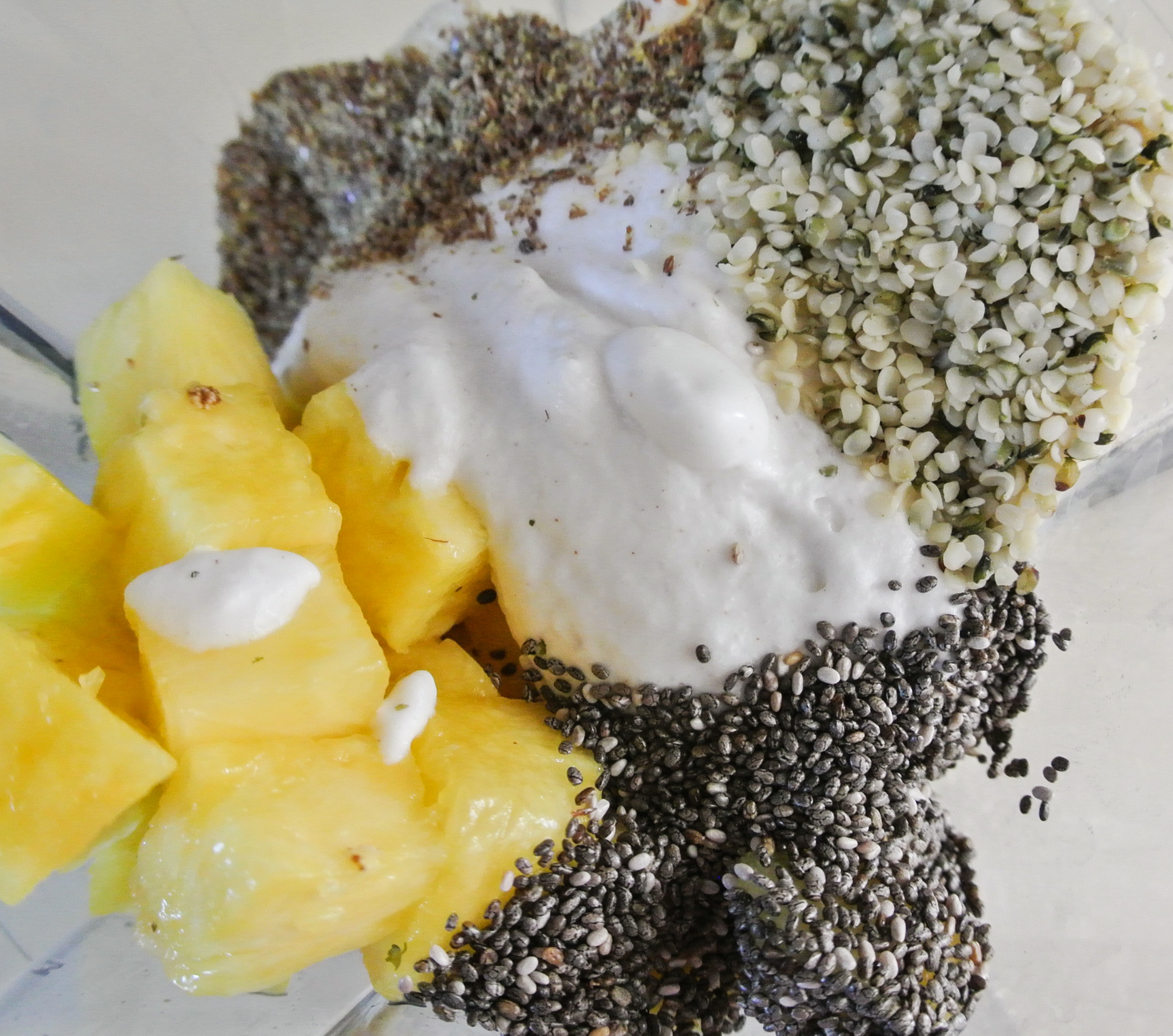
  • ½-1 cup specialty ingredients –> I’m using ½ cup diced pineapple and ½ cup coconut whipped* cream.
  • 1 tbsp chia seeds
  • 1 tbsp ground flax seeds
  • 1 tbsp hulled hemp seeds
  • ¼-½ tsp extract of choice (optional, and amount depends on flavor intensity) –> I’m using ¼ tsp almond.
  • Pitted medjool dates as needed for sweetness –> I’m not using any as my whipped cream is already sweetened. I probably would if it weren’t.
  • Juice or plant milk until desired consistency (start with 2 oz) –> I’m using almond.
  • SPECIAL ADDITIONAL: Nutmeg for topping

*You could just use coconut cream that has not yet been prepared as whipped cream. Remember, I’m trying to use leftovers.  🙂

Blend all ingredients until smooth. Top with more whipped cream and a sprinkle of ground nutmeg.

DSC_2318 DSC_2321