Is Your Spaghetti Missing Its Meatballs?

DSC_1857

I have met many vegetarians/vegans over the last few years. Although they can be categorized in a number of ways, when it comes to meat, I see only one: those that do not like the flavors and textures of meat and those that do, but don’t eat it for health and/or ethical reasons. Today, I’m offering a homemade meat substitute for those like me that did actually enjoy meat, but couldn’t bring themselves to eat it any longer.

Is this vegan sausage exactly like its pork, beef, or chicken-based counterpart? No. In my opinion, like vegan diary substitutes, it is different, but equally satisfying. In addition, this recipe is one that you can feel good about since it is not processed and prepackaged with excessive salt, preservatives, and other unnatural additives.

I so wish I could take credit for this Walnut “Sausage” recipe, but it belongs to the amazing Sage Kitchen, which I reviewed last month. Remember the “sausage and mozzarella” pizza I tried from owner Kita Centella’s menu? In reading through an issue of Green Living Magazine, I came across the recipe for that very sausage. It kind of felt like the stars aligned for a second, and as if I needed more proof that plant-based living works for me, that was it. 🙂

I am still working on a meat substitute formula, so for now, this is a stand-alone favorite vegan recipe. I was thrilled to see that the base of SK’s sausage is walnuts, which I don’t particularly enjoy raw unless they are mixed into something else. Although they can sometimes taste a bit bitter, I find ways to incorporate these nuts because they are known to fight and prevent many diseases, can assist in weight control, and contain fiber and omega-3 fatty acids.

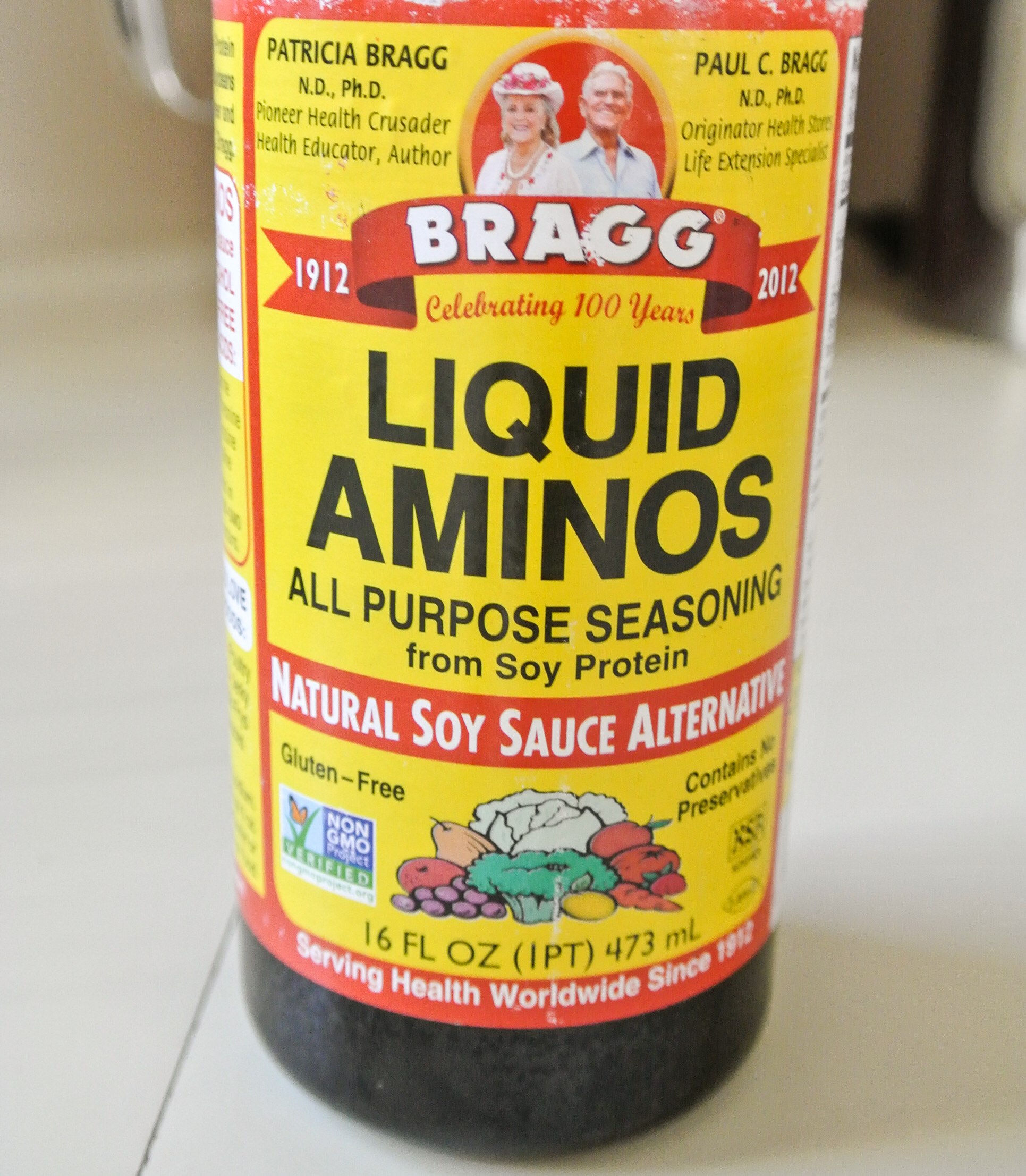
DSC_1837This recipe also contains a number of fresh herbs and spices and a touch of “soy sauce or substitute.” I encourage you to try liquid amino acids as your substitute. My sister Petra, who works for eVitamins and is the author of the expat blog 100 Tacks, got me into these, pictured below. Bragg’s is a combination of soybeans and water, and contains no added salt, genetically modified organisms, or MSG. It is gluten-free and offers sixteen of the twenty amino acids (the building blocks of protein), nine of which cannot be produced in our bodies naturally.
DSC_1841

You will LOVE this sausage recipe! I’ve included the ingredients and directions exactly as published in GL, with a few of my notes alongside. Enjoy!

SAGE KITCHEN’S WALNUT “SAUSAGE”

Ingredients

  • 2 ½ cups walnuts
  • 1 ½ tbsp nutritional yeast flakes (found at specialty markets) –> To learn more about “nooch,” check out my pesto formula!
  • ¼ tbsp soy sauce or substitute –>  I’m using Bragg’s Liquid Aminos.
  • ½ tsp ground flaxseed
  • 1/8 tsp Chakra 4 cayenne powder, 35K –>  Chakra 4 is the brand from the tea shop next to SK.  If you don’t have this brand on hand, you could substitute another.
  • ¼ tsp Chakra 4 ground caraway seed
  • 1 tsp Chakra 4 ground fennel seed
  • 1 ½ tbsp lemon juice
  • ¼ tsp mineral salt –>  I’m using pink Himalayan sea salt.
  • 2 ½ tbsp fresh parsley, minced
  • 1 tbsp fresh thyme, minced
  • ½ tsp fresh oregano, minced
  • ¼ tsp fresh rosemary, minced
  • ½ tbsp. fresh sage, minced

Directions

Place walnuts in food processor and pulse until finely chopped. –>  I followed these directions exactly, but next time, I would process the nuts until they are paste-like.

DSC_1839

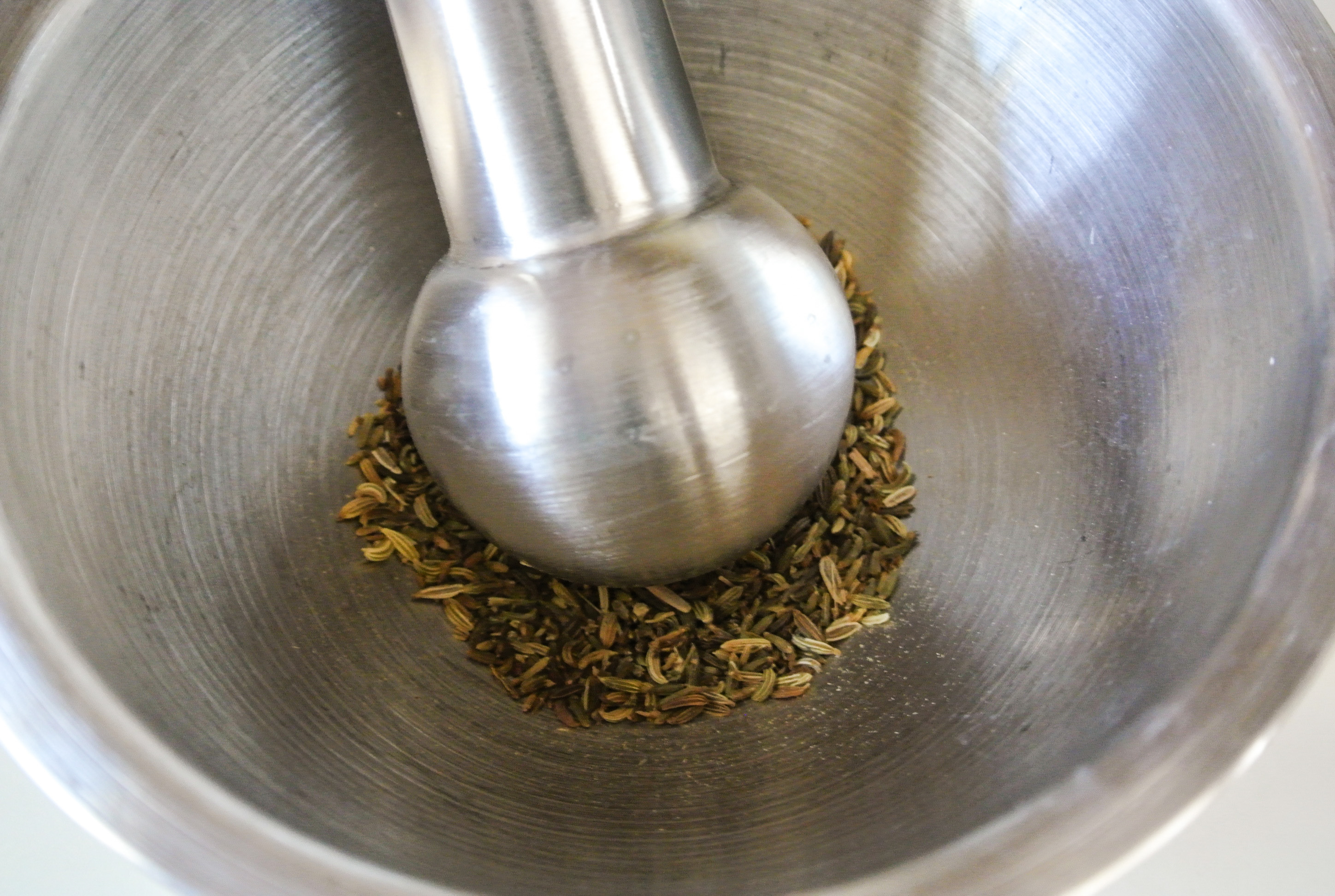
Combine all other ingredients together in a mixing bowl. –>  Use a mortar and pestle to grind down your seeds before adding to the other ingredients.
DSC_1846 DSC_1848

Slowly fold in chopped walnuts until fully incorporated.

For a raw vegan dish, serve this blend fresh.

It can also be heated to serve as crumbles, or formed into “meatballs.” –>  SK served it sliced in discs atop pizza when I tried it.  Look for my pizza formula using this sausage next week.  🙂

Store in refrigerator for up to seven days or freeze for up to six months.

New Formula: Hummus

DSC_1836

I love to browse social media for pictures of what my friends are cookin’ up in the kitchen. While all of my formulas and recipes are originals, I often get inspiration from the culinary creations of others. When it came time to develop a hummus formula, I had one particular image in mind.

A friend of mine from high school posted a picture of a scrumptious vegetarian spread on Facebook a couple of weeks ago. Every dish was mouth-watering, but what really stood out to me was a big bowl of pink hummus, which I read contained beets. This got me thinking about how many different ways hummus can be made unique and delicious.

Hummus is a chickpea-based dip and spread popular in Greek and Middle Eastern cuisines. It is often served as a dip with pita bread, chips, or raw vegetables, or spread in wraps or sandwiches. Hummus is typically made by pureeing cooked chickpeas, lemon juice, and tahini (sesame seed butter). It is an easy dish to make, eat, and bring with if you need quick appetizer for a party or family dinner.

The formula (under Snacks) I’ve developed works with any cooked beans or lentils. You can keep it traditional and simple, or add extras like fresh herbs or vegetables, as was the case with my friend’s beet hummus. I’ve found that a bean/lentil base is what gives hummus its creamy, dip-able texture; any other ingredients you select will blend right in.

As noted in my post about what I consume in a typical day, I try to eat most of my vegetables raw, but I really believe that hummus made with their addition calls for the cooked variety. They puree more smoothly and have a richer flavor, which is essential for competing with beans/lentils, which can be pretty blandly overpowering. Consider some of these alternatives to traditional hummus:

  • Lentil hummus with curry
  • Black bean hummus with lime and cilantro
  • Pinto bean hummus with roasted red peppers
  • Edamame hummus with miso
  • Chickpea hummus with roasted tomatoes

The list goes on…

Today, I’m taking a stab at the beet hummus that caught my eye a few weeks back. As if simplicity and yumminess were not enough, consider the protein power of beans. A question that I am often asked as an almost-vegan is “Where do you get your protein?” These answer is simple: from beans, lentils, nuts, seeds, whole grains, and of course, fruits and vegetables.

Beans in particular:

  • Are high in soluble protein, which can lower cholesterol (high cholesterol is why I adopted plant-based living to start with…see my bio).
  • Contain no cholesterol – woo!
  • Are packed with protein, approximately 7 grams per ½ cup.
  • Can prevent constipation.
  • Are gluten-free diet friendly.
  • Are a source of complex carbohydrates that keep you fuller longer.
  • Are inexpensive, especially compared with other protein sources.
  • Are a powerhouse of vitamins, minerals, and antioxidants.
  • Are super versatile (see my bean salad, chili, and curry formulas to glean ideas).

So, get dippin’…for your health! 🙂

FORMULA BASE: HUMMUS

  • 2 cups cooked beans or lentils –>  I’m using chickpeas.
  • 2 cups cooked vegetables and/or raw herbs (or more beans and lentils, if you want to keep it simple) –>  I’m using 1 ½ cups steamed beets and ½ cup fresh parsley.
  • Approximately 1 tbsp oil, if including roasted vegetables –>  I’m steaming, so I don’t need oil in this case.
  • 2-4 cloves raw or roasted garlic –>  I’m using two raw cloves.
  • ¼-½ cup citrus juice –>  I’m using the juice of one large lemon.
  • 1 tbsp tahini (optional) –>  I’m not using it for this particular recipe.
  • Spices, salt, and pepper to taste –>  I’m using ¾ tsp onion powder, ½ tsp pink Himalayan sea salt, and two turns of fresh cracked black pepper.
  • Liquid (water, oil, vegetable stock, vinegar, or more citrus juice) as needed until desired consistency is achieved –>  I’m using about ¼ cup homemade vegetable stock.

If using, peel if necessary and coarsely chop your vegetables. Decide on a cooking method that works best for the particular vegetable(s) you’re using and have at it. (Steaming will maintain the most nutrients of any cooking method.) I’m steaming my beets in the Baby Bullet steamer that I purchased when Nolan was first born. I knew it would come in handy for more than just baby food! 🙂

DSC_1828When the veggies are finished, put all ingredients in a food processor and puree until smooth. Chill for an hour and serve as a dip or use as a spread (just like my pesto formula).

DSC_1830

Here, I have mine accompanied by some of my favorite bean-based chips (which I can’t wait to try making myself someday).

DSC_1834 Store in the fridge for 3-4 days. Hummus has a tendency to dry out and/or thicken the longer it sits. Enjoy!

Bountiful Baskets

DSC_1815

Plant-based living, in general, is not cheap. While I am still coming out ahead of my omnivorous days, no longer purchasing sirloins and brie, to eat high quality, fresh, organic “real food” can still be costly. Consuming sometimes twenty different fruits and vegetables in a day requires real diligence in seeking out the best prices for produce (as well as whole grains, beans, lentils, nuts, and seeds).

Travis’s parents introduced us to a farmers’ co-op called Bountiful Baskets. I’ve mentioned BB before, but today, plan to go into a bit further detail about what a value it really is.

DSC_1823

Each week, the sale opens online on Monday and closes on Tuesday for pickup on Saturday. Popular items—like the organic fruit and vegetable basket—sell out quickly, so you have to be on your game. We head over to the BB website to place our order. You have a choice between a regular basket ($15) or organic ($25), plus extra add-ons like whole grain bread, tortillas, granola, and bulk produce. These add-ons change each week, as do the contents of the baskets. You can count on a 50/50 mix of fruits and vegetables, but the rest is a surprise.

I love the surprise element of the basket because every once in a while, it contains a fruit or vegetable that I have never heard of before or at the very least, never eaten or prepared myself. This challenges me to research typical preparations and uses, as well as flavor and nutrition information. This week, there is nothing out of the ordinary, but I am elated to see beets in the organic basket…stay tuned for a beet hummus recipe that you just have to try. 🙂

DSC_1818

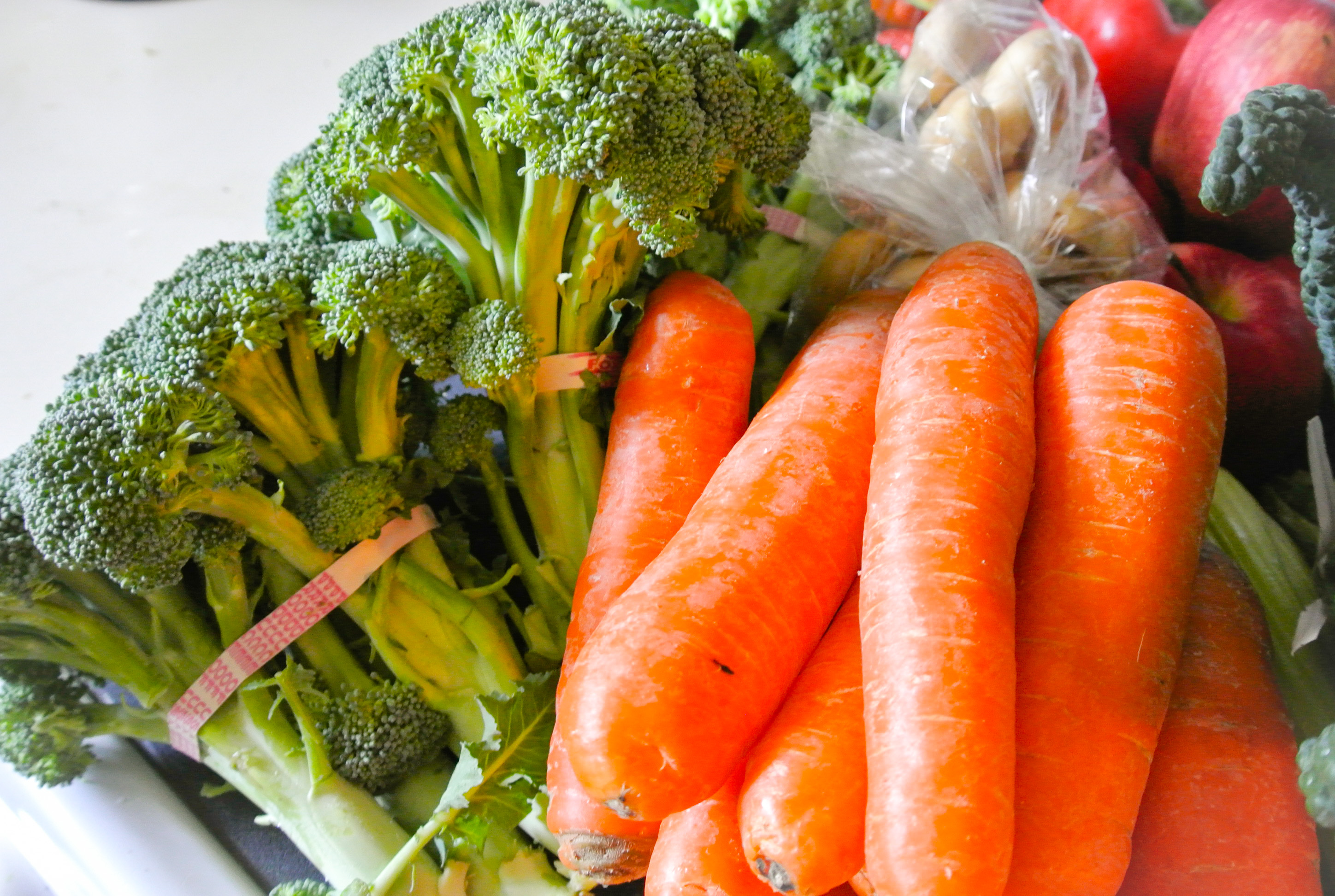
Anyway, the add-ons that we selected this week were pineapples (twenty-one pounds, to be exact) and what the BB website called a “Freezer Pack.” The FP contained a large quantity of broccoli, carrots, and asparagus. We are keeping half of these vegetables and two of the eight pineapples fresh in the fridge and chopping the rest to go in the freezer. Below, you can see that we filled one-gallon food storage bags with chopped vegetables that will be ready to dump into a pot of vegetable stock for a quick soup. The pineapple chunks, since they will inevitably freeze into one solid unit, are in smaller baggies, the perfect size for smoothies.

DSC_1826

DSC_1824

When add-ons like these—or similar bulk deals in the supermarket—come along, we always stock up and get creative. A couple of months ago, for example, we paid BB an extra $20 for twenty-five pounds of organic tomatoes which we promptly turned into homemade marinara sauce. This was frozen in food storage containers in perfect portions to accompany a box of pasta (or the equivalent in fresh eggless pasta). Today, we are cracking into the last one.

Living a plant-based lifestyle, for us, is still cheaper than being omnivores, in part because we seek out deals and find creative ways to preserve produce that we have stocked up on. Many of the deals come with the seasons and holidays. I don’t often purchase pecans and walnuts, for instance, because they are among the more expensive nuts, but my farmers’ market had longstanding sales on these around Thanksgiving and Christmas, at which point I bought a whole bunch that lasted us for months.
In addition, since we don’t buy prepackaged frozen food, our freezer typically always has room to store produce that we have peeled, chopped, or otherwise prepared ourselves. We freeze fruits and vegetables in convenient portions for the anticipated future application. This forethought comes in especially handy when it looks like there is “nothing to eat” and then I open the freezer and remember that I have soup-in-a-bag ready to go.
The photos in this post display $57 worth of produce, most of which is organic. The fresh produce will last us a week or two, but the frozen weeks or months beyond that. The fact that this is a smokin’ deal not enough for you? The extra produce and forgotten pickups are donated to local fire stations. 🙂 See if you can find a farmers’ co-op program in your area!

DSC_1817

New Formula: Pesto

DSC_1811

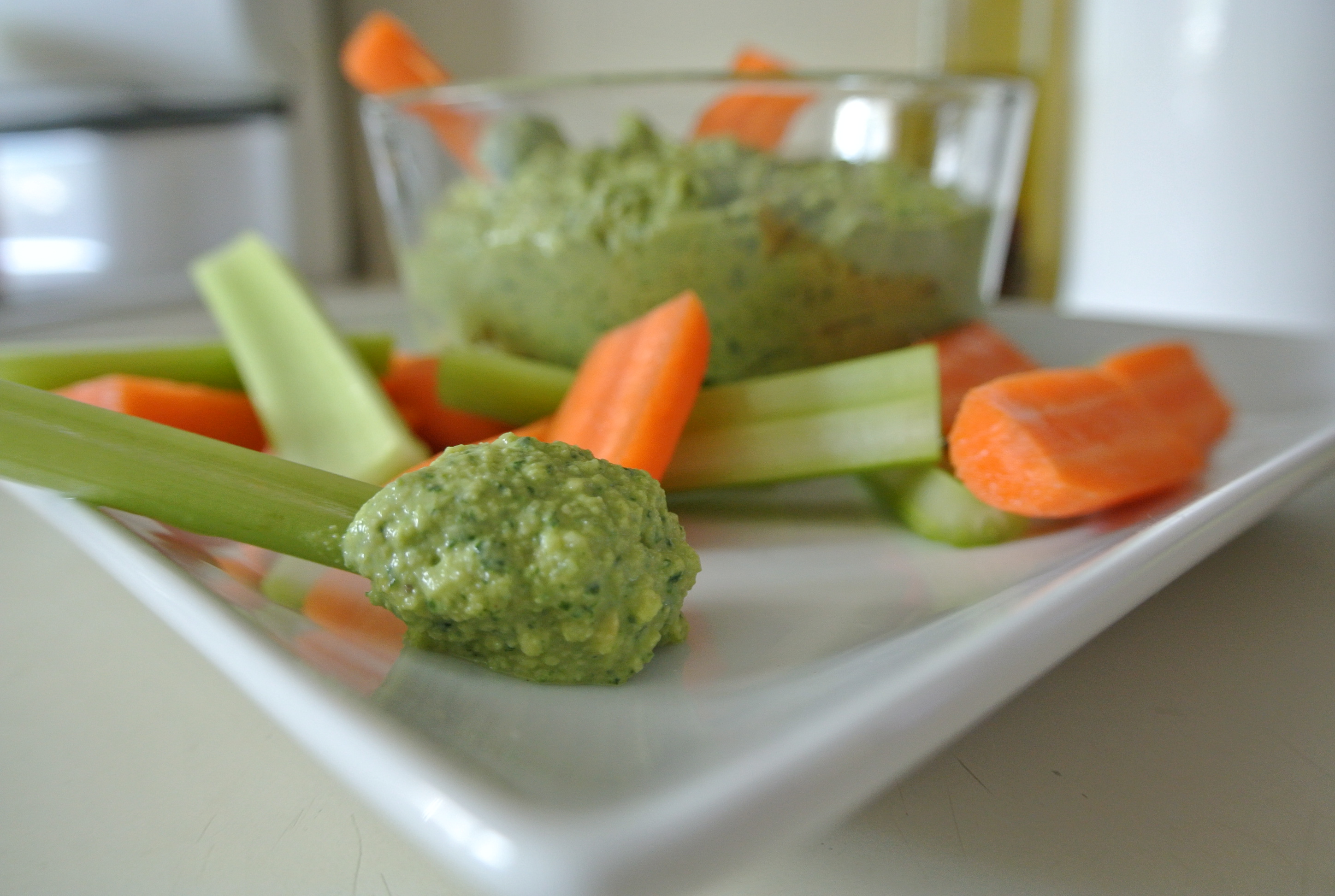
Pesto is easy to make and super flavorful. While it is quite commonly a sauce for pasta dishes, it can also be used as a spread for sandwiches and wraps or a dip or marinade for vegetables. Depending on the application, pesto may be best used immediately as it will change in consistency once it goes into the fridge. This is a result of the oil within solidifying. If you’re looking for the pesto to be “pourable,” use it right away. Otherwise, it can easily keep in the fridge for up to a week.

There are endless combinations that make pesto delicious and versatile. The flavor depends largely on the herbs selected. Thus, I believe that pesto follows a basic formula and although often made with cheese, I’ve found a way to make it “cheesy” and vegan at the same time.

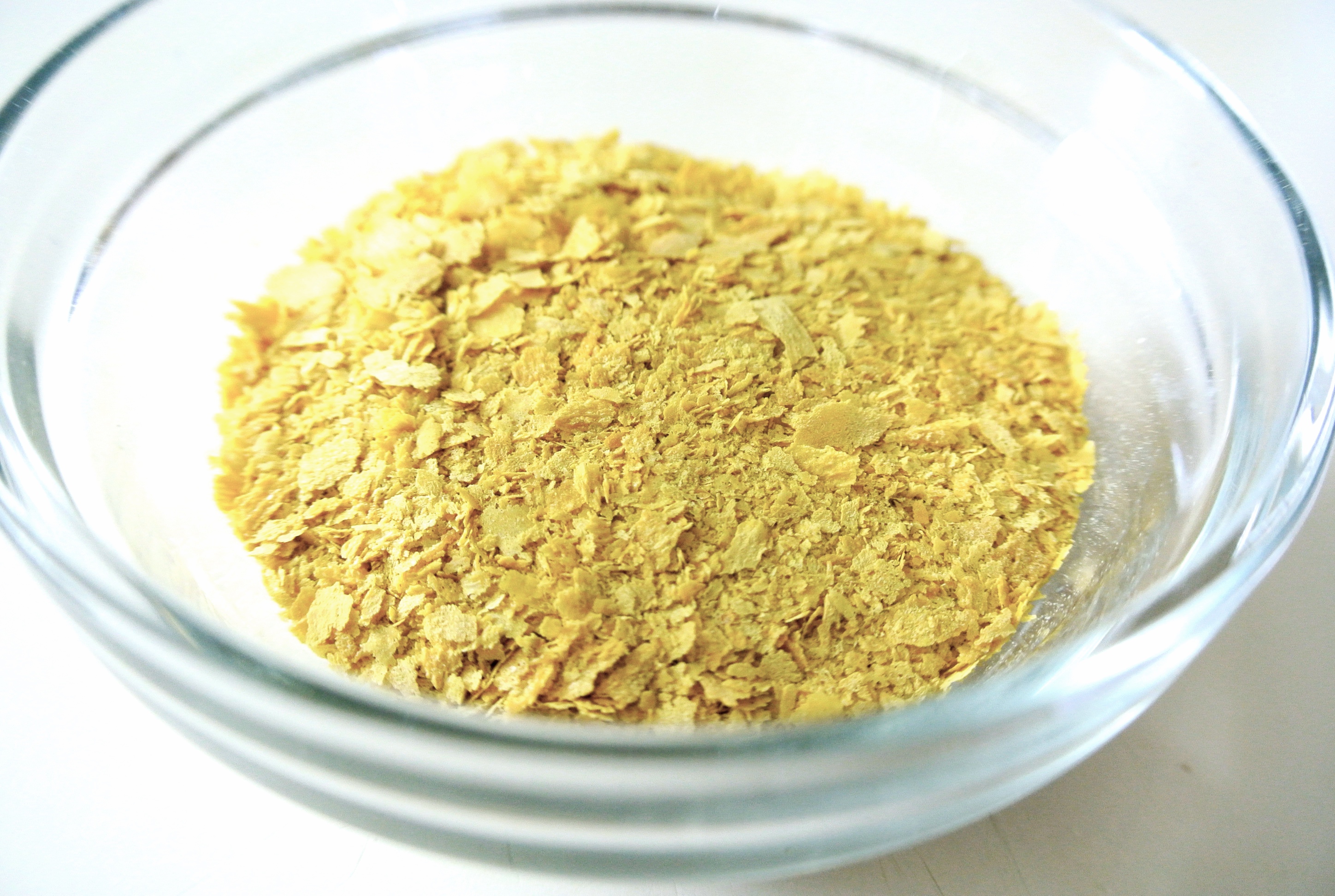
DSC_1806 The “cheesiness” comes from a couple of places. First of all, some nuts have flavors that mimic the nutty quality of cheeses like parmesan. My favorite parm substitute is cashews, which I grind finely and sprinkle on top of pasta often. The other cheesy element to this pesto is nutritional yeast, also known as “nooch.”

DSC_1808 Ummm…what is nooch (pictured above)?! Originally named “nutritional yeast,” it is a member of the fungi family and not the same as say, brewer’s yeast or baking yeast. This strain of yeast has a cheesy, nutty taste and adds a lot of flavor to dishes in small amounts. Most importantly, it is called nutritional yeast for a reason. Nooch is loaded with B-vitamins, protein, zinc, folic acid, and selenium. To sweeten the deal, some brands specifically contain the highly sought out vitamin B12.

Be creative in experimenting with my pesto formula. You could make a cilantro version to spread inside burritos or tacos, a basil version for Italian cooking, or even a mint version to use with falafel. The possibilities are endless. Enjoy!

FORMULA BASE: PESTO

Makes about 1 ¾ cups 

  • 1 ½ cups fresh herbs –> I’m using 1 cup parsley and ½ cup basil.
  • 1 cup raw nuts –> I’m using cashews
  • 1/3 cup nutritional yeast
  • 5 cloves raw garlic
  • ½ cup citrus juice –> I’m using the juice of two lemons.
  • Additional spices (optional) –> I’m using 1 tsp onion powder.
  • Water/oil as needed for smoothness –> I’m going for a thicker dip/spread, so I won’t need any extra liquid today.

Combine all ingredients in a food processor and blend until smooth, adding water and/or oil as needed. The less oil used, the lower in fat the end product will be. 🙂 So flavorful, this pesto doesn’t even need salt!

DSC_1810

Nothin’ Like the Smell of Freshly Baked Bread!

DSC_1804

I love bread (who doesn’t?!) and I insist on the absolute best if I’m going to buy it premade. I’m talking whole grain, organic, all natural, no preservatives, and loaded with extras like seeds and nuts. When it comes to bread, high quality will cost you; my favorite pre-made bread is $7.00 a loaf. Between me, Travis, and Nolan, that bread could easily disappear in less than five days.

I’m a big proponent of DIY and prefer, when I have the time, to go the extra mile and make food items from scratch that I could easily buy in the store. Travis and I have made our own plant milk, pasta dough, extracts, beer, wine…and the list goes on! I had been making quick breads for years, but knew when the price of my favorite pre-made yeast bread went up again that I had to learn how to make it myself.

Making yeast bread, I found, it actually quite simple, but time-consuming. Thankfully, most of the time is spent waiting for the dough to rise, so I take the opportunity to do a short workout, clean the house, or do some more cooking during this time period. The best part? I can make my own bread, meeting all of the above criteria and loaded with extras, for about ONE THIRD of the price of my favorite $7.00 loaf!

Is yeast bread vegan? Yes, it is. It’s true that the yeast is “alive” when you go to make the bread, but it is a simple organism, incapable of pain, emotions, or thought, just like plants. At one point, the bananas on your counter and kale in your fridge were living, growing organisms as well. It is impossible to avoid eating something that was once living and any moral dilemma you may face with yeast certainly barely compares to that that you might experience with cows, pigs, birds, and fish. 🙂

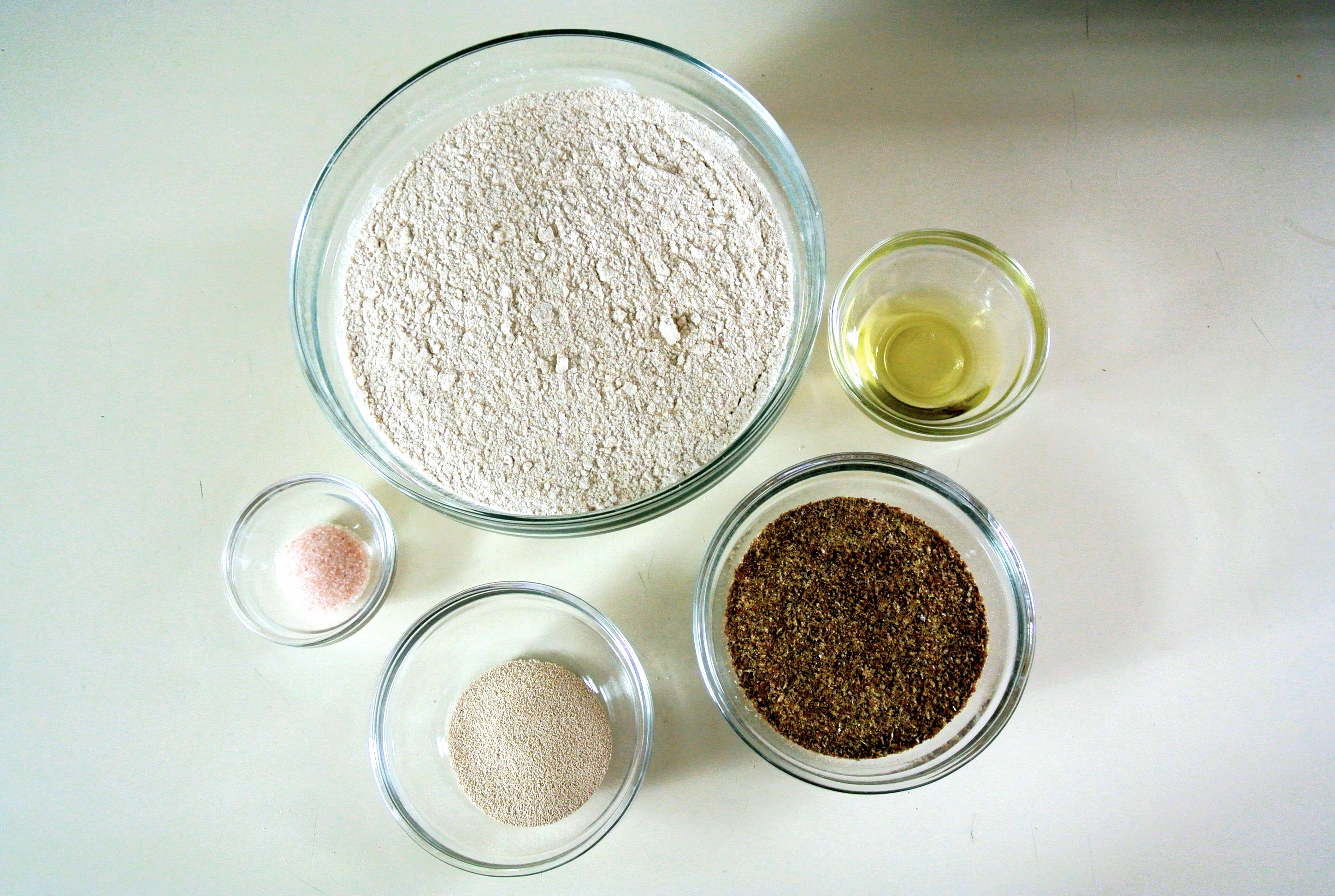
Let’s talk a little bit about some of the ingredients I’m using today, pictured below.

DSC_1781

SPELT FLOUR: Although I am a fan of whole wheat flour, spelt flour is even richer in vitamins and minerals, and more flavorful.

PINK HIMALAYAN SEA SALT: HSS is naturally high in iodine, among over eighty other vitamins and minerals, including iron. It contains less sodium per serving than iodized white table salt. I don’t use a lot of salt in my cooking in general, but I’ve made this bread with and without and it just doesn’t taste the same without.

YEAST: I use rapid rise yeast. It does the same job as active dry, but faster.

GROUND FLAXSEED: Flaxseed is a super food high in Omega-3 fatty acids, lignans, and fiber, and may even reduce the risk of major diseases like cancer and diabetes. NOTE: You must eat flaxseed ground in order to reap its nutritional benefits.

AVOCADO OIL: Avocado oil is high in vitamin E and potassium and contains more protein than any other fruit. It can lower blood pressure and increase absorption of carotenoids from other fruits and vegetables.

Like my other fresh formulas, I’m using what I have available on hand. You can substitute any flour or oil you have in your pantry. Enjoy!

FORMULA BASE: YEAST BREAD

Makes 1 standard size loaf

  • 3-4 cups of flour, plus more for dusting your workspace –> I’m using 2 ½ cups spelt and filling in as necessary with whole wheat.
  • ¼ cup ground flaxseed
  • ½ tsp salt –> I’m using pink Himalayan sea salt.
  • 1 packet rapid rise yeast
  • 1 tbsp oil –> I’m using avocado.
  • 1 ¾ cups very warm water (hot, but touchable)
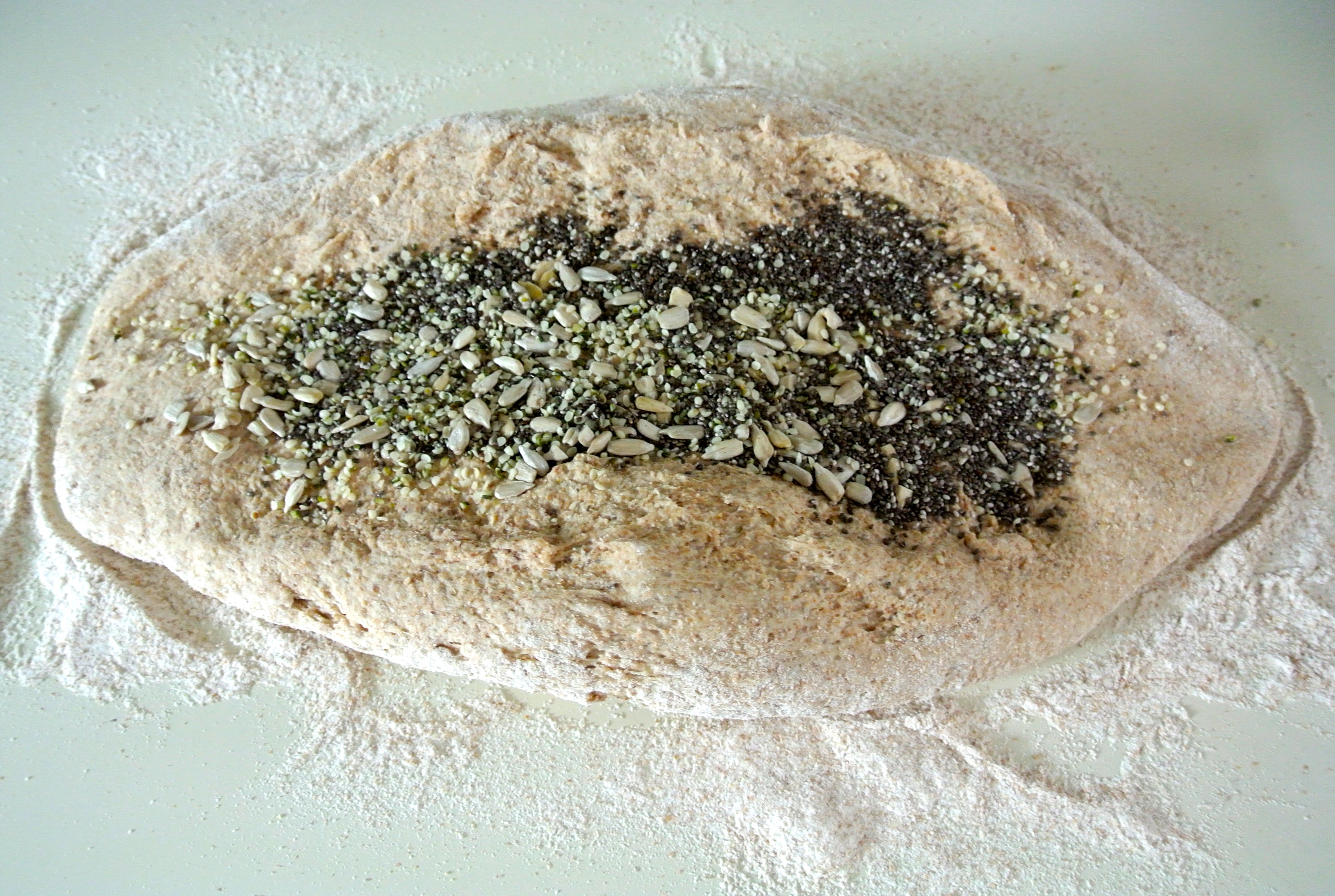
  • Up to ½ cup specialty ingredients (optional) –> I’m using equal parts chia seeds, hemp seeds, and raw sunflower seeds.

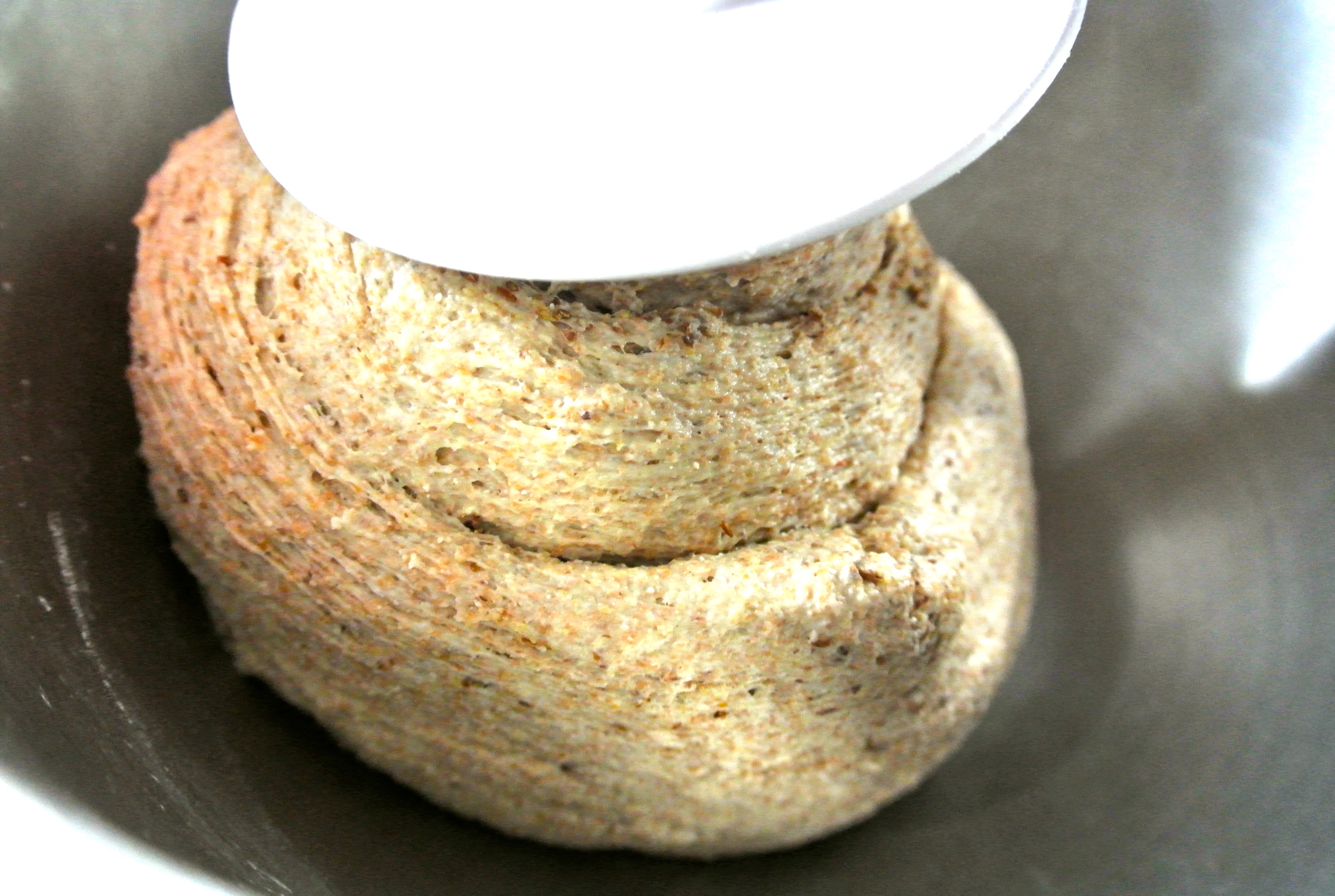
Attach a dough hook to your stand mixer (you can make the bread entirely by hand, but it will be a little workout!).

DSC_1780 Thoroughly clean and dry your countertop and sprinkle with flour.

DSC_1784 Have any specialty ingredients of choice nearby to eventually knead into your bread dough. Lightly oil a large bowl and a loaf pan.

Combine 3 cups of flour, salt, and yeast in the mixer on low. Add any additional spices or sweeteners, if using. Add the water and oil to the dry ingredients and scrape down the sides of the mixing bowl before starting the mixer. Start on low speed and increase the speed as the dry ingredients become incorporated into the wet.

Add all of the flaxseed and then, additional flour gradually until your dough forms a minimally sticky ball on high speed. I can tell that the dough is ready for kneading if it is still somewhat sticky to the touch, but does not stick to the mixing bowl itself when whipping around on a high speed.

DSC_1792 Flour your hands, remove the dough, and place the dough onto your floured countertop.

Knead the dough, adding small amounts of flour as necessary, until it makes a smooth ball. If you are adding ingredients like dried fruit or seeds, stretch the dough open 3 times throughout the kneading process to sprinkle in ingredients before folding over the dough and kneading again.

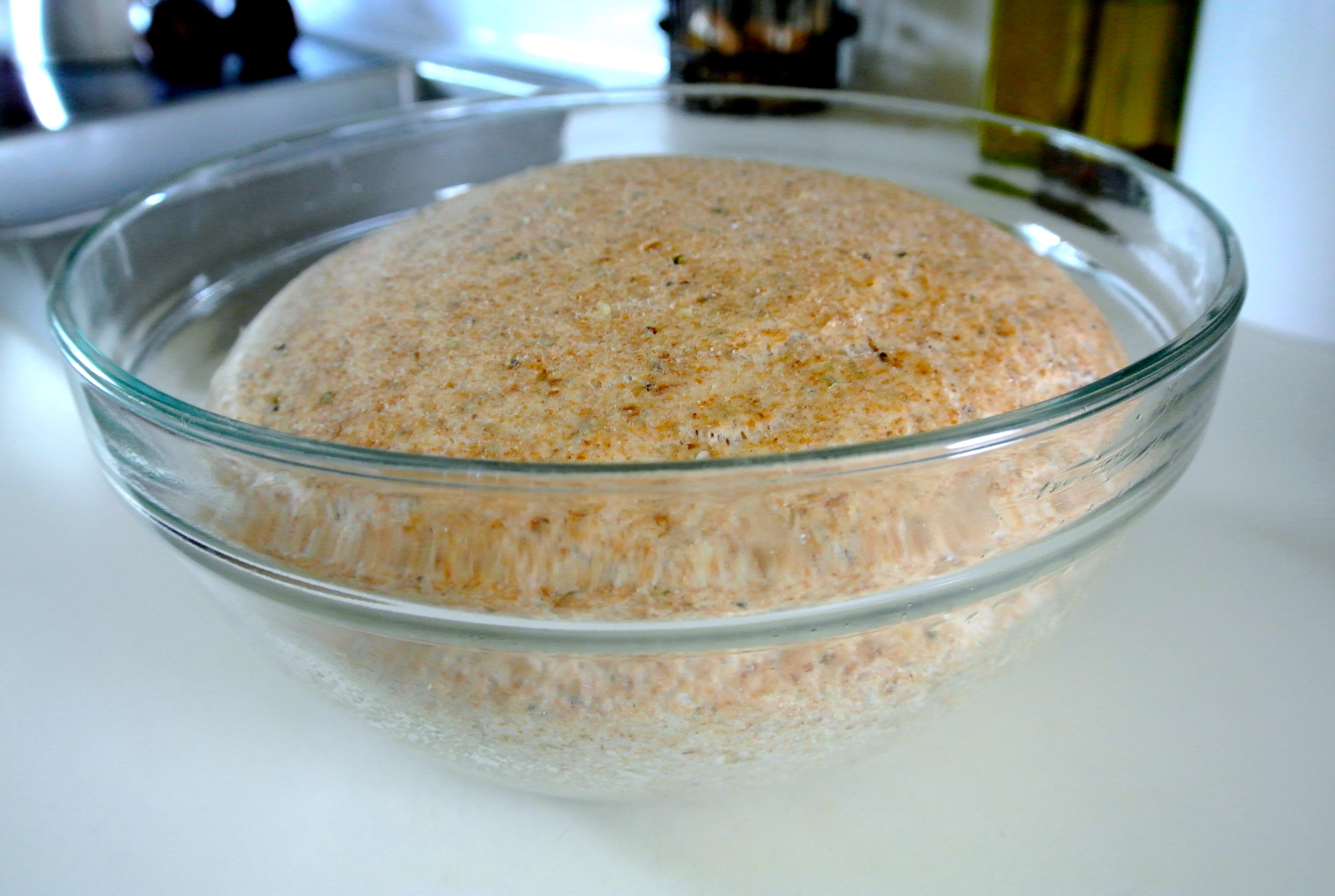
DSC_1793 Knead for 5-7 minutes total and then place the ball into your oiled bowl. Cover with a clean towel and let it rise in a warm place for 45 minutes.

DSC_1794 DSC_1795 After 45 minutes, punch down the dough, reform into a loaf shape, and transfer it into your oiled loaf pan.

DSC_1798 Cover the dough and preheat your oven to 400 degrees. In the time that it takes the oven to preheat, your dough will rise again and then be ready for baking. Bake for 35 minutes. The bread should come out of the loaf pan fairly easily and onto a wire rack to cool.

DSC_1800

The Answer to a Popular Question: What Do You Eat?

DSC_1752

If you’re a vegetarian or even more “extreme,” a vegan, you’ve probably had omnivores ask you questions like these: If you don’t eat meat or cheese, what do you eat? Wait, no eggs either? What’s left to eat? Before I knew what I know about plant-based living, I may have behaved just as incredulously. So, I think it would be helpful to spend a day in the life of a mostly-vegan to see exactly what I eat…and it’s a lot!

As you know, I very occasionally splurge on an item of my former omnivorous diet, be it a bowl of macaroni and cheese (of COURSE that’s what I craved when I was pregnant!) or baklava dripping with honey. On the regular, however, thanks to my getting-better-everyday discipline, these splurges don’t occur. Travis and I pretty strictly refrain from purchasing any animal products for our kitchen. At home, we eat totally vegan, 99% of the time. As I explained in my bio, animal products typically only make their way into our lifestyle when we are out and about, if then.

Parents may also be wondering what my two-year-old eats on a day-to-day basis. As you learned in my post about his second birthday party, he basically eats like we do, although is a little less adventurous with raw vegetables at this stage of the game. Here’s a sample of what I eat in a given day (this list is not exhaustive):

  • Breakfast: unsweetened green tea* and raw fruit:
  • Snacks (2-3 daily): more unsweetened green tea with one or more of the following:
    • raw nuts or seeds
    • dried or raw fruit/veggies
    • homemade trail mix
    • dark chocolate
    • popcorn –> popped on the stove from bulk seeds
    • rice cake with or without nut butter
    • homemade graham crackers
    • homemade hummus with raw veggies, pita bread, etc.
    • super food muffin
  • Lunch: more unsweetened green tea with salad, as is, wrapped in a tortilla, or sandwiched between slices of homemade bread:
  • Dinner: another salad or a cooked or partially cooked plant-based meal:
    • veggie curry
    • chili
    • soup/stew
    • veggie burgers
    • pasta
    • homemade cheese-less pizza
    • veggie stir fry
    • roasted vegetables
  • **Dessert: raw fruit, dark chocolate, or homemade vegan dessert (e.g. cookies, brownies, etc.)

*I drink 3-4 cups of unsweetened green tea daily. I’m sure you’ve heard greatness about this superfood, but just in case you haven’t, you should know that it is jam-packed with antioxidants, has healing properties, and can even help you to lose weight.

**On a regular basis, I don’t eat a traditional dessert like cookies or brownies…not because I don’t like them, just because I can’t always make a dessert as healthy I can a square meal or snack. If I do have a craving for something sweet, I make it myself and you guessed it: it’s vegan and made with smart substitutes (i.e. whole wheat flour and flax seeds for white flour, maple syrup for white granulated sugar, etc.). I will very often, however, have more raw fruit and/or dark chocolate near the end of the day.

DSC_1779

This typical menu may look like a lot or a little bit of food to you. As I’ve mentioned before, because I am eating mostly raw fruits and veggies and whole grains, I can basically eat as much as I want. When I eat a salad, for example, it is often the size of a large mixing bowl, just to give you an idea. The energy level I maintain is such that I am hungry more often and am burning a lot of calories, even when not exercising very intensely. As a result, I eat when I want to eat and as much as I want to, depending on what I plan to consume, of course.

DSC_1764 Here’s a day in Nolan’s life, which you will notice is not much unlike my own:

  • Breakfast: super food muffin and raw fruit and/or togurt (so far, he will eat any fruit in any capacity and the muffins are a great way to hide vegetables that he isn’t willing to try yet)
  • Snacks (2-3 daily): see above (finely chopped/small pieces)
  • Lunch: will sometimes eat the same salad that I make for myself or will munch on cubes of marinated tofu, baked veggie fries, or any one of the cooked meals above
  • Dinner: will sometimes eat another mostly vegetable or bean salad, but is typically always up for a salad made with grains (e.g. quinoa, wheat berries, etc.) or one of the above cooked meals
  • Dessert: raw fruit, every night before bed

DSC_1733

Lately, I’ve been trying to track what I eat so that I can give you the most realistic picture of my lifestyle possible. These are just rough estimates, and amounts certainly vary from day to day based on what is available at the store, what we have in stock, and what’s on our schedule, but here are more of my food stats:

  • I eat 60-70% raw plant-based foods in a day; the rest are partially or fully sautéed, steamed, boiled, or baked.
  • I eat 3-4 different whole grains daily (e.g. farro, quinoa, brown rice, wheat berries, cracked wheat, rolled oats, etc.).
  • I eat 7-10 different fruits daily, in varying amounts.
  • I eat 10-15 different vegetables daily, in varying amounts.
  • I eat 2-3 significant sources of protein daily (e.g. beans, seeds, nuts, etc.).
  • I eat 2-4 significant sources of calcium daily (e.g. plant milk, seeds, green vegetables, etc.).
  • I eat 6-7 times per day, be it snacks or meals.
  • I drink only water, tea, plant milk, or 100% juice with no sugar added (plus alcohol in reasonable amounts, although not daily).
  • I do not count calories, carbs, or fat grams, but do pay attention to amounts of protein, fiber, and iron, vitamins, calcium, etc. and thoroughly read the list of ingredients when I am considering eating something that is packaged.
  • I eat within an hour of waking up and within 90 minutes of going to bed.

DSC_1765

This certainly isn’t the entire picture and life circumstances can change any strong or poor diet at a moment’s notice, but I wanted you to see how fulfilling it can be to subsist primarily on plants. There are endless combinations and methods and I can assure you that there is, definitely, plenty to eat. 🙂

DSC_1758

“Yogurt” with a Twist

DSC_1748Tofu: a protein-packed animal product alternative made from soybean curds. In my years of living a plant-based lifestyle, I’ve come across vegan/vegetarian chefs that put the stuff in everything and others that won’t touch it with a ten-foot pole. The reality is that tofu is just soybeans. You can buy it already processed or even make it yourself.

DSC_1745 Some cooks don’t like it because it is processed (although you can find many varieties that contain only soybeans and water) and others don’t like it because it is composed of soy, which has questionable health risks. The jury is still on out on whether or not soy products can really cause serious health problems, particularly for women, but from what I’ve researched, it is fine in moderation for just about anyone. Another concern about soy is that it is often grouped with other foods likely to result in allergies (i.e. nuts, fish, dairy milk, etc.), but I suppose, as with any food, if you ate it and were allergic, you’d know pretty quickly.

At the end of the day, I am willing to consume a little soy and so are Travis and Nolan. I absolutely can’t go to sushi without ordering edamame as an appetizer and I love to crumble and sauté tofu to make ground “chicken” tacos or barbeque “chicken” pizza. Like the meats that tofu is often substituted for, soybeans are loaded with protein and can be prepared in a number of ways that make them truly delicious.

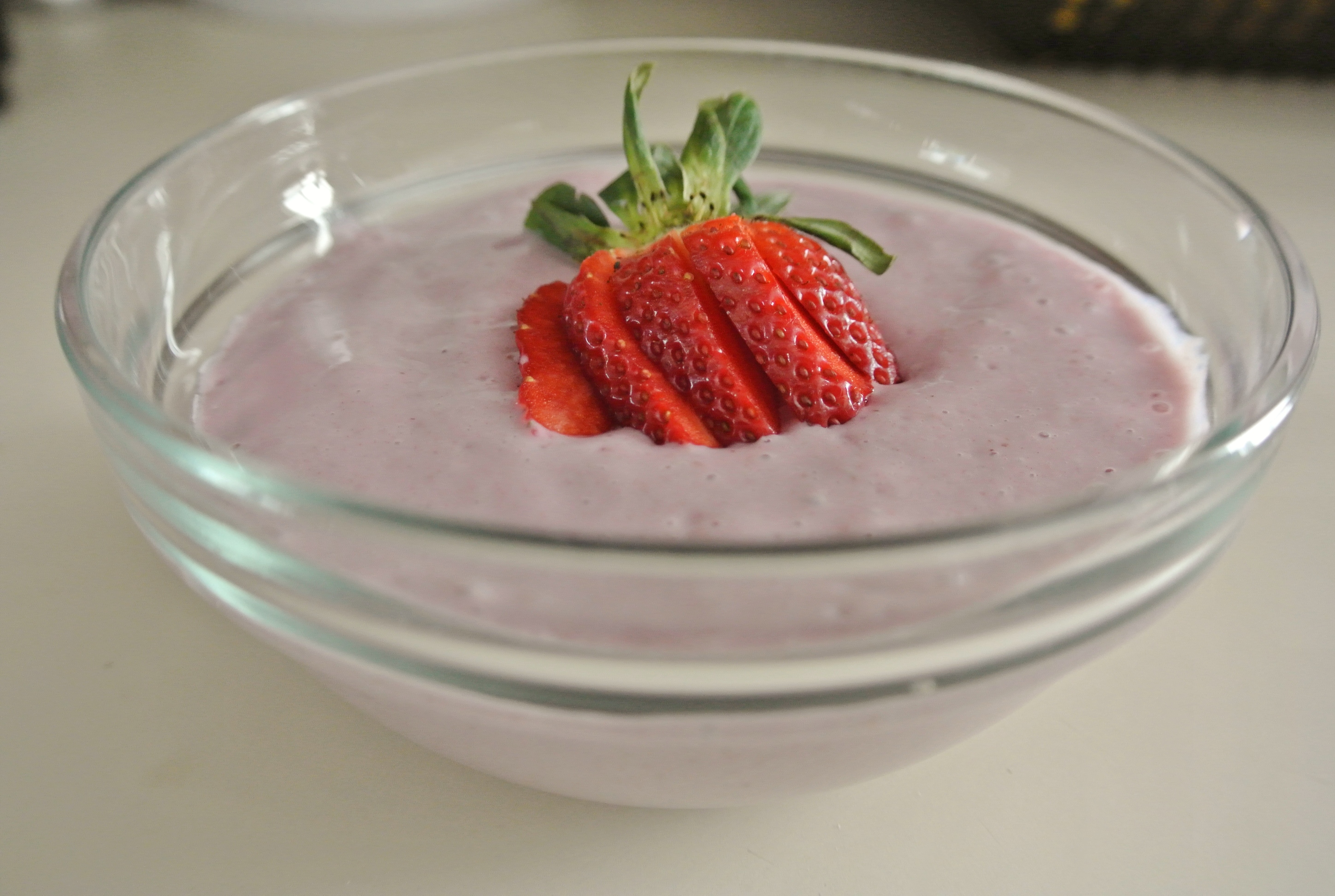
One of my favorite ways to prepare silken/soft tofu, in particular, is to make it into togurt. Yup, just like yogurt, but without dairy, which I avoid because of its lactose and cholesterol and quite frankly, because I’ve read and seen some disturbing things about how the cows that produce our dairy are treated. I’ll let you read up on it on your own. 🙂

Anyway, my version of “yogurt” has a similar texture and flavor to the traditional variety, sans high fructose corn syrup, preservatives, and artificial coloring. If you have a block of silken/soft tofu, fruit, and plant milk, you’re ready to make togurt. Nolan loves it, too, and it pairs nicely with fruit or granola. Be advised that when you puree it initially, it will be a bit thinner than what it will become when sitting in the fridge. Enjoy!

FORMULA BASE: TOGURT

Serves 6-8

  • 1 block (14 oz) silken tofu
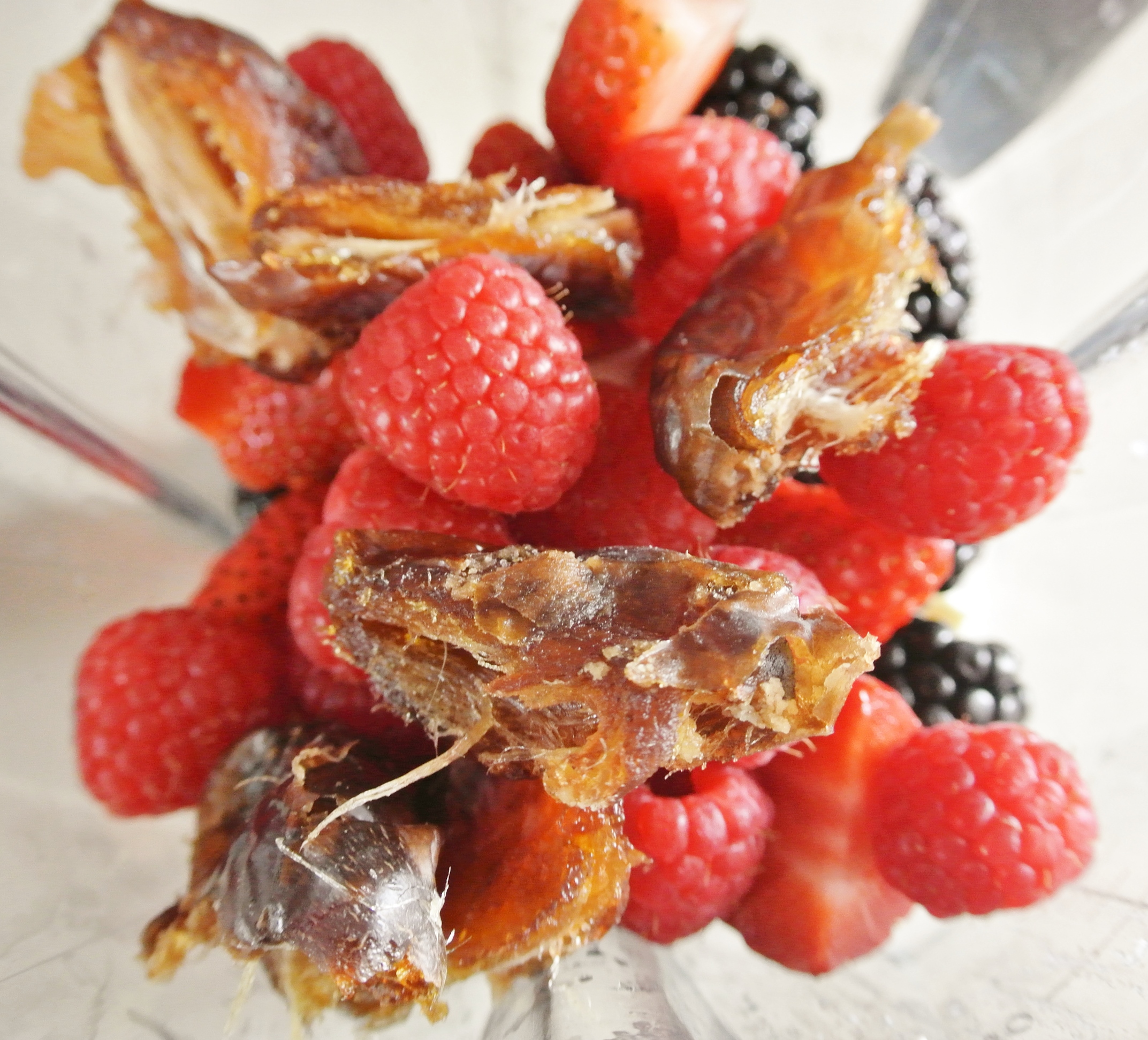
  • 1 ½-2 cups fresh or steamed fruit (depending on the fruit) –> I’m using almost 2 cups of raw strawberries, raspberries, and blackberries.
  • ½-¾ cup plant milk –> I’m using ½ cup almond.
  • Pitted medjool dates as needed for sweetness –> I’m using 3.
  • Spices/extracts as needed or preferred –> I’m using 1 tsp vanilla extract.

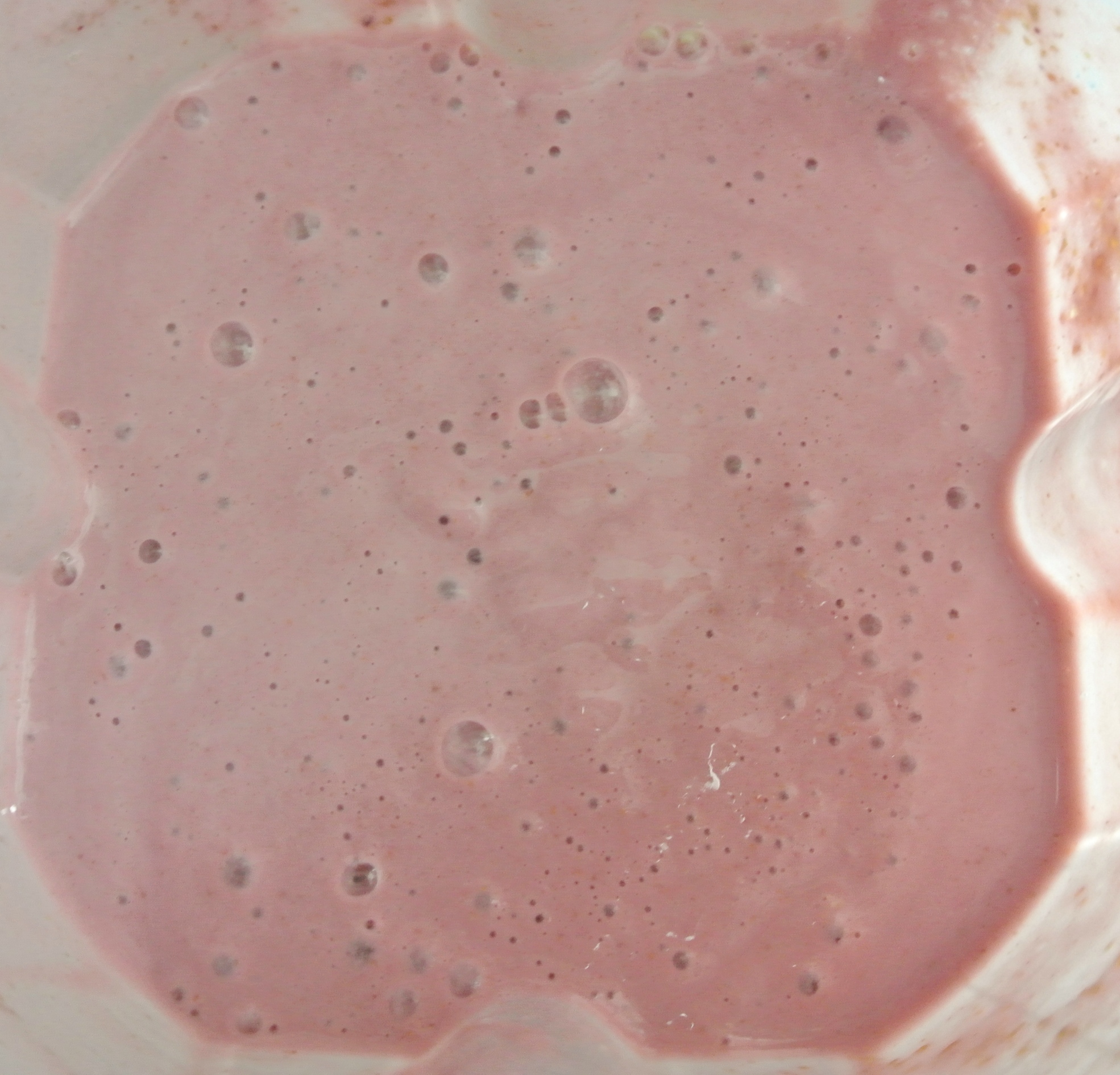
If necessary, peel and/or steam your fruit. I would leave citrus fruits, berries, and tropical fruits, for example, raw, but would steam hard fruits like pears or apples. Combine all ingredients in a blender.

DSC_1746Blend, taste, and adjust ingredients as necessary for your taste preferences. The air bubbles are normal and will never completely dissipate.

DSC_1747Store in the fridge for up to a week. Stir before eating if the water and solids separate a bit. 🙂

DSC_1751

Vegan Eats at Sage Kitchen

OutisdeWhile my plant-based, mostly vegan lifestyle isn’t perfect, family members and friends that come to visit me in Arizona look forward to eating clean when they stay at my house. I can’t even count the number of times a visitor has exclaimed about living plant-based for their stay in hopes of feeling refreshed and energized and even, losing weight. So, when I have an eager-to-be-temporarily-vegan visitor, I don’t disappoint! I prepare vegan dishes at home and try to maintain my plant-based lifestyle when heading out for local grub (except when we’re out for authentic Mexican food…that’s one time that I will, against my better judgment, eat copious amounts of cheese!).

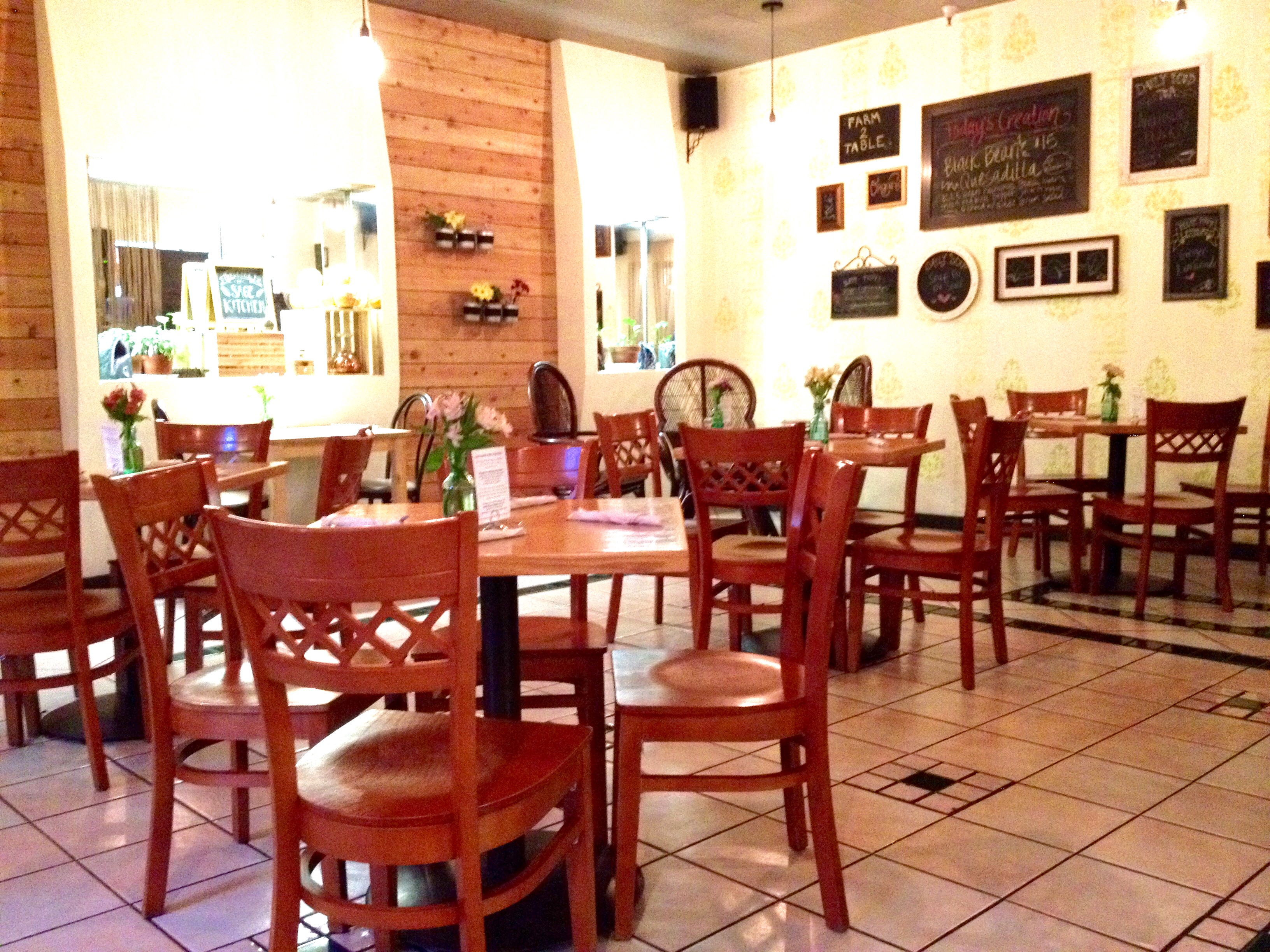
My mom was recently in town for Nolan’s birthday and offered to treat my little family to dinner on her last night in Arizona. I perused the web to find a restaurant in the Phoenix area that I hadn’t yet tried and came across Sage Kitchen, an organic, non-GMO, gluten-free, vegetarian eatery. The food was so yummy I can practically still taste it and I’m excited to share my review of the restaurant with you.

Sage Kitchen is located next to Chakra 4 Herb and Tea House, which shares its owner. As a result, the menu features a variety of teas and herbal remedies that I just had to try. Although I still dislike coffee, after our trip to Japan this past summer, I have recently grown very fond of tea. I sampled a blueberry kukicha green tea over ice that was subtly flavored and not too sweet, which is how I prefer it. Teas at Sage Kitchen are sold hot or cold by the cup, glass, pot, or carafe.

Next, it was time for an appetizer. We ordered a trio of dips with marinated raw veggie sticks and homemade, gluten-free flatbread. Pictured below is an avocado dip with sunflower seeds and pepitas, a black bean hummus, and a lemon herb hummus. We were afraid of becoming too full for dinner, so we ate about half of the dips and took the rest home (they were just as delicious, if not more so, the next day).

FullSizeRender (2) As indicated on the card you see below, Sage Kitchen avoids unnecessarily processed vegan “meats” and “cheeses,” opting for those made in house with nuts, vegetables, and spices. While the menu contains no actual meat products, many menu options offer real or homemade vegan cheese (as well as homemade meat substitutes) that I wanted to taste for myself.

Card In the description of my creamy sauce formula, I admit that there really is no completely satisfying substitute for dairy cheese, but Sage Kitchen definitely came darn close to making it happen. While Travis opted for real cheese in his veggie enchiladas, my mom ordered a black bean quesadilla and I ordered a “sausage and mozzarella” pizza, both containing different varieties of Sage Kitchen’s signature vegan cheeses. Let me tell you, they were so good, I didn’t miss the real thing for a second and am determined to figure out how they did it so that I can try to make these cheeses (and the sausage) on my own.

Enchilladas FullSizeRender[3] (2) FullSizeRender[2] (2) The kids’ menu is not featured on the Sage Kitchen website, but I was happy to see that it offered simple vegetarian/vegan food that is kid-friendly in ingredients and presentation. We ordered Nolan this adorable sunflower butter and apple flatbread. He couldn’t finish it and had to twist our arms to polish it off for dessert. Poor us. 🙂

FullSizeRender[1] (2) The only downside to our dining experience at Sage Kitchen was that the restaurant seemed a bit dead for a Saturday night. Travis and I concluded that this was probably a result of the early hours (it closes at 8:00) and lack of alcohol. The restaurant is a BYOB and does not serve booze of its own. I’m sure that during the weekday lunch rush, Sage Kitchen is packed.

Overall, no complaints. Grab a bottle of your favorite wine and go to Sage Kitchen to get your vegan eat on!

Inside

Baked Veggie Fries

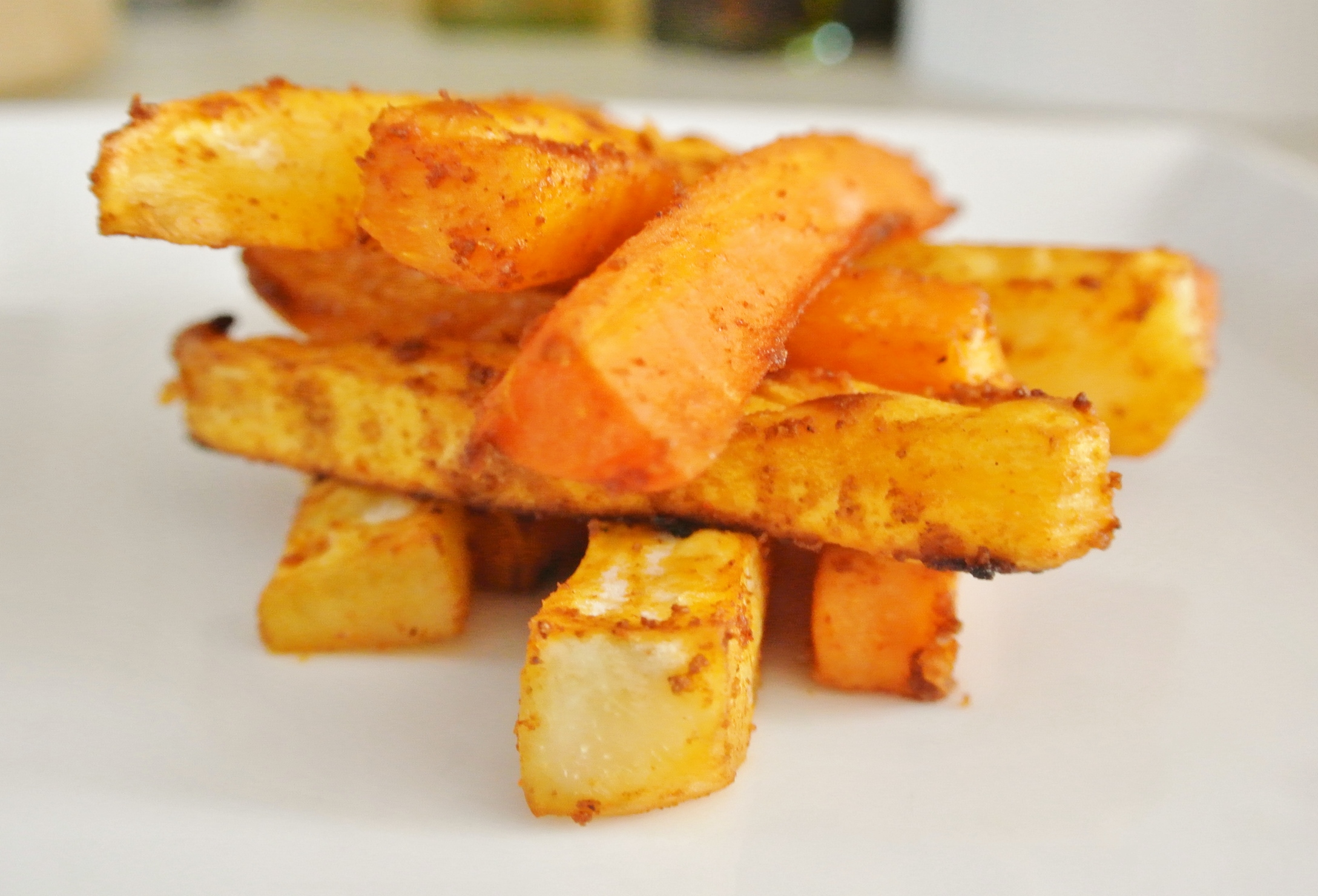
DSC_1730One of the dishes served at Nolan’s second birthday party was baked veggie fries, which were easily the crowd favorite of the evening. Today, I’m going to share with you how I make these delicious, un-fried fries.

The key to a baked fry that can stand up to shuffling on the pan, toddler squeezing, and condiment dipping is using hearty root vegetables. When we think of fries, our minds usually turn to good ‘ole russet potatoes. Nothing wrong with those guys, but fries can really be made out of nearly any root vegetable, be it parsnips, turnips, potatoes, carrots, radishes, etc.

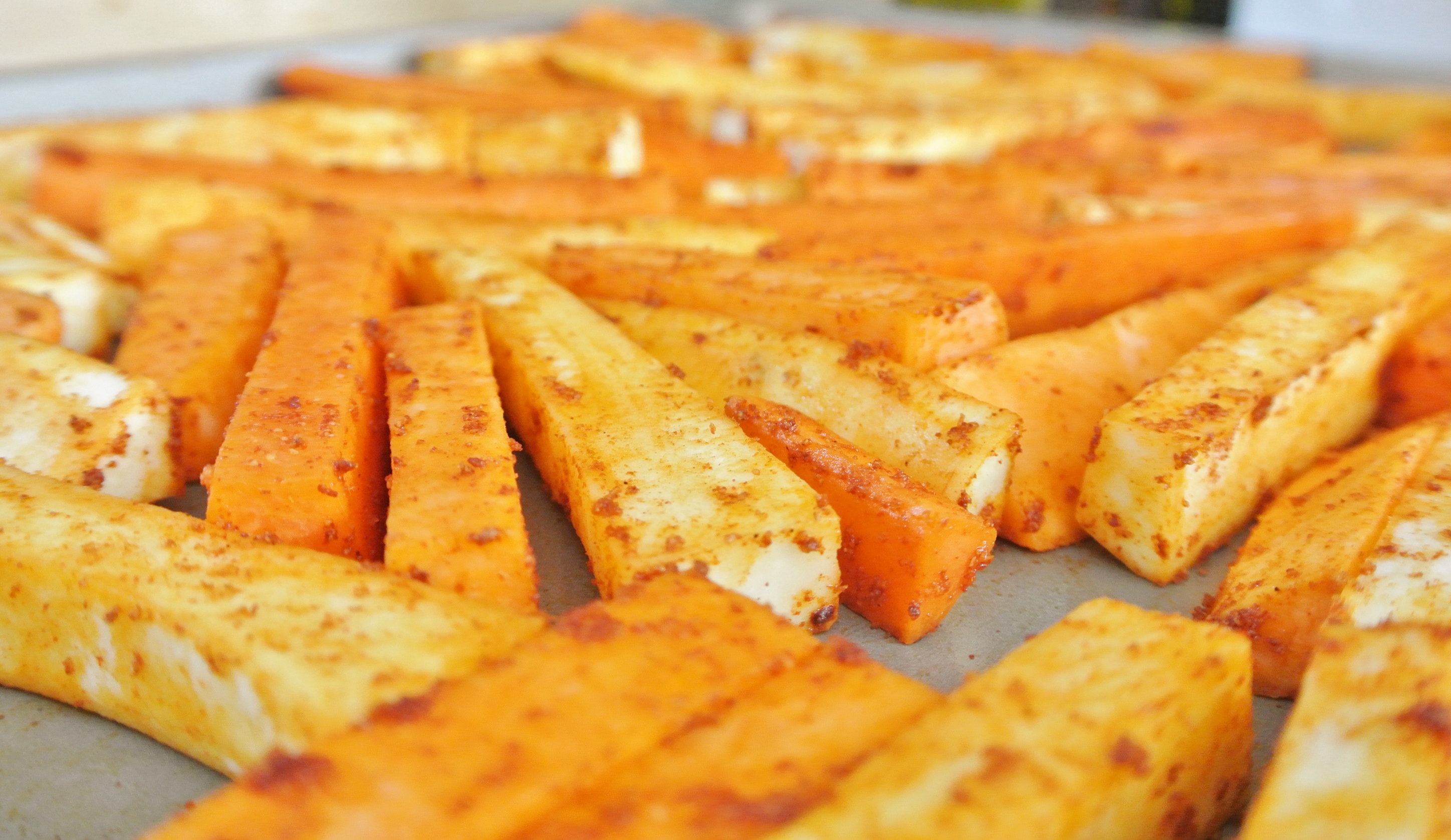
Today’s snack (or side dish) formula features three of my favorite root vegetables, pictured left to right below: garnet yam, sweet potato, and carrot. Yes, that yellow/white-ish fry in the middle is in fact a sweet potato, which you may not have known is often actually this color, rather than orange. (For a more detailed explanation on the difference between sweet potatoes and yams, check out my post on veggie curry.)

DSC_1724These un-fried fries are sure to please adults, but are the ideal healthy snack for toddlers. Extremely low in oil and salt free (unless you can resist a little sprinkle of pink Himalayan sea salt), they are a snack that I never refuse little Nolan. They are so yummy, I doubt you’ll need a dip, but if you do, try to stay away from processed ketchup, as it is often composed of highly fructose corn syrup and other unnatural additives. 🙂  Enjoy!

FORMULA BASE: BAKED VEGGIE FRIES

Serves 4-6 (as a side dish)

  • 2-2 ¼ lbs root vegetables –> I’m using just over two pounds of garnet yams, sweet potatoes, and carrots.
  • 1 tbsp oil (+ 1 tsp for greasing your baking sheet) –> I’m using extra virgin olive oil (I’m a big fan of coconut oil, but love the flavor of olive in this case).
  • Spices and/or fresh herbs to taste –> I’m using 1 tsp each of paprika and garlic powder (no salt).

Preheat your oven to 400 degrees. Thoroughly wash and peel your root vegetables. (You can leave the peels on, but I like to save them for homemade veggie stock.) Cut into ¼ inch thick fries. In a large bowl, use tongs to toss the fries with your spices and oil.

DSC_1725 Grease a baking sheet and spread the fries out in a single layer. Bake for 20 minutes, turning halfway through. Turn the oven off and broil on high for an additional 2-3 minutes for a bit of crispiness. Store in the fridge for up to five days, reheating in the toaster oven if necessary.

DSC_1727

Nolan Turns Two: What We Ate

DSC_1715I can’t believe my son is already two years old! Everyone told me that the time would fly and they were right. Before I knew it, it was time to plan Nolan’s second birthday party, including a mostly vegan menu that was sure to please all guests.

And, it did! We kept the affair small and invited family members that are both vegetarians and omnivores. Everyone ate mostly vegan and loved it, exclaiming over the food and asking me for recipes. In the past, I’ve served foods at parties I’ve thrown that are crowd pleasers, but that don’t necessarily reflect our plant-based lifestyle. Animal products like meat and cheese were once on the menu for such an event and I would always be conflicted with the leftovers; I don’t believe in wasting food, but I don’t, any longer, choose to eat many animal products. This time, I knew that I wanted to be left with the food that we eat every single day.

DSC_1665To answer the question that is surely on many minds, particularly those of parents, yes, Nolan follows a plant-based lifestyle, too. While I’m no expert on this way of eating and living, I’ve done quite a bit of research and have been living plant-based for over three years. As a result, I know that animal products are not at all necessary to the proper growth and development of a young child. While Nolan eats the occasional piece of cheese or cup of yogurt when at the homes of friends and family, in our house, he eats just like Travis and I do.

So, when it came time to plan his birthday party menu, I knew I wanted to serve some of his favorites. I apologize for the less-than-stellar quality of these pictures, but with a house full of hungry guests, a toddler being a toddler, and dogs running all over the place, capturing these images ended up becoming sort of an afterthought. 🙂 Here’s what we served:

  • Two types of veggie burgers: a black bean quinoa burger with red peppers and a falafel burger with sunflower seeds; we served an avocado “sour cream” (silken tofu, lime juice, avocado) and sliced veggies for topping
  • Baked veggie fries: a combination of yams and sweet potatoes seasoned with paprika and garlic powder
  • Fruit salad: bananas, blueberries, grapes, strawberries, blackberries
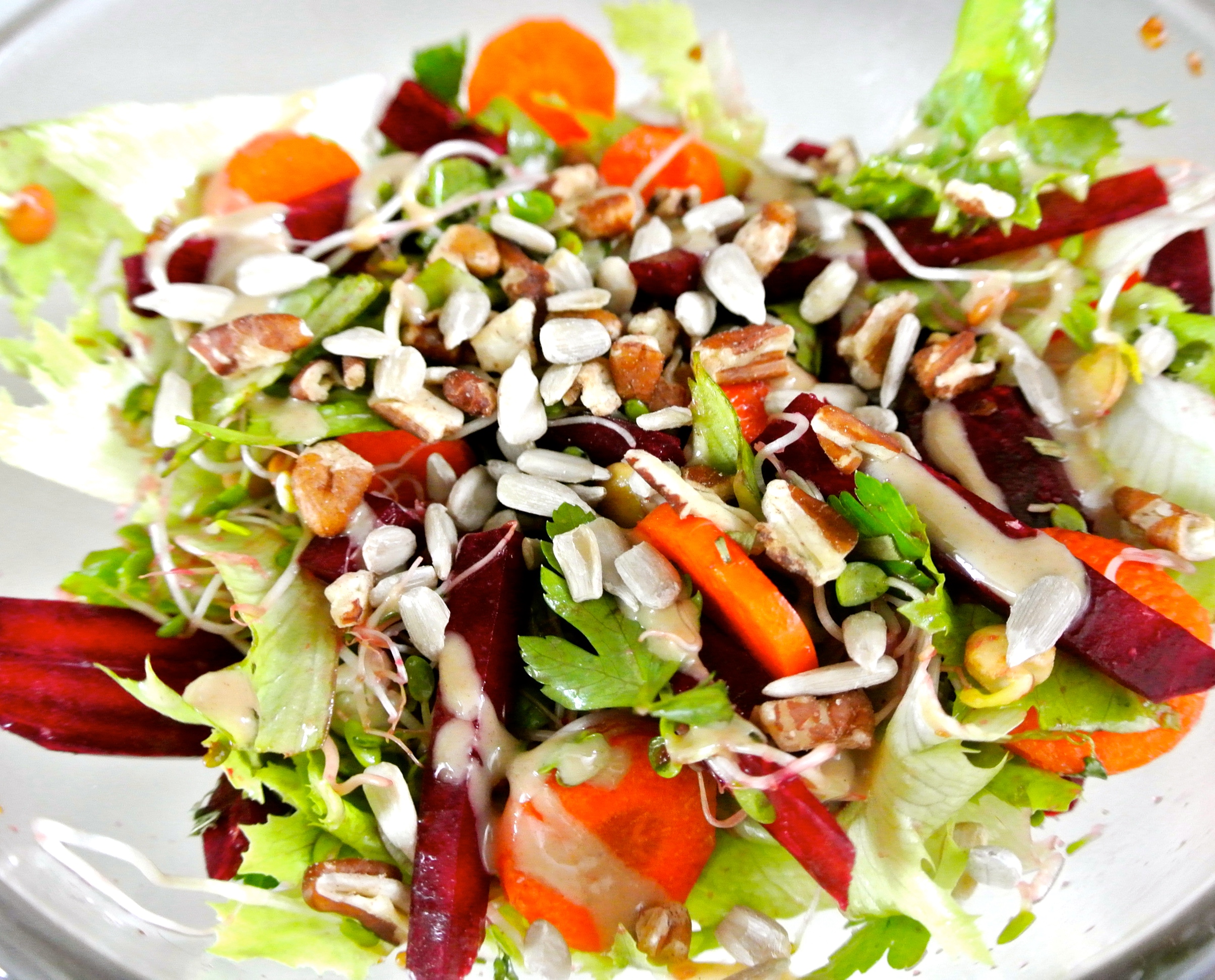
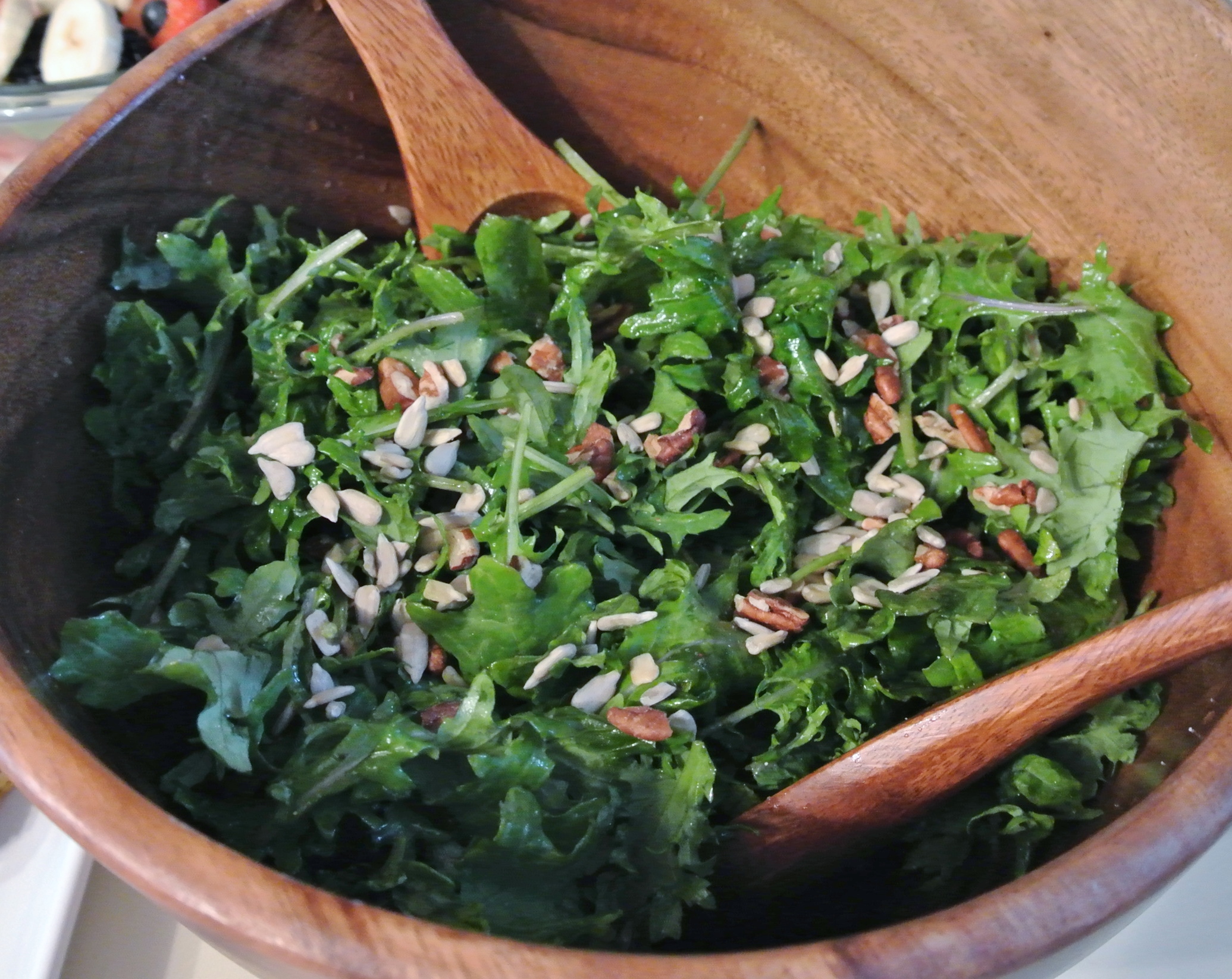
  • Kale salad: baby kale mixture dressed in a lemon vinaigrette and topped with raw chopped pecans and sunflower seeds
  • Homemade graham crackers and dip (a thicker version of my chocolate peanut butter banana smoothie)
  • California rolls: Other than the cake, which we custom ordered from a local bakery that we love, these were the only non-vegan items on the menu. Nolan isn’t yet at the point where he’ll munch on very many raw veggies when we go out for sushi, so we always get him a California roll. 🙂

DSC_1668

To answer another question that may be on your mind, yes, Nolan does eat (and love) all of these foods, often in one day. The kid DOMINATES plant-based yumminess like it’s going out of style and I’d be willing to bet that if we did a blood draw, the results would show that he’s in better nutritional shape than most adults. He has no food allergies, has energy for days, is happy and well-tempered, and has been sleeping through the night for at least twelve hours since two months old. I’d say that he’s doing just fine without animal products.  🙂

As you read in my bio, I am a mostly vegan, as sometimes it just isn’t feasible to be 100% plant-based. Case in point, Nolan’s cake. I have made vegan and gluten-free cakes and icings before, to much success. This time around, however, I needed someone to do the job for me. With Travis working full-time and completing an MBA, a steady stream of visitors since January (everyone wants to be in Arizona when it’s winter!), my job, and running our entire house, I honestly just didn’t have the time, this time. The cake was delicious and it was worth the very occasional splurge.

DSC_1660 I’m hoping that getting a glimpse into our plant-based lifestyle—even when throwing a party—helps you to embrace it yourself, even if it’s occasional or gradual. I can’t stress enough the health and happiness that living this way has brought to our lives and we have an adorable two-year-old to show for it. Happy Birthday, Nolan!