Back-to-School Brownies

This summer, I’m teaching a one-month ENG102 course that meets four times a week for two hours a day.  At this point in my pregnancy, I need to eat at some point in the two hours, even if it is just a little nibble.  So, I thought I would start a snack sign-up for the students, bringing a snack for them on the first day so that they knew I meant business.  🙂

Brownies are a decadent, sweet, rich treat that seems to please even the pickiest of eaters.  Because these are Fresh Formula brownies, you can additionally expect my version to be healthier than the boxed variety or even those homemade with animal products.

The health benefits of what makes a brownie a brownie—cocoa powder—are numerous, and detailed in my chocolate peanut butter banana smoothie post.  Before we get to baking, I am going to cover two other featured ingredients:  pecans and coconut oil.

Pecans, besides being easy to chop and chew, are buttery and delicious.  Pecans are notably high in fiber and magnesium, which has anti-inflammatory benefits.  While pecans are high in fat, they boast healthy fatty acids, such as oleic acid (also found in olive oil), and contain no cholesterol.  Nut allergies?  Don’t worry – this formula does not require nuts to work.  I just really enjoy them for their protein content and yummy crunch!

DSC_2139Speaking of fat, coconut oil is loaded with it…but a lot of other amazingness, too.  Brownies rely on some fat to achieve their fudgy texture and glistening appearance, but you can make smart choices about what type of fat and how much you are going to use.  Coconut oil is everywhere in health news of late.  It can be used as sunscreen, hair conditioner and even toothpaste!  When it comes to ingesting it, it doesn’t contain many health benefits, per se, but can withstand a higher cooking temperature than many other oils, lessening your exposure to free radicals or carcinogens.  And of course, it doesn’t contain cholesterol.

DSC_2141

Whichever oil you choose, keep it mind that some will affect the flavor of the brownies; I found that coconut oil did not.

Finally, brownies are an excellent canvas for all kinds of chips.  Like my classic chip cookie formula, “chips” here can be a lot of things:  chocolate, nuts, seeds, dried fruit, etc.  My chips for today’s take on the formula are pecans.

As I’ve mentioned before, dessert is dessert and it won’t be the healthiest item you put into your mouth all day, vegan or not, but we can always strive to do better.  For me, they really are a special treat, popping out of my oven only two or three times a year.  Oh, and in case you were wondering, my students gobbled these up…even after they learned they were vegan.  Plant-based victory!

FORMULA BASE:  BROWNIES

Fills a 9 x 13 pan with approximately ¾-inch thick brownies

  • 2 cups flour –> I’m using all whole wheat except for the last 1/3 cup; I ran out and used brown rice flour to fill in the rest.
  • 1 cup plant milk –> I’m using unsweetened, unflavored almond.
  • 1 cup sweetener –> I’m using turbinado sugar.*
  • ¾ cup unsweetened cocoa powder
  • ½ cup oil –>  I’m using coconut.
  • 1 tbsp ground flax or chia seeds + 3 tbsp hot water (“egg”) –> I’m using flax.
  • 1 tsp extract –> I’m using homemade vanilla.
  • ½ tsp baking powder
  • ½ tsp pink Himalayan sea salt
  • OPTIONAL:  ½-1 cup chips

*What’s this?  See my cake formula.

Preheat your oven to 350 degrees.  In a large bowl, mix your dry ingredients, sans sweetener.  In another bowl, mix your wet ingredients, plus sweetener.  This includes your “egg,” which should be prepared separately before adding it to the rest of the wet ingredients.

Slowly mix your wet ingredients into your dry until a dough forms.  That’s right, this mixture will likely be more dough-like than batter-like, although different sweeteners and oils may change the consistency slightly.  Point is, don’t be concerned if what you expected to be a drippy batter turns out thick.  🙂

DSC_2144Mix in your chips or save them to sprinkle on top.

Lightly grease a 9 x 13 backing pan or dish (I prefer glass).  Spread your dough evenly throughout and top with chips, if you’d like.  Lightly press any toppers into the dough with a spatula before heading into the oven.

DSC_2145

Bake for 20-22 minutes for a fudgy brownie or 23-25 minutes for a cakey brownie.  Enjoy!

Ice Cold Water, Tea, & Smoothie Infusers

Today’s post features an idea I took from my sister, Petra, author of lifestyle blog 100 Tacks.  She has admitted to me on several occasions that she just doesn’t drink enough water, sometimes even forgetting to stay hydrated in the hustle and bustle of everyday life.  While she doesn’t “dislike” the taste of plain old water, she’d rather drink other varieties.  Petra bought a Soda Stream not to make soda, but to carbonate her water.  Sometimes she drinks mineral water.  Other times, she infuses her water with fruit or herbs.

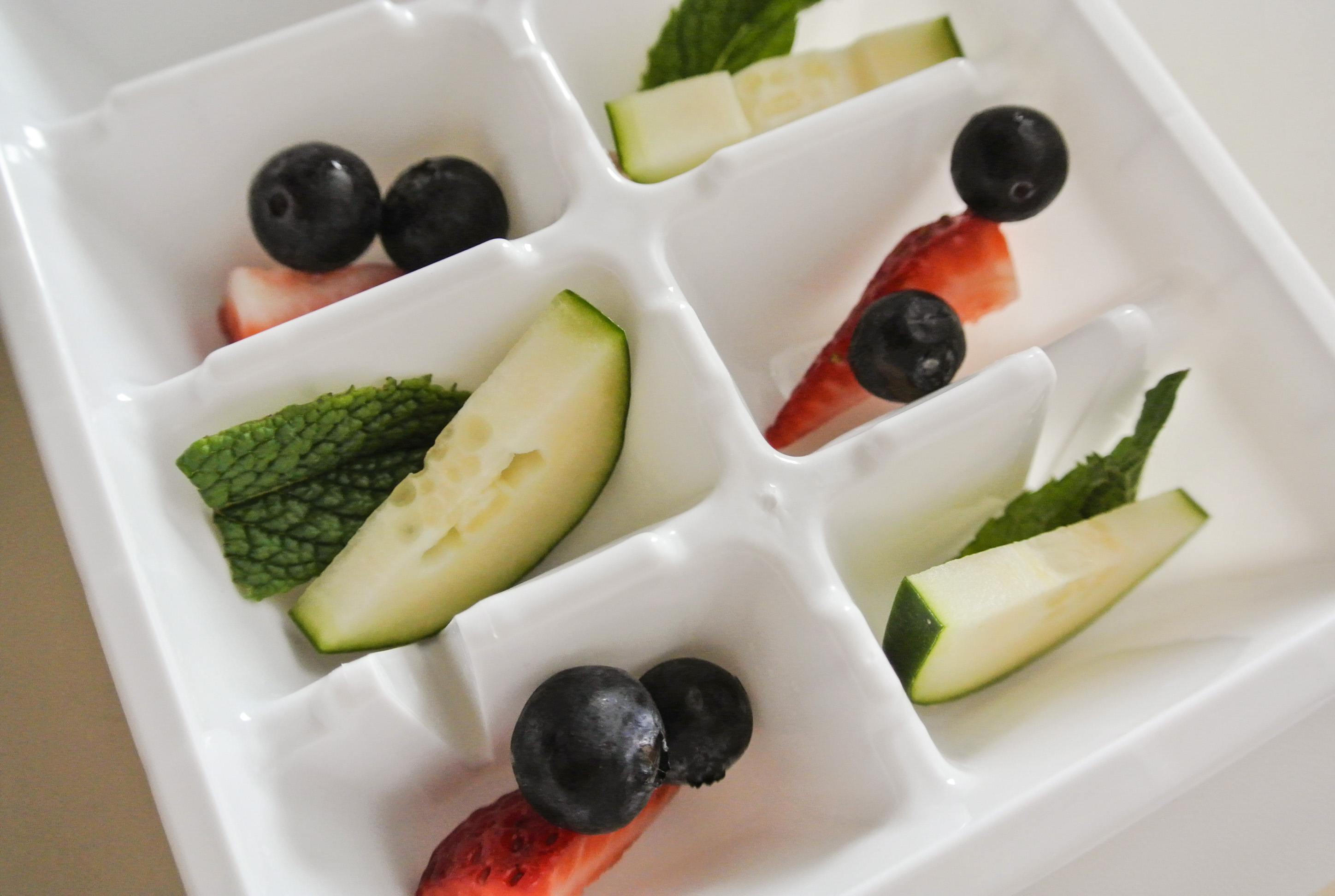
Infusing water has become increasingly popular, especially for those like Petra.  She told me that she will freeze ice cube trays with lemon juice and pop them into ordinary water for a slow release of added flavor.  Today, I’ll be making ice cube infusers that include citrus juice and herbs, whole fruits, and veggies.  When the cube melts, you can eat the “prize” inside!  🙂

For these cubes, I use citrus juice that comes from fruit I would never consider eating whole.  For instance, while you could make these cubes with orange juice, I’d rather just eat an orange; I’m never, however, going to chow down on a lemon or lime, so their juice makes for great infuser cubes.  Let’s take a look at some of the health benefits of these super foods:

LEMON:  Loaded with vitamins and antioxidants, lemon juice can prevent/fight many diseases and ailments, such as cancer, diabetes, kidney stones, constipation, and indigestion.  Lemon juice also promotes healthy hair, teeth, and gums, can ease pain, fade scars, and more.  Although unrelated to nutrition per se, lemon juice is a popular all-natural household cleaning product if you’re trying to use fewer chemicals.

LIME:  Lime juice is also packed with vitamins and antioxidants, and like lemon juice, can assist with constipation and indigestion.  It can also relieve oral ulcers, congestion, nausea, and body odor, and rejuvenate hair.  It protects eyes, aids in weight loss, and is instrumental in preventing/fighting diseases such as scurvy and heart disease.

You can freeze lemon and lime juice—ideally with as much of their pulp as possible—alone, but I like to take the flavor profile up a notch by adding in yummy extras like fresh mint, cucumbers, or fruit.  As the cubes slowly melt, their flavors will release into your water or iced tea.

DSC_2130

I also love the idea of dropping these into piping hot tea to get it to a more drinkable temperature more quickly…and with more flavor!  And smoothies need some icy element, right?  While I typically freeze fruit to avoid needing to use ice, these infusers would be an extra punch of flavor and nutrition in the blender, too.

A few tips:

  1. Buy/grow/obtain more citrus fruit than you think you’ll need.  I ended up juicing two lemons and seven limes to make just one ice cube tray’s worth of infusers.
  2. Check your juice for seeds or seed particles than may have fallen through the grates of the juicer.  The seeds are bitter.
  3. Don’t make too many of one infuser combination unless you’re 100% certain you’re going to like it; it would be a shame to waste the cubes!
  4. Play around with flavors that appeal to you, inspired by combinations you already know you like or think that you will like.  Consider fruit salads, cocktails, mocktails, and teas that you’ve tasted.

Hopefully, these flavor infusers will help you on your quest to drink more water.  I always have a glass around and don’t even leave the house without filling up a bottle.  Cheers!

FORMULA BASE:  WATER INFUSERS

Makes 1 ice cube tray of infusers

  • Approximately 1 ¼-½  cups freshly-squeezed citrus juice  à  I’m using lemon juice for some cubes and lime for the majority (I just happen to have more limes!).
  • 1 cup additives (i.e. fruits, veggies, herbs, etc.) (optional)  à  I’m using strawberries and blueberries in my lemon cubes and two different combinations in my lime cubes:  cucumber + mint and mint + blueberry.

Juice your citrus fruits and check for seeds or seed particles.  Place any additives that you’re using, if any, in the ice cube tray compartments.  Fill the compartments the rest of the way with juice.

DSC_2133 DSC_2136

Freeze and enjoy in fresh water, iced tea, hot tea, or smoothies.

DSC_2137

Protein-Packed Comfort Food

DSC_2117

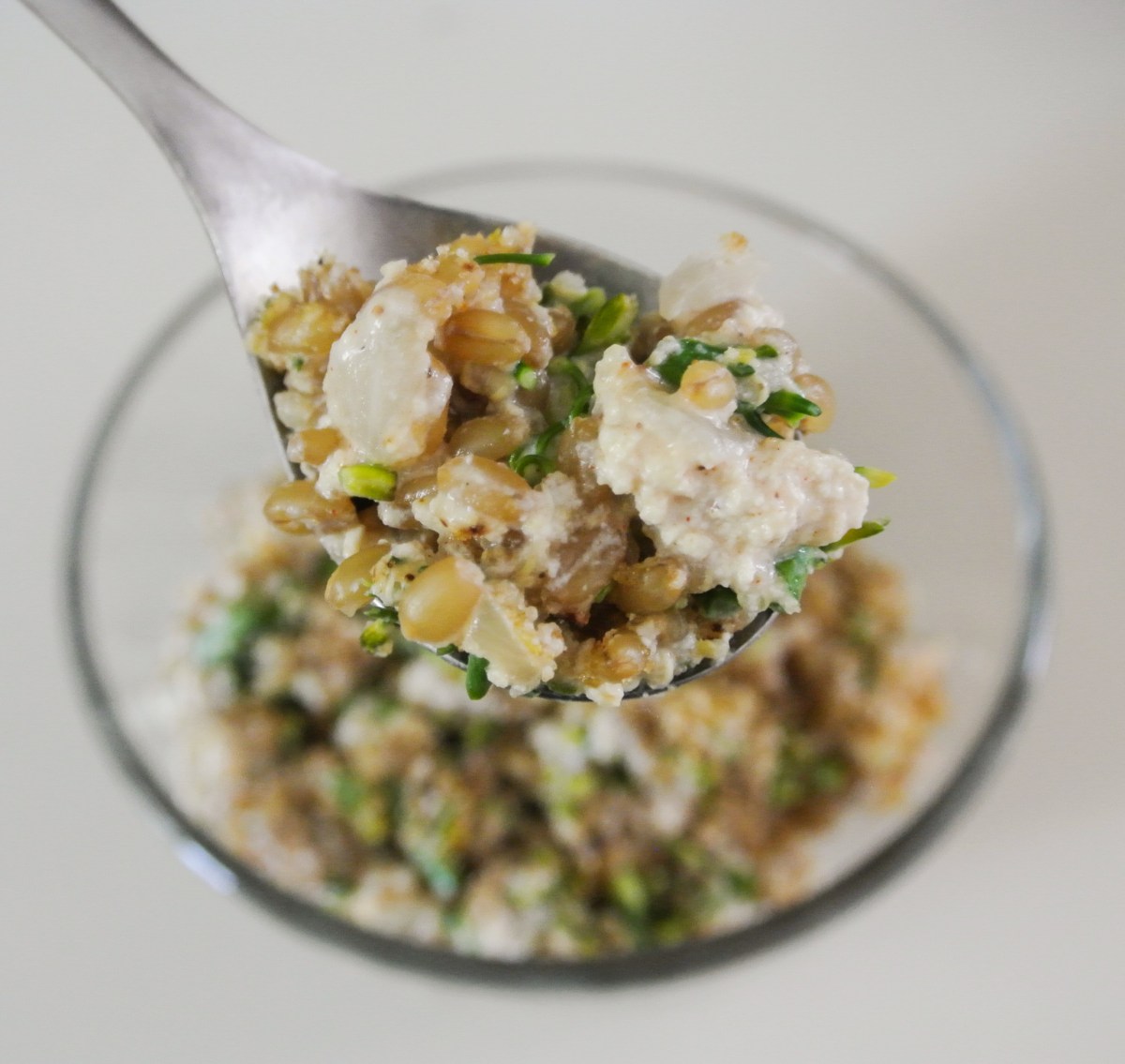
Of all of the vegan dishes that I make, of this one, I am exceptionally proud. For me, it ticks so many boxes, from nutritional value to great leftovers to toddler likability. It isn’t easy to reinvent classic comfort foods—many of which are comforting as a result of fat, sugar, or salt—but I’ve managed to do it with my take on the classic, Chicken Divan.

CD is a chicken and broccoli casserole with a creamy sauce. As much as it is delicious, it is loaded with fat and cholesterol, two no-no’s in my world. My recipes are certainly not all fat free (you will see there is a little bit in today’s concoction), but most are low in fat and definitely don’t contain cholesterol, which only exists in animal products. A positive of the original CD is the protein found in chicken. Thankfully, protein can be found in tons of plants, and often, in much greater quantities per serving.

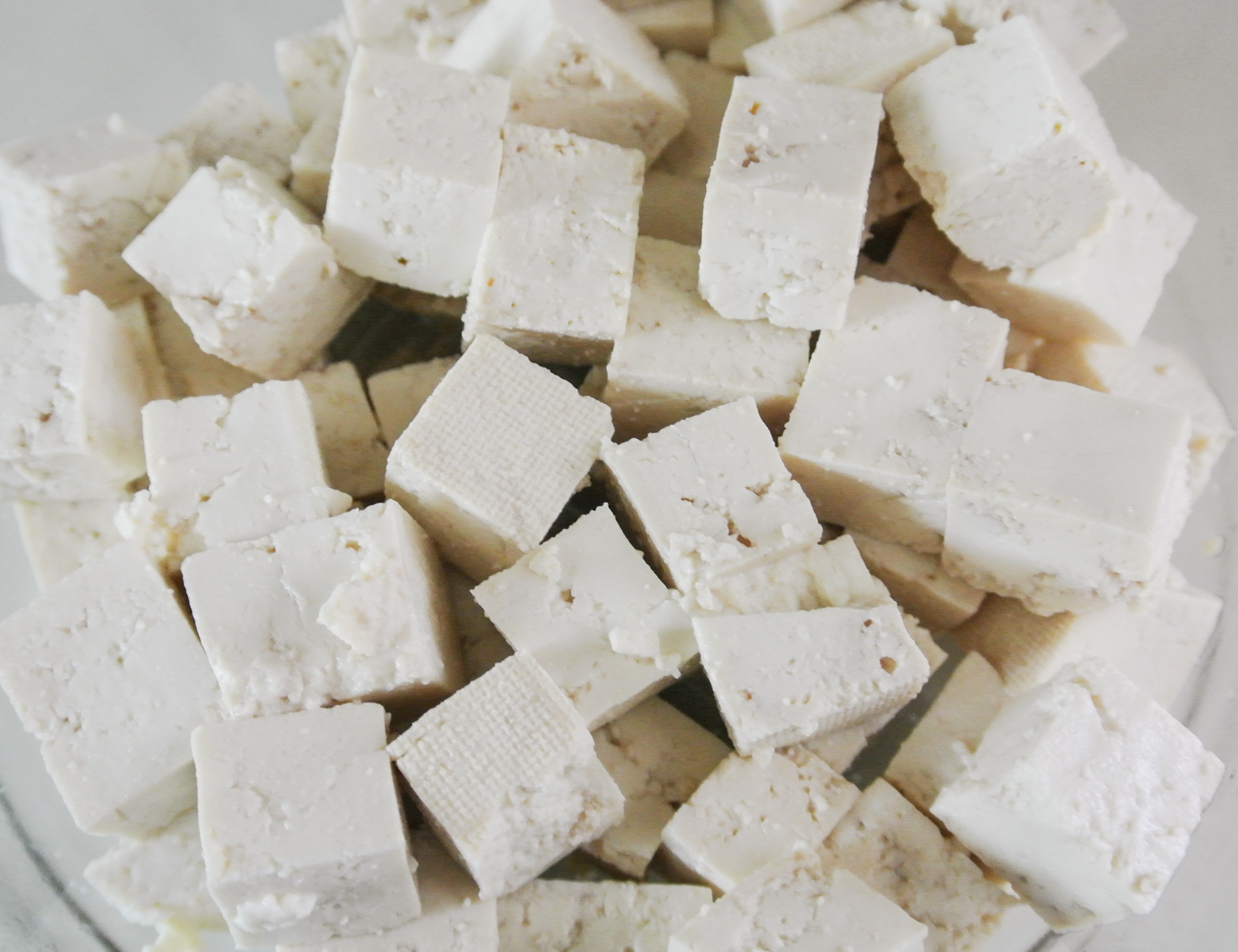
Today, CD becomes TD: Tofu Divan. Yea, tofu (and all soybean products) should be consumed sparingly, according to some research. But then, I visit Japan, with its ultra-healthy, lean population, and see tofu everywhere. So, who knows!  Tofu is an EXCELLENT source of protein that is low in fat, free of cholesterol, and adaptable into both savory and sweet applications. (Check out my togurt and chocolate mousse formulas for more tofu ideas!) I eat tofu in some capacity once or twice a month…nothing to worry about.

Side note: My TD utilizes a block of silken (or soft) and half a block extra firm. What am I going to do with the other half? Since Nolan was just beyond pureed baby food, I’ve been cutting it into cubes, and tossing it with just a splash of amino acids or soy sauce and a little bit of agave syrup. He’s been popping the cubes for over a year and a half now and couldn’t be happier with this easy and baby-friendly snack. He even learned how to use a fork with these tofu cubes.

DSC_2113Ok, back to the TD. I’m using broccolini, or baby broccoli, but you could really use any vegetable you’d like. You can also use any grains you’d like. This is a Fresh Formula, after all. 🙂 Tradition CD doesn’t contain grains, but if I’m going to make a cooked dish, I like to include them, since the bulk of what I eat is typically raw.

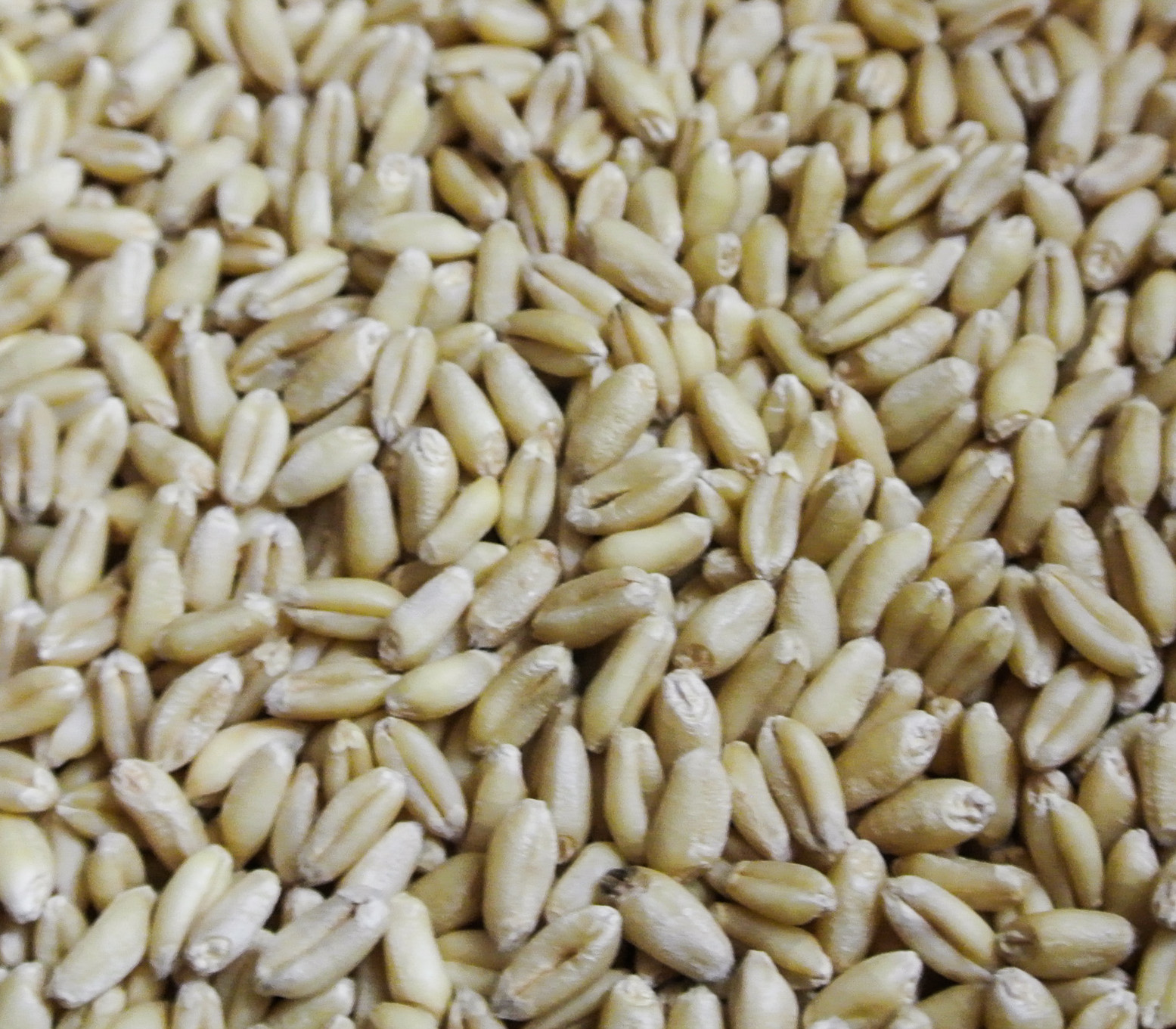
DSC_2100My grain of choice today is primarily wheat berries, with a little bit of quinoa I had left over from making Nolan his favorite breakfast: my quinoa muffins. When Travis and I selected our Bountiful Basket offerings last week, we added twenty-five pounds of wheat berries. They aren’t as easy to find as other grains and I love the crunch that they maintain, even after cooked. Now, I just need to find some ways to use them, which is one of my goals today! I first introduced you to wheat berries in my multi-grain salad formula, another one of my go-to favorites.

DSC_2095 DSC_2096The nutrients derived from the produce, grains, and tofu in my TD are unmatched by its animal-based cousin, CD. This dish is delicious right out of the oven and also makes for satisfying leftovers. Mostly importantly, my two-year-old loves it. Still not keen on many veggies as is (although he’ll eat them all day in smoothies), TD is a great way for me to “hide” finely chopped vegetables that he eats without question.

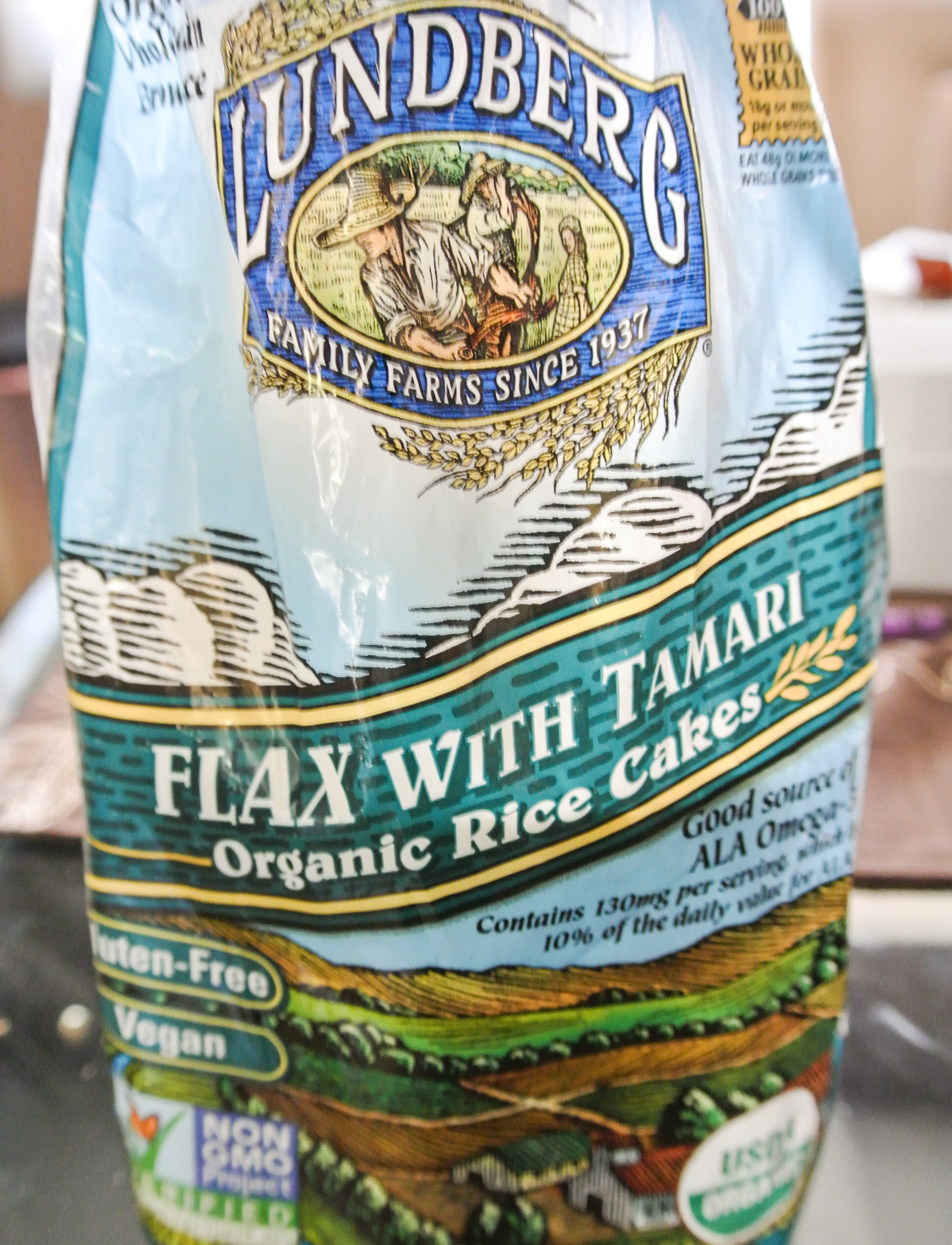
Finally, you’ll see that the casserole is topped with breadcrumbs. Typically, I’d use some of my own freshly baked bread, but with none on hand at the moment, I’m getting creative and using rice cakes! I love this brand. They make for a great snack as is, or smothered in peanut butter and jam. Yum-o!

DSC_2101Bear in mind that making tofu divan takes about ninety minutes, start to finish, depending on what type of grains you use. While brown rice can cook in about thirty minutes, wheat berries need an hour. Just FYI if you’re in a hurry. 🙂 Enjoy!

FORMULA BASE: TOFU DIVAN

Serves 6-8 

  • 5-6 cups homemade veggie stock
  • 3 cups uncooked grains –>  I’m using 2 cups wheat berries and 1 cup white quinoa.
  • 2 cups finely chopped vegetables –>  I’m using broccolini
  • 1 cup breadcrumbs –>  I’m using two tamari and flax seed rice cakes.
  • 1 block silken tofu
  • ½ block of extra firm tofu
  • ½ cup liquid to blend with silken tofu (more veggie stock, water, plant milk, etc.) –>  I’m using unsweetened, unflavored almond milk.
  • ½ of a small onion –>  I’m using yellow.
  • 2-4 cloves garlic –> The more the merrier in my book. 🙂
  • 1 tbsp nutritional yeast
  • 1 tbsp oil –> I’m using olive.
  • 1 tsp paprika
  • 1 tsp dried minced onion
  • 1 bay leaf
  • ¼ tsp ground nutmeg
  • Salt and pepper to taste –> I’m using pink Himalayan sea salt and fresh ground black pepper in both the sauce and in the sauté pan.

Thoroughly rinse your grains before cooking. Add to a rice cooker or stovetop pot with veggie stock. If you’re using a variety of different grains, stagger their addition to the cooker/pot based on cook times. Wheat berries, for instance, need much longer to cook than quinoa.

While the grains are cooking, put the silken tofu in a blender with your liquid of choice and puree until smooth. Put in a small sauce pan on medium low heat with all spices, the bay leaf, and salt and pepper to taste. Leave the sauce to simmer, stirring occasionally. If it gets too thick (should be thicker than milk, but thinner than a milkshake), thin out with water, plant milk, or veggie stock.

DSC_2104Heat up a sauté pan on medium high heat with ½ tbsp of the oil. Dice your onion, mince your garlic, crumble your extra firm tofu, and sauté until the onions are almost translucent and the tofu is slightly browned. If you have a starchy vegetable, such as carrots, throw them into the sauté pan, too. Otherwise, finely chopping and adding to the casserole mix before it goes into the often should suffice.

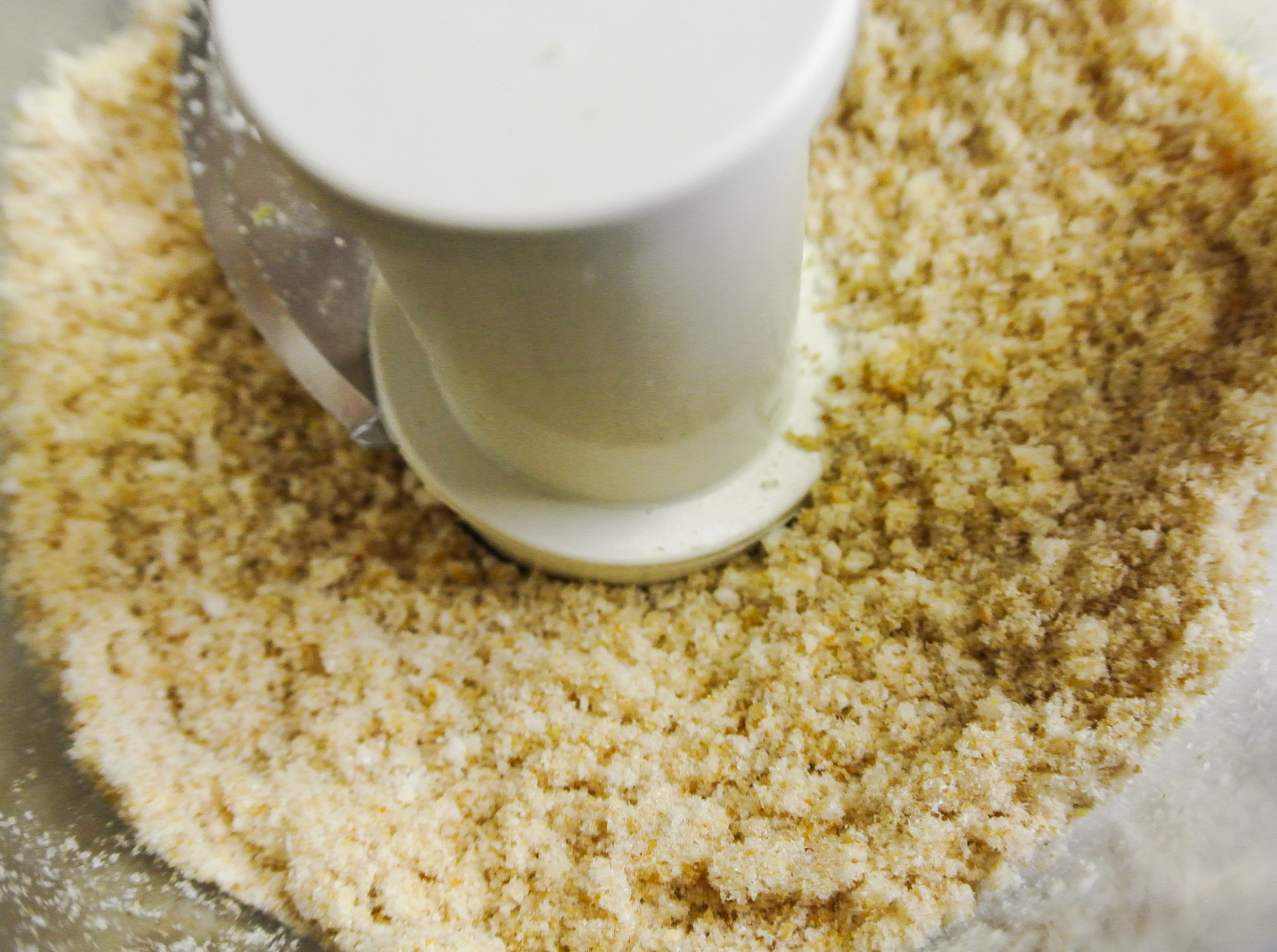
DSC_2112Finally, pulse your bread, crackers, etc. in a food processor to make breadcrumbs.

DSC_2102The grains should have absorbed all of the liquid by the time they are cooked, but drain them if they haven’t. In a large mixing bowl, combine grains, onion, garlic, tofu, vegetables, and silken tofu sauce, sans bay leaf. I am strategic about how I do this. The veggies go on the bottom if they have not been precooked, topped next by the hot grains, which will par-cook the vegetables for me, finishing them off in the oven.

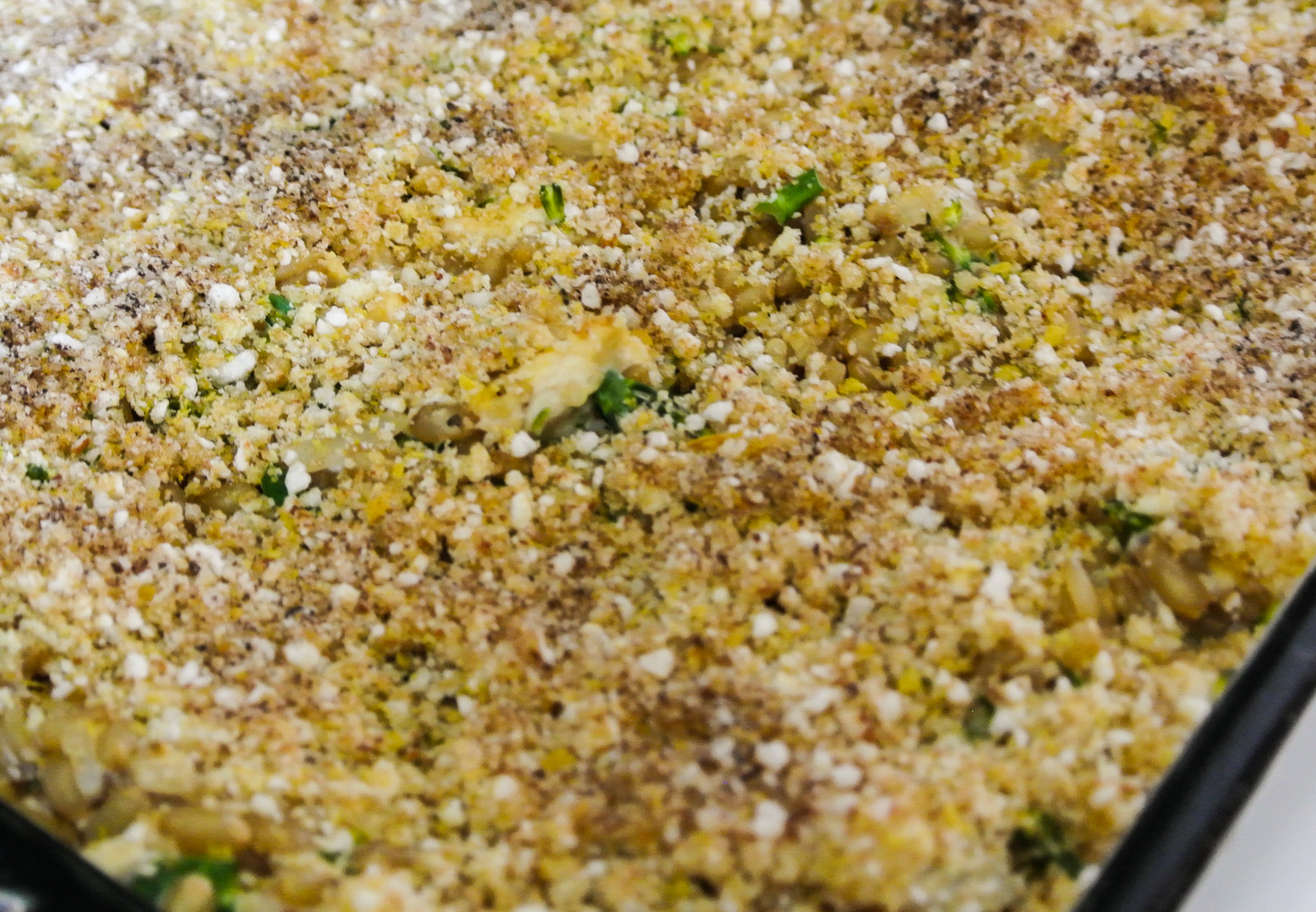
Mix your breadcrumbs with nutritional yeast and the other ½ tbsp oil. Once the other ingredients are combined and spread in a 9 X 13 baking dish, top with breadcrumbs. Put under the broiler on low for 4-5 minutes, or until the breadcrumbs are golden brown.

DSC_2114

Classic Chip Cookies

Notice that I didn’t title this post chocolate chip cookies?  That’s because the chip concept—a true Fresh Formula—lends itself to way more than just chocolate.  “Chips” can also include such yumminess as chopped nuts, seeds, dried fruit, candy, and even, shredded veggies (a la carrot cake, etc.).  Obviously, some choices are healthier than others.

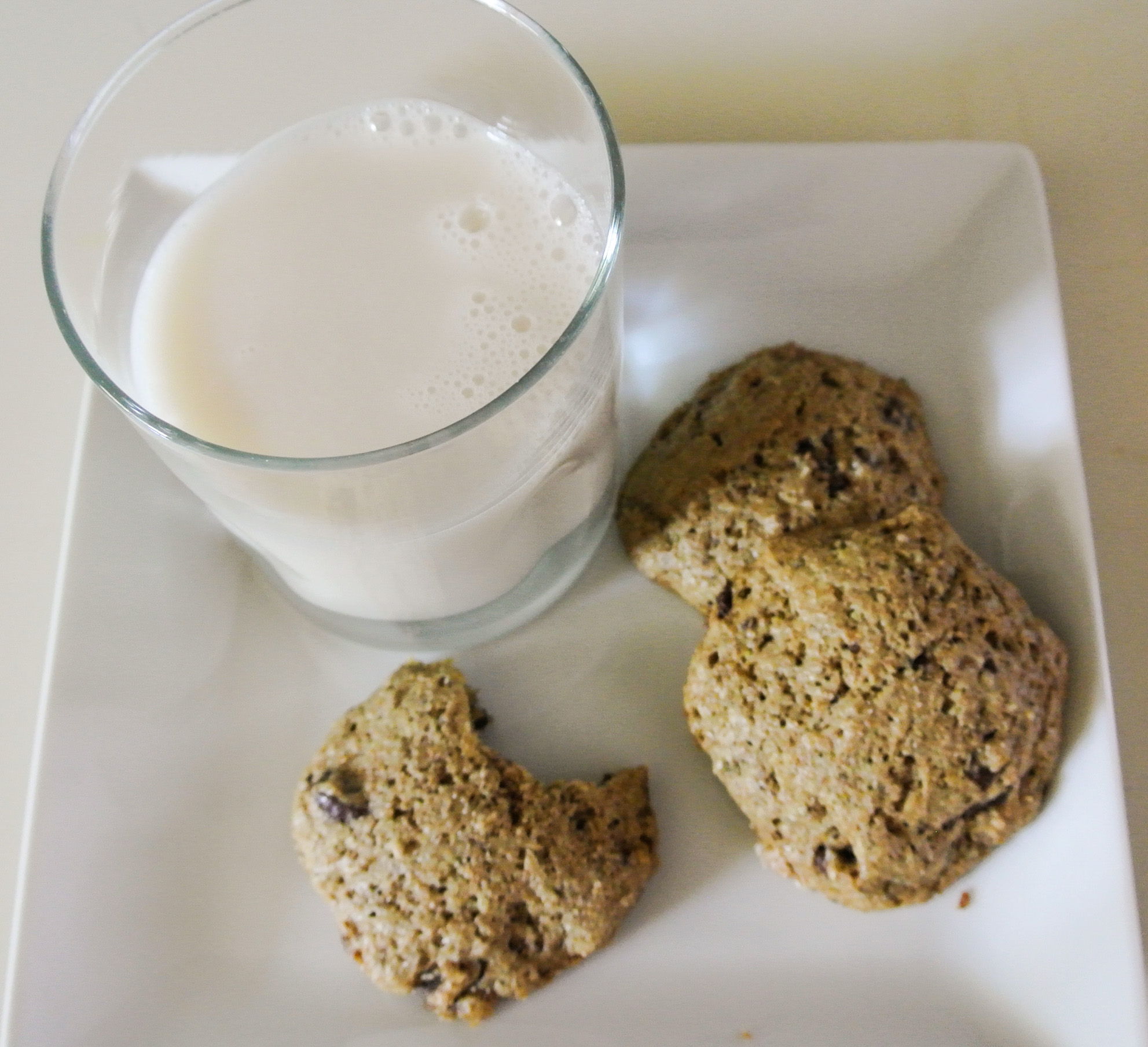
Today, I’m making a classic chip cookie, inspired by a recipe from Thug Kitchen (you know I love these two vegan chefs!).  I’ve taken their chocolate chip almond butter cookie recipe and adapted it to a formula; not everyone likes chocolate, some people have nut allergies, etc.  You could even make these cookies gluten-free.

For my chips, I’m using dark chocolate covered ginger.  Travis bought me a bag of these ginger treats at the beginning of my pregnancy.  Ginger aids with nausea, just FYI.  🙂  Although tasty, they were the size of large malted milk balls; that’s just too much ginger for me to pop into my mouth at once.  I’ve been hanging on to them in hopes of thinking of some other way to use them.  So, I decided to chop them up and use them in lieu of traditional semi-sweet chocolate chips.

DSC_2083The “egg” in this formula is made possible with ground flax seeds, although chia will likely work as well.  I haven’t tried that, but let me know if you do!

I did, however, make two batches of my new formula, trying different mixing methods with the exact same ingredients.  The first time I made these cookies, I used an electric hand mixer to incorporate every single ingredient except the chips, which I stirred in by hand.  The result was a deliciously smooth batter that made for thin, crisp cookies.  The second time, I mixed the dough by hand, using the electric hand mixer only after all ingredients except the chips were mixed by hand, just to smooth it out a little.  What resulted was a slightly lumpier dough and fluffier cookie.

I also think that the density of the dough would differ if nut/seed butter were used in place of oil.  Experiment until you get the cookie texture that you prefer.  No matter what, these vegan delights promise to be delicious.  Enjoy!

FORMULA BASE:  CHIP COOKIES

Makes 24-30 small cookies

  • 1 ½ cups flour –> I’m using whole wheat.
  • ¾ cup unsweetened plant milk –> I’m using almond.
  • 2/3 cup sweetener –> I’m using turbinado sugar.*
  • ½ cup oil or nut/seed butter –> I’m using coconut oil.
  • 2 tbsps flax or chia seeds –> I’m using flax.
  • ½-1 tsp extract (depending on flavor intensity) –> I’m using 1.5 tsps homemade vanilla extract.**
  • ½ tsp baking powder
  • ½ tsp baking soda
  • ½ tsp pink Himalayan sea salt
  • 2/3 cup chips –> I’m using chopped dark chocolate covered ginger.

*See my cake formula for an explanation of this sweetener.

**Pictured below is the vessel that I use to bottle homemade extracts (another post, another day).

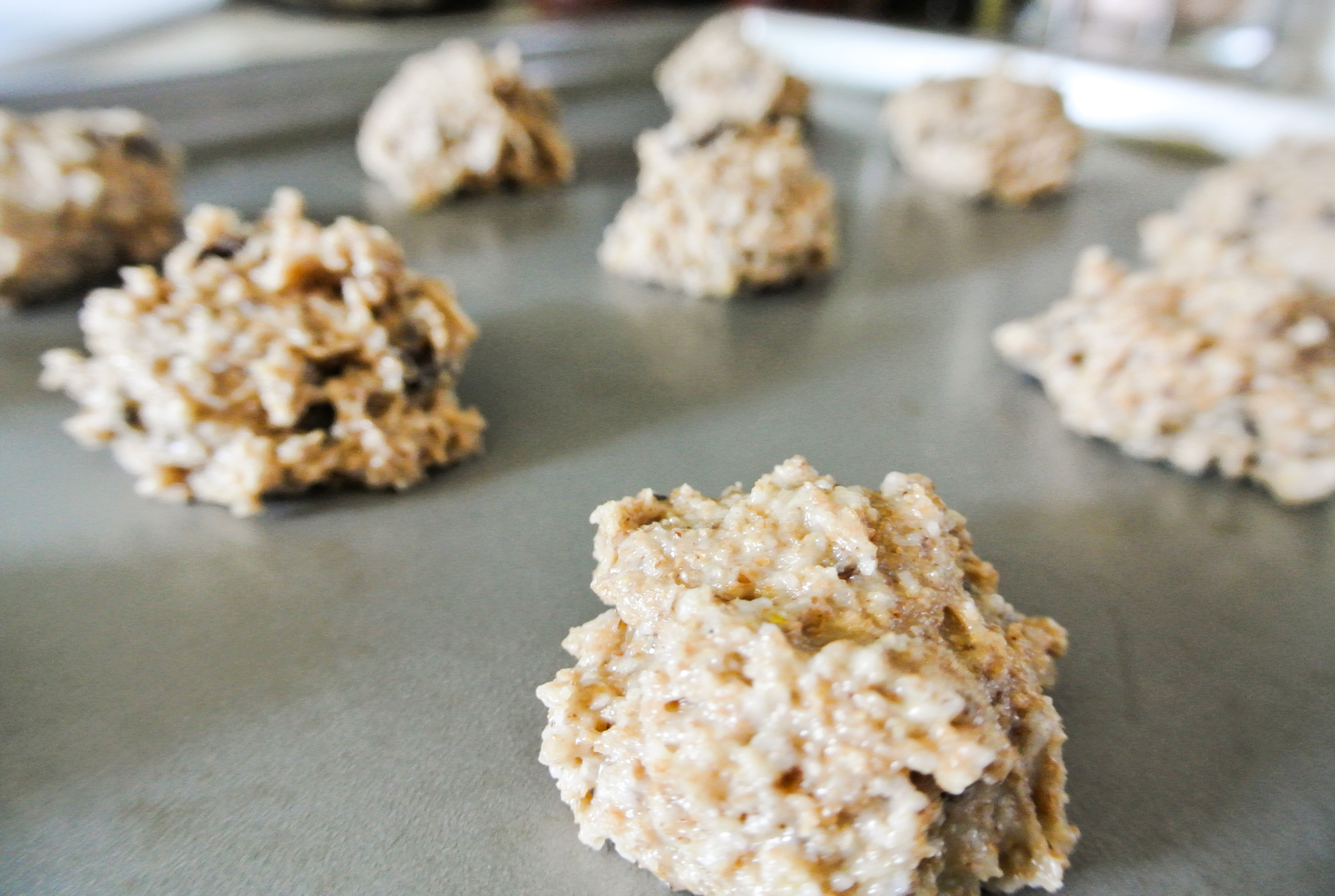
DSC_2084Preheat your oven to 350 degrees.  Combine all wet ingredients in a large mixing bowl.  Slowly incorporate the dry ingredients, mixing as you go.  Lastly, stir in your chips.  Grease 2-3 baking sheets or line with parchment paper.  Place heaping spoonfuls of cookie dough approximately a 1.5 inches apart.

DSC_2087

Bake 15-18 minutes, or until the cookie edges are slightly golden brown.

DSC_2088 DSC_2089

Wonderberries Turned Homemade Triple-Berry Jam

DSC_2075

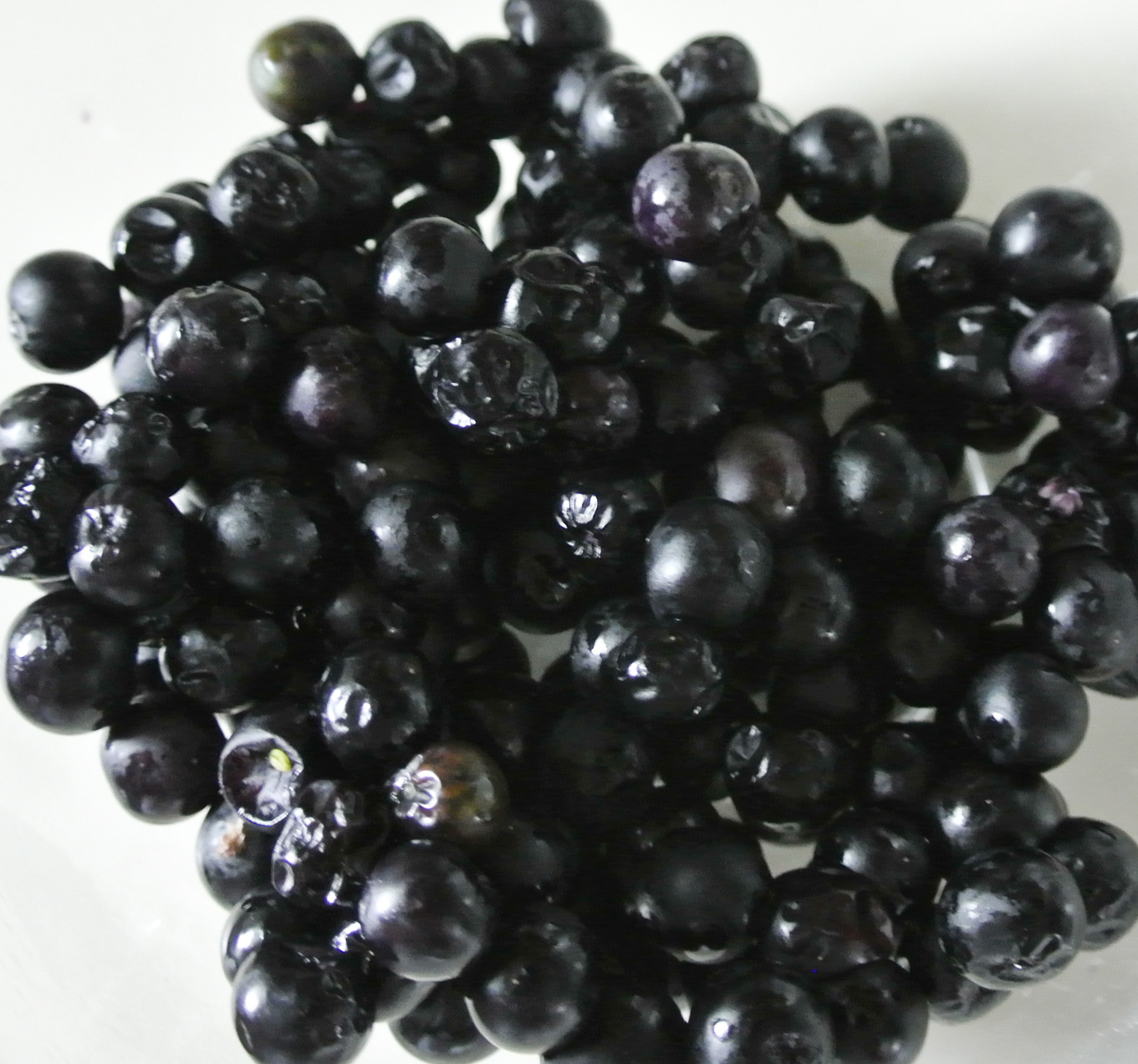
When I updated you on the progress of our garden, I shared a photo of the wonderberries (AKA sunberries) that had mysteriously begun growing there.  By the time we returned from Michigan on Sunday, they were ready to harvest.  Not naturally very sweet, we knew we were going to use them to make jam.

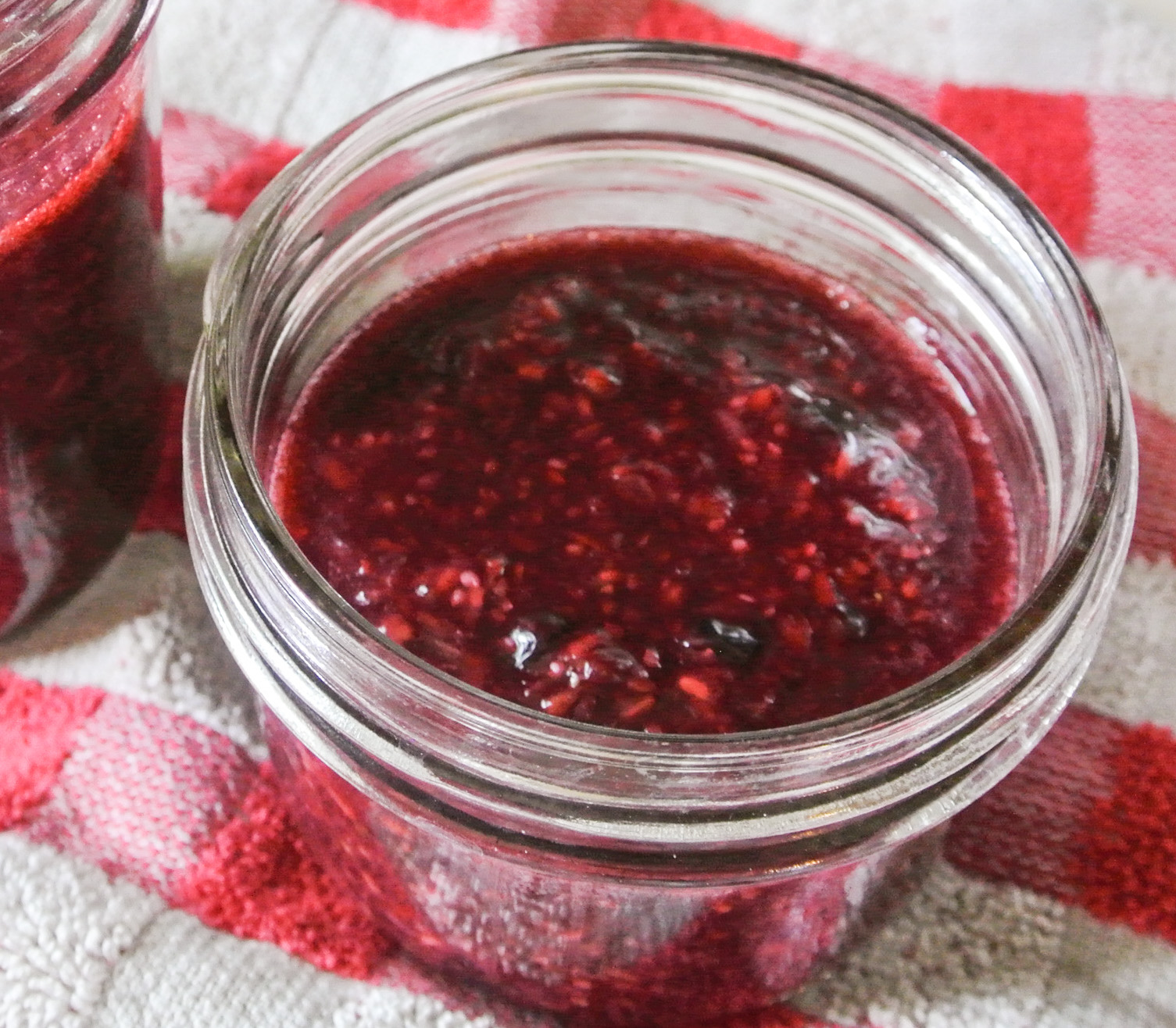
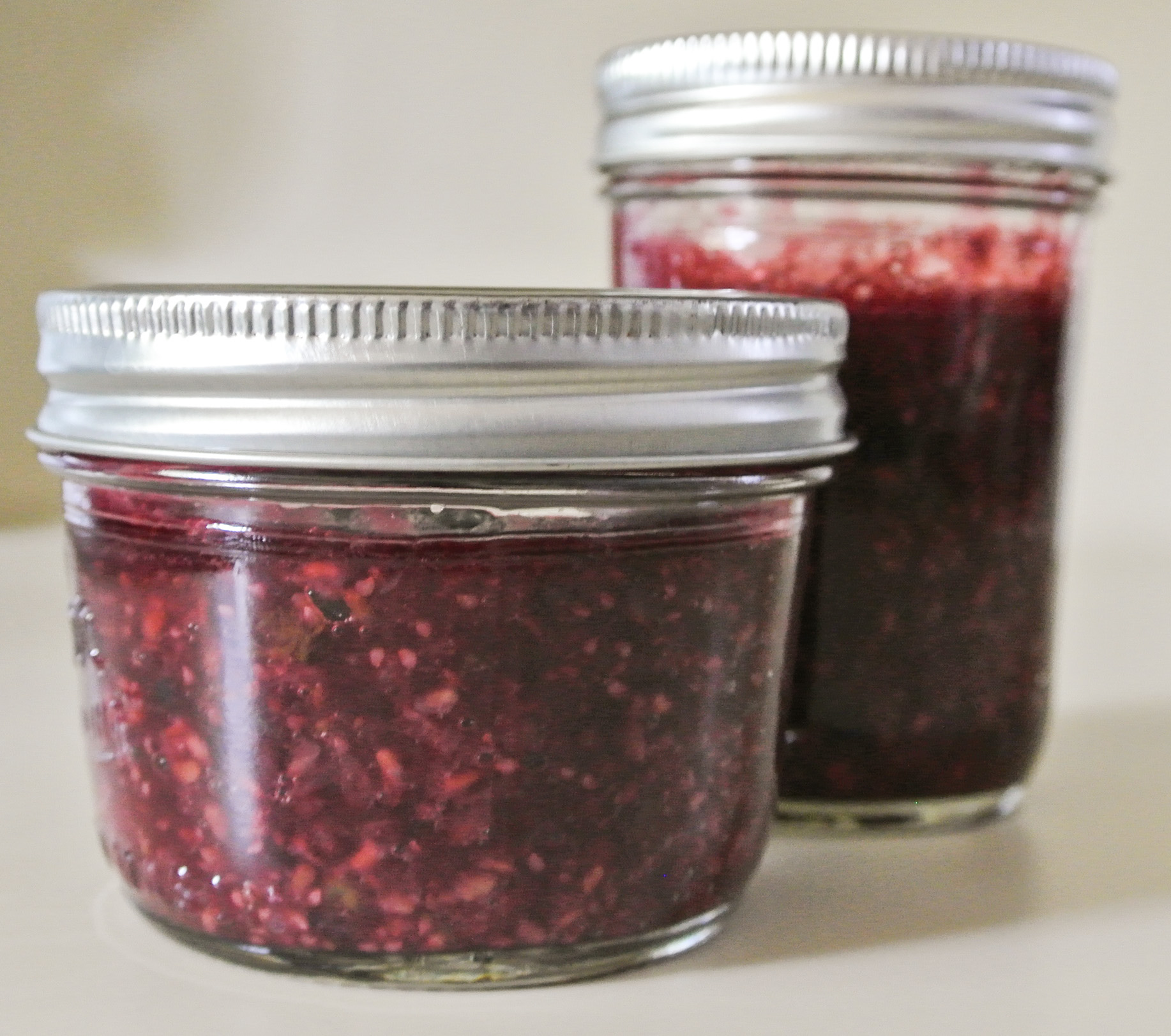
DSC_2065As you know, I’ve been craving peanut butter and jelly this pregnancy.  Between my PB&J smoothie, PB&J atop rice cakes and graham crackers, and good old PB&J sandwiches, I’ve got my cravings covered!  The downside to many jellies and jams, however, is that they are loaded with sugar.  Today, I’m making a triple-berry jam—inspired by our wonderberry harvest—that is low in added sweetener.

First, a few definitions that will help us along the way:

PECTIN:  A natural gelling agent found in the cell walls of plants.  You can purchase pectin in powdered form to make vegan jelly, jam, or jello.  (Gelatin, which is not vegan, comes from animals, and is found in such items as gummy bears and marshmallows.)  This pectin brand is available at Whole Foods.

DSC_2066

JELLY:  A smooth pectin-based mixture that contains fruit juice (or, unfortunately, artificial flavors that mimic real fruit) and no chunks of actual fruit.

JAM:  A less smooth pectin-based mixture that contains mashed, pureed, or whole fruits.

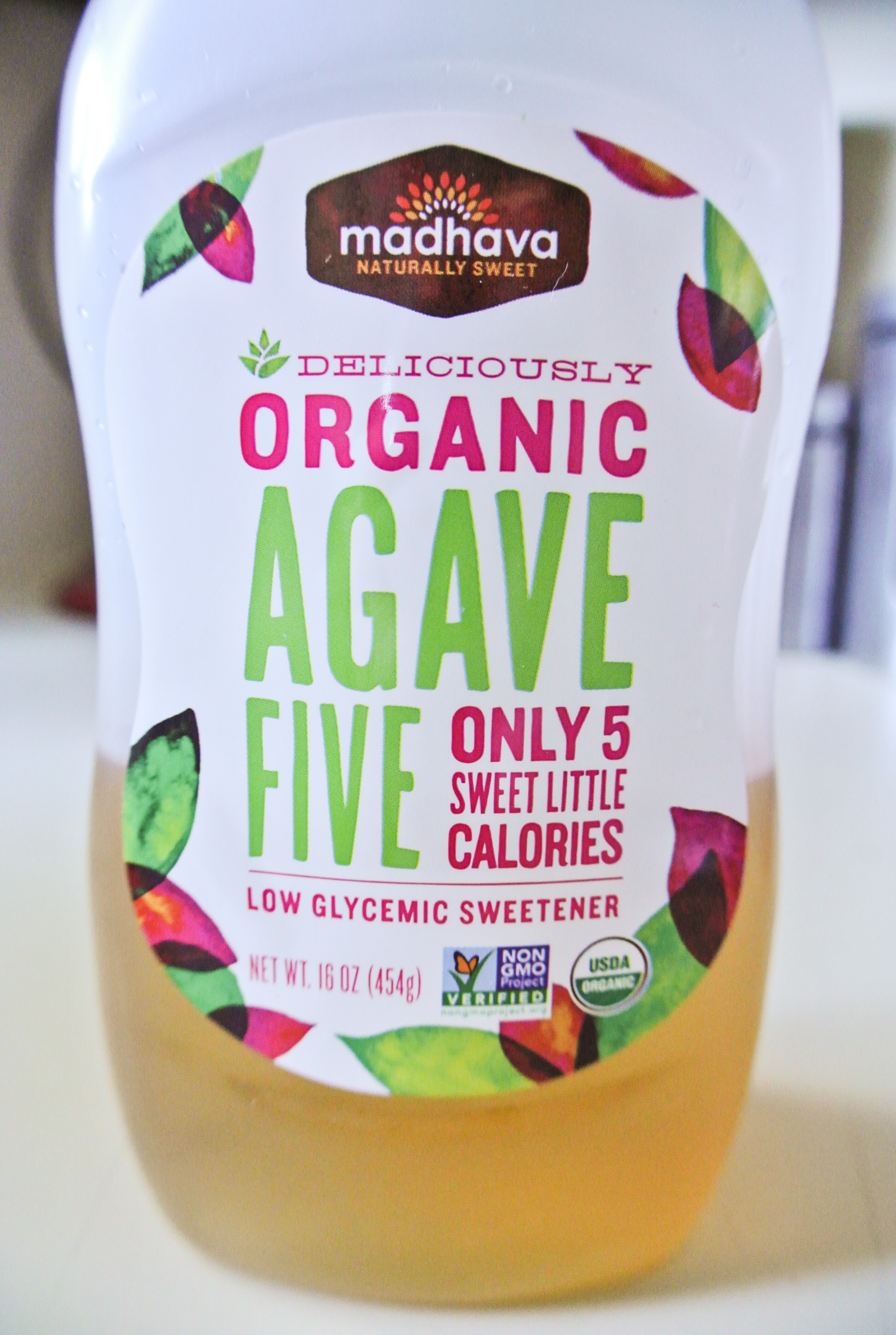
Of course, I am making jam.  As mentioned in a previous post, I try to keep my consumption of juice to a minimum; whole fruits contain more fiber, which aids in preventing the conversion of sugar to fat.  For my sweetener, I’m using light agave syrup, which I first introduced to you with my coleslaw formula.  Compared to many (if not most) store-bought jams, mine contains very little added sugar and no artificial sweeteners of any kind.

I must warn you, despite containing few ingredients, making jam does contain quite of few steps, including several rounds of boiling.  Having a helper in the kitchen makes a big difference, and you can make jam in bulk to save time later on.  🙂  This jam keeps at room temperature for one year, but should be refrigerated and consumed in three weeks once a jar is opened.  Enjoy!
FORMULA BASE:  JAM

Makes 2 small jars or 1 large*

  • 2 cups raw or precooked fruit**  –>  I’m using ½ cup wonderberries, ½ cup raspberries, and 1 cup blackberries.
  • 2 tbsps sweetener  –>  I’m using agave syrup.
  • 1 tsp pectin
  • 1 tsp calcium water (prepare according to package directions)

*You can find mason jars at many retailers including dollar or 99 cent stores.

**A hard fruit like apples will be easier to mash or puree if it has been precooked, but a softer fruit like raspberries will mash easily in a raw state.

Fill a pot with water enough to completely cover your mason jars in standing position and bring to a boil.  Add both the jars and their lids.  After the jars have boiled for a few minutes, turn the heat on low and keep the jars in the hot water.

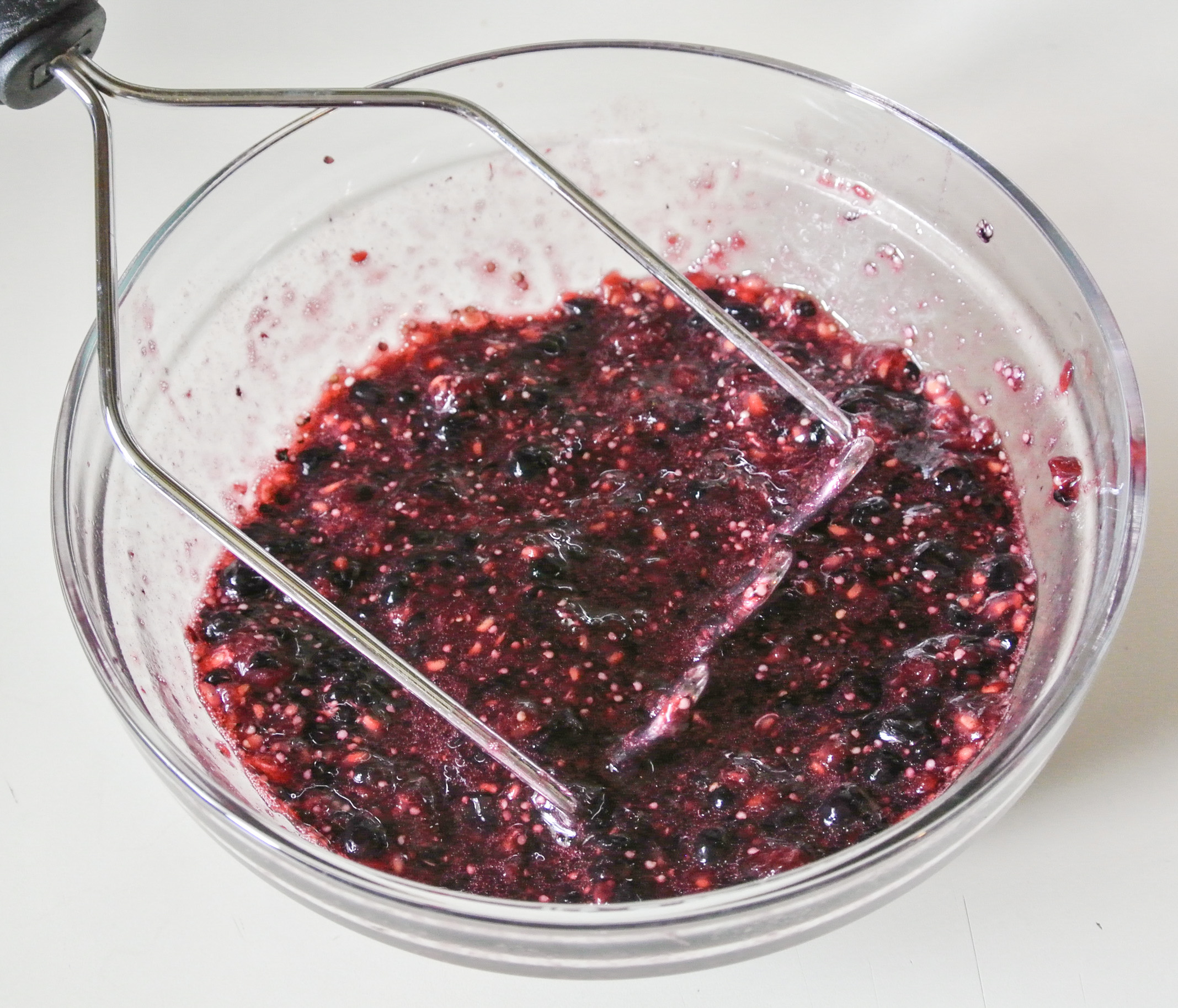
Next, peel and precook your fruit, if necessary.  Place your raw and/or cooked fruit in a bowl and mash, or, puree in a blender or food processor.

DSC_2072Combine your mashed fruit and calcium water in a pot and bring to a boil.  While you are awaiting the boil, combine your pectin and sweetener in a separate dish.

DSC_2073Add the mixture to the boiling fruit and stir an additional 1-2 minutes, until the pectin is dissolved.  Remove from the heat.

Using tongs, remove your hot jars from the other pot and bring the water to a boil again.  While you are waiting for yet another boil, pour the jam into the jars, approximately ¼ of an inch from the top.  Wipe the rims clean and seal.  Once the water is boiling, submerge the jars in an upright position and boil for 10 minutes.

Use tongs to remove the hot jars and place on the countertop to cool.  Refrigerate once opened.

DSC_2077 DSC_2081

Update: Our Backyard Garden

DSC_2050

Here in Phoenix, temperatures will be over 100 degrees by the end of this week. This means the beginning of some summer crops, but the end of most, with temperatures eventually reaching the teens. Since I last updated you on our DIY backyard garden, we’ve had a few changes and one surprise.

As previously mentioned, growing your own garden allows you to control the quality (i.e. organic, for example) and saves you money on purchasing pre-grown produce. Unless you’re an expert and/or have a ton of available land with extremely fertile soil and/or live in a region with perfect gardening weather year-round, you probably can’t grow everything that your veggie heart desires, but there may be a few items with which you can find success.

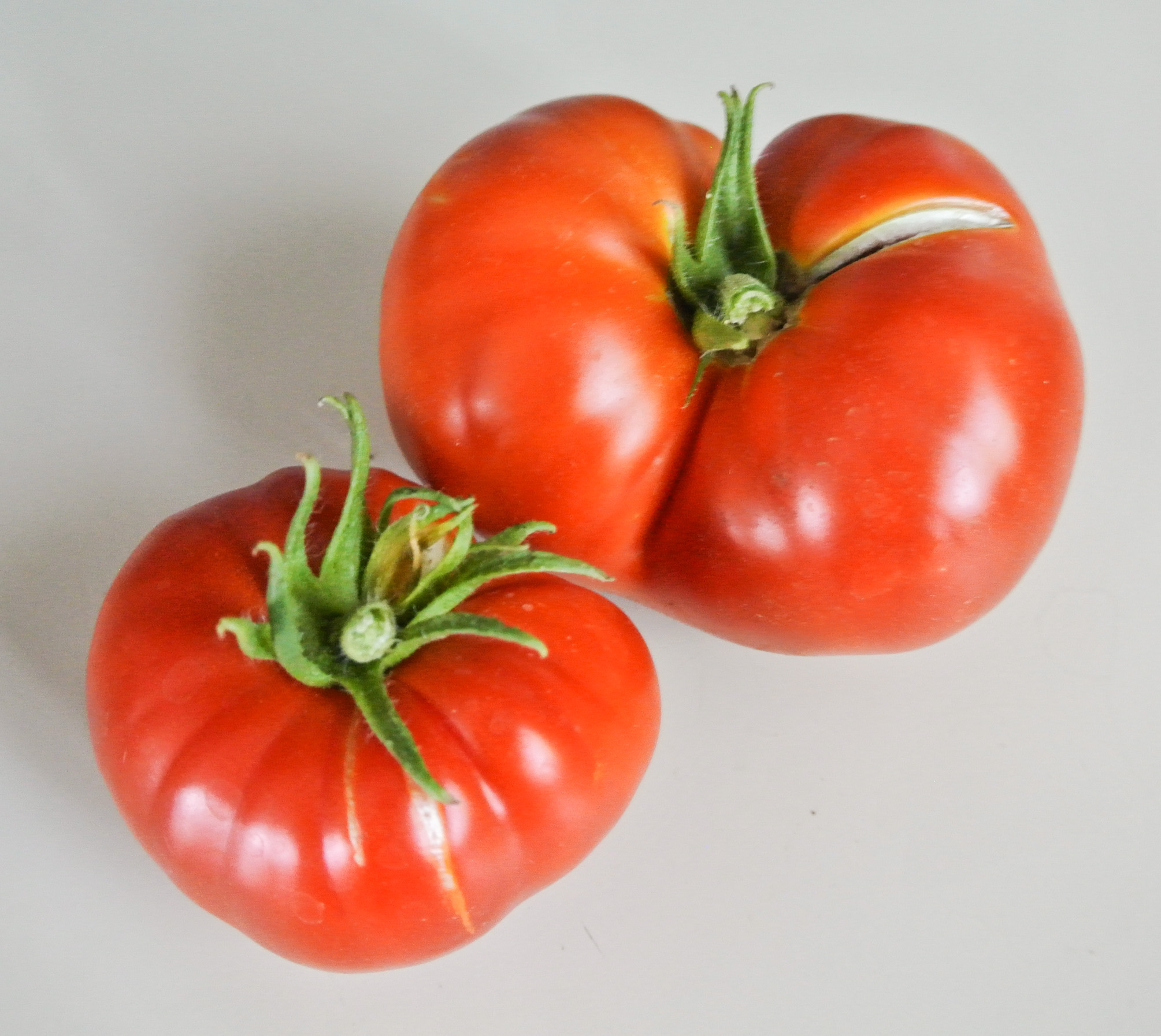
Other than our extensive herb collection—which, unfortunately, is starting to take a beating from the heat—our biggest success by far is tomatoes. We have at least four different varieties (that we’re aware of) growing in our garden, including these gorgeous beefsteaks (pictured above). Our plants are holding strong as summer approaches and we have 40-50 fit-sized tomatoes near maturity, including some sweet yellows and black rim.

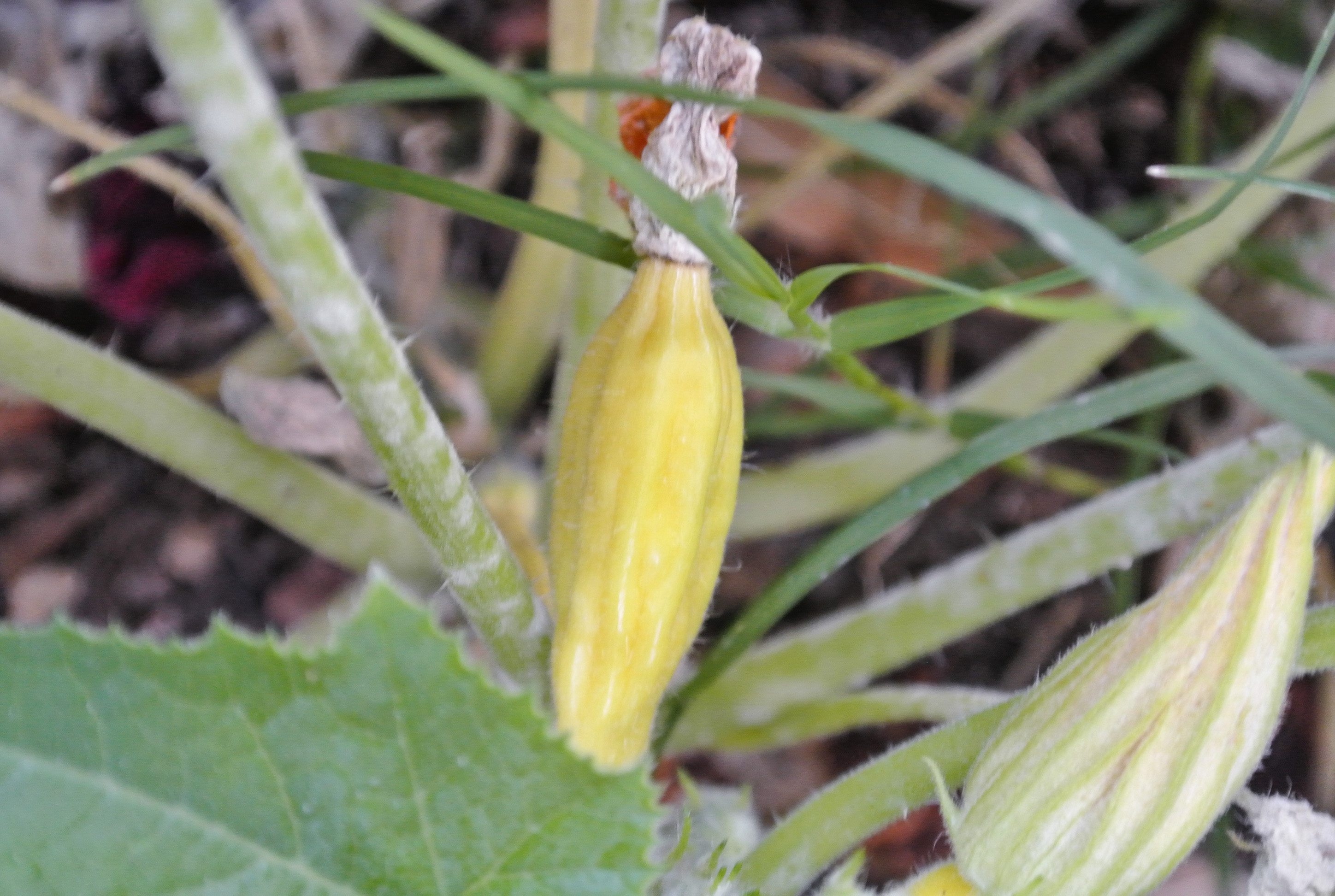
We have a few baby yellow summer squashes and leeks, too. We received leaks in our Bountiful Basket one week and thought we’d try planting it; months later, it’s going strong.

DSC_2045 DSC_2043Other successes (not pictured) include continued growth of our pomegranate trees, shrub-sized rosemary and lavender, and lemongrass that’s been going for well over a year. We have about five ears of corn with a couple of kernels each and green onions that we planted over two years ago that just keep on giving.

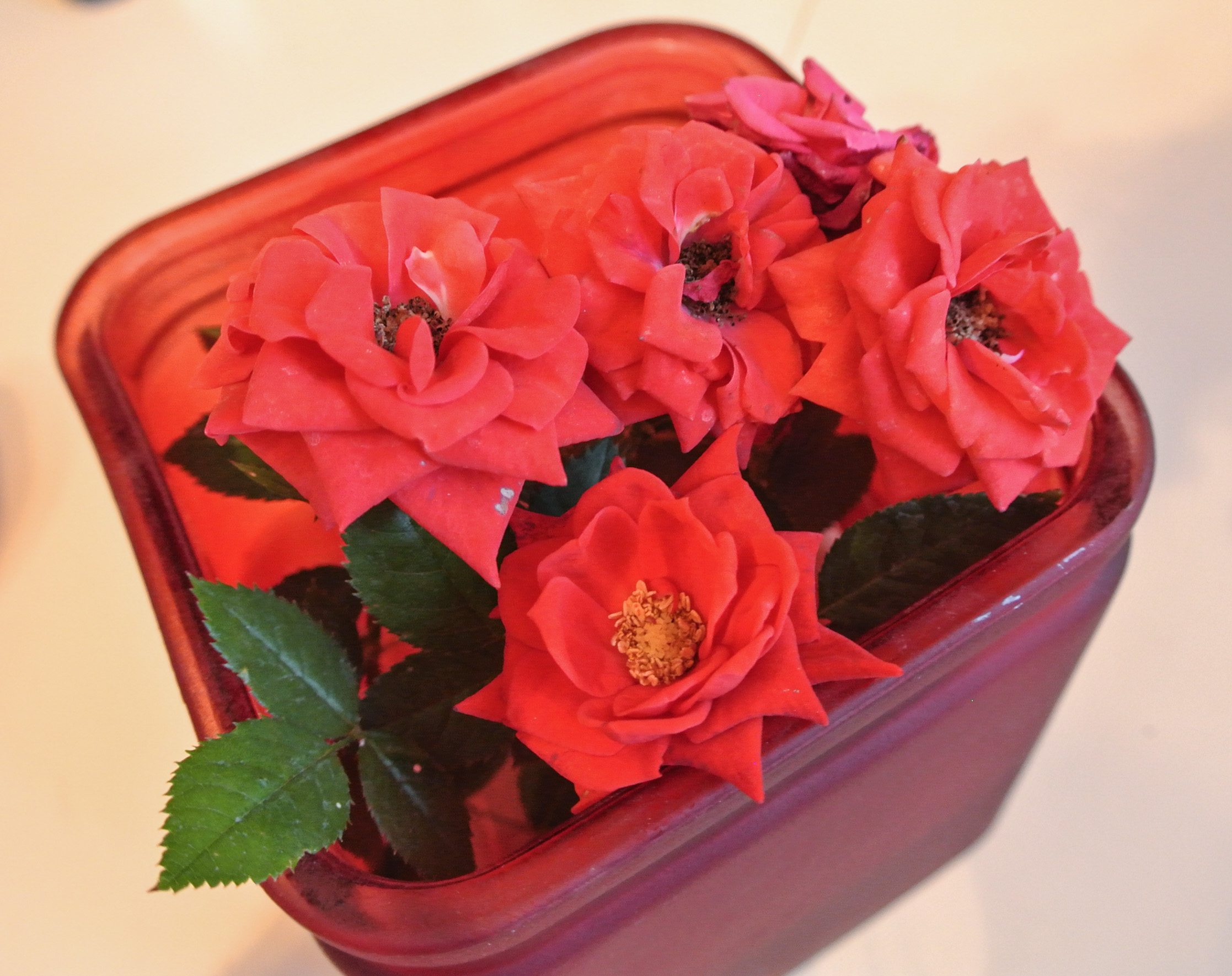
Our oleanders are in bloom, as well as a few different flower varieties. The mini-red roses below came from a “house plant” given to us nearly two years ago. It was near death living inside, so we took a chance and planted it outside and it has been in bloom since. Blooming flowers = birds and bees = new growth cropping up unexpectedly…

DSC_2051Surprise: We have wonderberries! It took us a while to research and name the mystery plant that has taken root in our yard, but we finally did it. Wonderberries, sometimes referred to as sunberries, look similar to blueberries. When they are green, they are poisonous. Once they turn black, they are edible. When the skin goes from shiny to dull, they are at their best, but never quite as sweet as other berries. They are commonly made into pies or jams where extra sugar can be added. I’ll let you know when we harvest ours and make something out of them.

DSC_2041Still feeling daunted? Again, start with windowsill herbs and work your way up to planting bigger crops. 🙂 Your organic palate and fuller wallet will thank you in the end!

I’m Bringing Coleslaw Back, Sans Mayo

DSC_2060

I used to have lukewarm feelings for mayo-based coleslaws, but once I made slaw with a vinaigrette dressing, I enjoyed it so much more.

Coleslaw gets a bad rap. It is often presented in ways that are unappealing, slopped down as an unwanted side dish with ribs, burgers, or fish and chips. No matter how good it tastes, it’s always overshadowed by other elements on the dish, and perhaps rightly so…until now. I’m bringing slaw back – and you won’t be satisfied with just that tiny plastic cup.

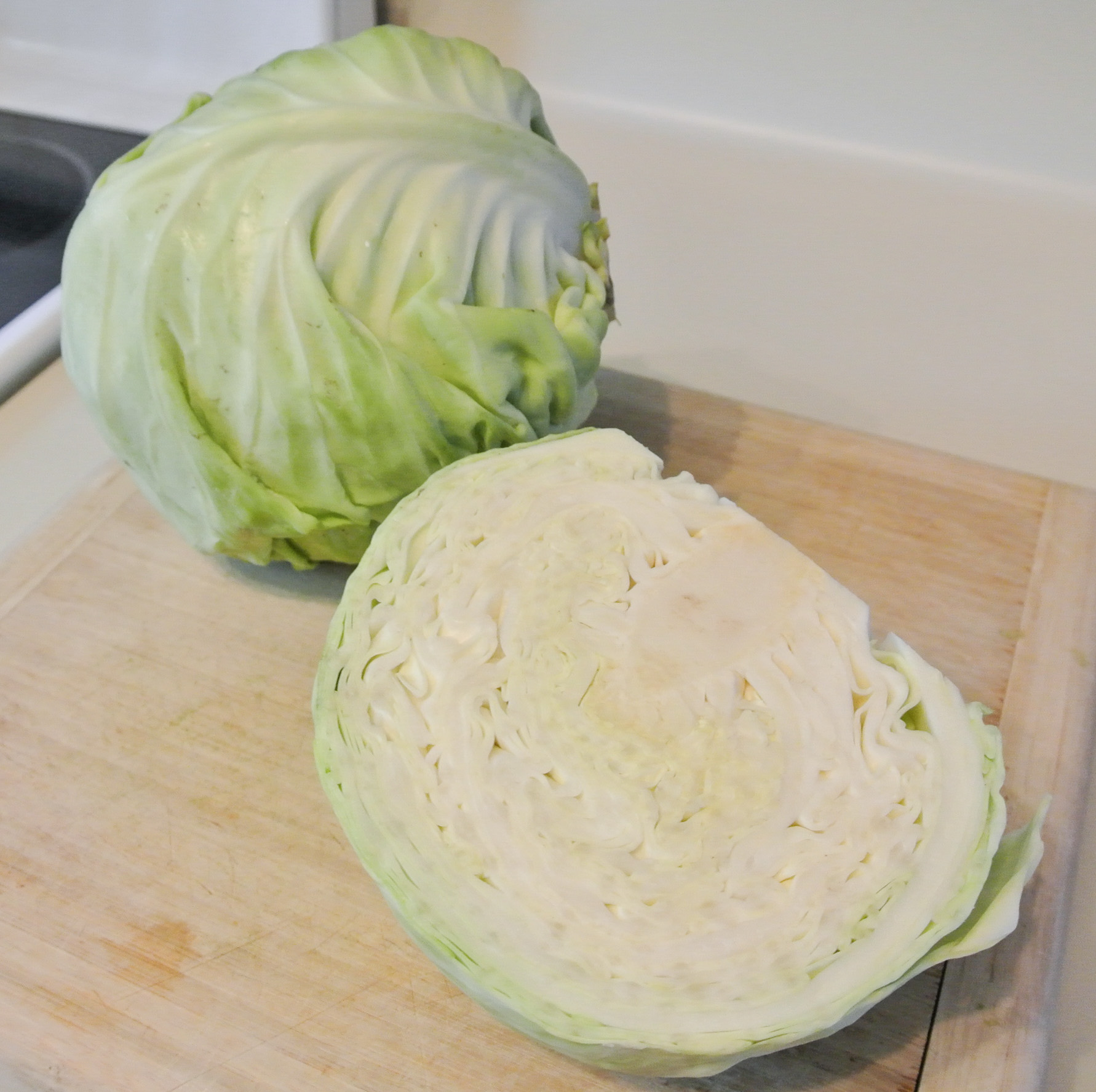
While slaws are traditionally made with cabbage as the main ingredient, you can certainly use any hearty leaf that will hold up to being dressed and transported to a backyard barbeque. Today, I’m starting with the basics. Cabbage is high in vitamin K and anthocyanins, which aid mental function and concentration.  It is also a rich source of vitamin C and sulfur, which helps the body to remove toxins and improve skin.  Cabbage has number of other health benefits and can even assist in getting rid of that nasty hangover!

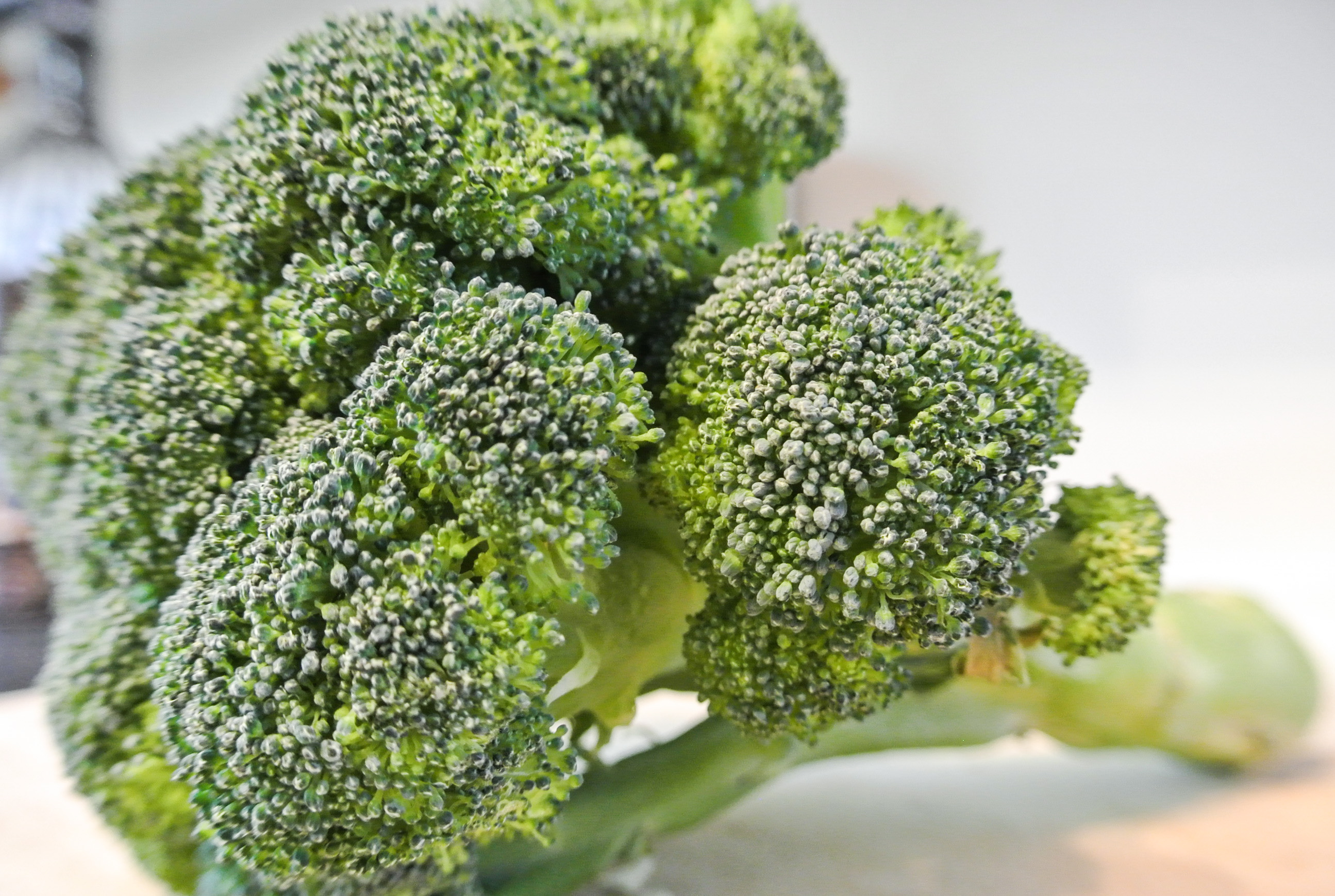
DSC_2053Another super food that I’m using in today’s slaw rendition is broccoli, which is in the same family as cabbage.  Thus, it also a powerhouse of vitamins K and C and contains detoxifying properties.

DSC_2057Finally, in my dressing, I’m using, for lack of a better description, a watered-down version of agave syrup.  Thankfully, this sweetener is all-natural, containing small amounts of juices from other fruits that amount to fewer calories.  Again, I don’t count calories, but what appeals to me about this sweetener over pure agave syrup is that it has a lighter, more refreshing quality about it, which I think pairs perfectly with a slaw like this one.  As you’ve seen in my other formulas, I use full-fledged agave syrup all the time, but I like this one best in this application.

DSC_2061So, I beseech you to consider giving coleslaw another chance.  My formula yields a crunchy, crisp dish that I would eat as more than a measly side.  If I’m hungry enough, I’ll eat at least half of the bowl myself.  🙂  Enjoy!

FORMULA BASE:  SLAW

Serves 4-6 as a side; 2-3 as the main event

  • ½ head or 1 bunch hearty leaves (cabbage, kale, collard greens, rainbow chard, etc.)  –>  I’m using green cabbage.
  • 2 cups chopped raw fruit and/or vegetables  –>  I’m using broccoli.
  • ¼ cup “crunch” (raw seeds, nuts, etc.)  –>  I’m using sunflower seeds.
  • ¼ garnish (green onions, chives, fresh herbs, etc.)  –>  I’m using green onions.
  • Homemade dressing of choice*

*Today, I’m using a combination of 2.5 tbsps white wine vinegar, 1 tbsp olive oil, 1 tbsp agave syrup, and salt and pepper to taste.

Chop or shred your leaves; it isn’t important that they are perfectly uniform in size or shape.  If you’re using cabbage—or a vegetable like it—cut around or otherwise remove the tough core.  If you’re using a green with ribs—such as a kale—cut around or otherwise remove those as well.

DSC_2054Finely chop your vegetables, crunch, and garnish (if needed) and add to your slaw base.  Mix your dressing separately and pour over the slaw.  Toss and serve.  Holds up well in the fridge for a few days.

DSC_2059

I’m Pregnant, and I want PB&J!

DSC_2037

If you haven’t heard via one of my social media accounts (follow me on Twitter and Instagram @jackiewitzke or on Tumblr, TheFreshFormula), I am pregnant with baby #2! We have lovingly named our mini-us Baby Dos, since we aren’t finding out the sex until birth. I’m happy to report that I’ve been feeling well overall, especially now that the exhaustion of the first trimester has passed.

When I was pregnant with Nolan, I craved macaroni and cheese, which doesn’t exactly bode well for my plant-based lifestyle. This pregnancy, I’m thankful to be craving something animal-free: good ‘ole peanut butter and jelly! So long as jelly doesn’t contain gelatin, it is naturally vegan. I buy nut butters containing only nuts, so they’re as natural as you can get, too. And as you know, I also make my own bread, so PB&J is generally a pretty healthy snack for me…

…except for the excess of sugar found in some jelly brands. I’ve handled this a couple of ways. If I purchase premade jelly, I look for all-natural varieties that do not contain high fructose corn syrup. Travis and I have also made our own jellies and jams in the past, allowing us to control the amount and quality of sweetener that goes in.

Regardless of how well I shop or prepare homemade jellies and jams, sugar is sugar. Not only does the average person need to avoid consuming an excess, but certainly a pregnant woman should. I have solved this problem by turning to an old standby: my dessert smoothie formula.

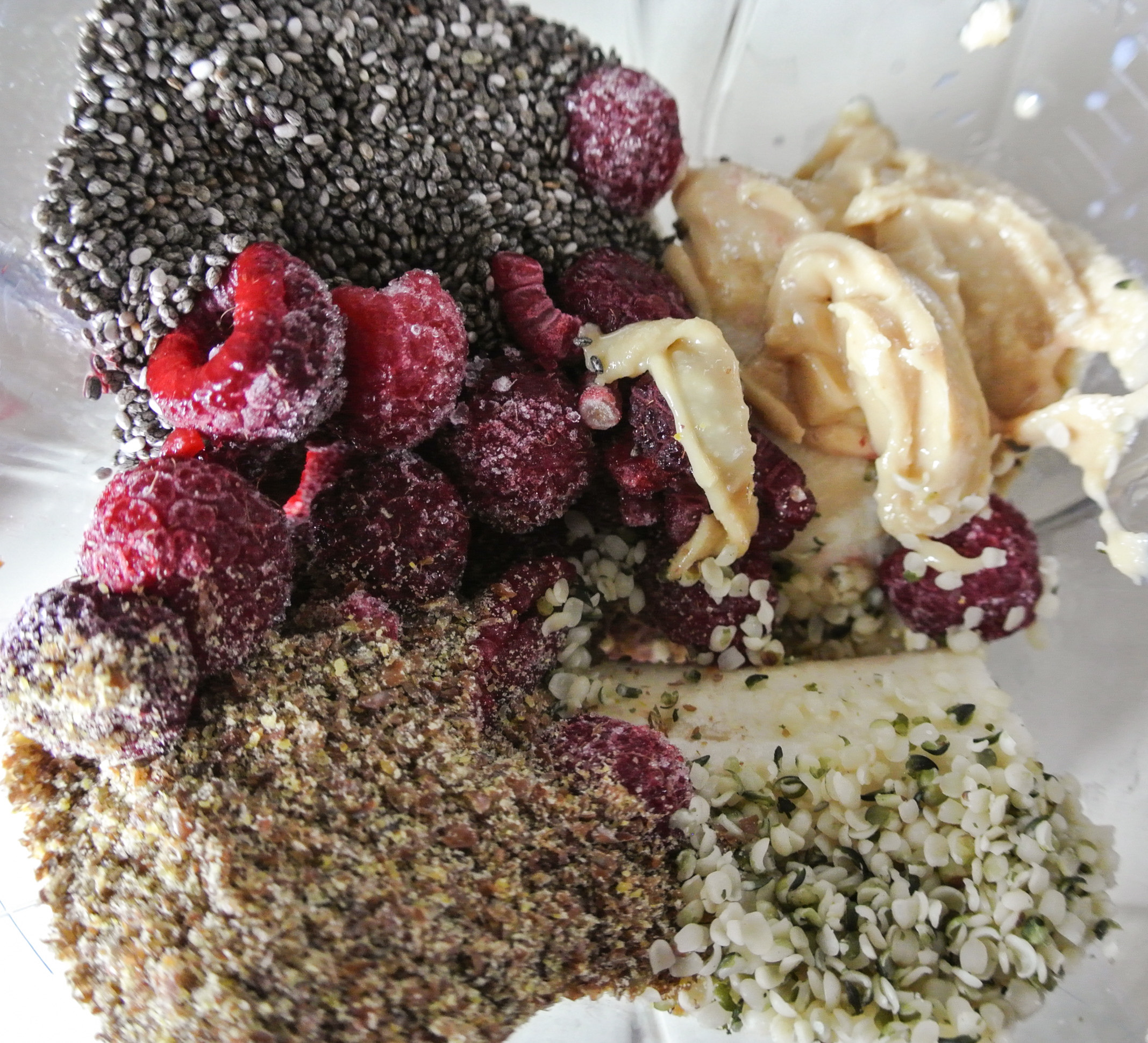
Yes, it’s here: the no-sugar-added PB&J smoothie! I derive all of the sweetness in this treat from raw fruit and medjool dates (as needed). But wait, doesn’t fruit contain sugar? Yes – thankfully, it is coupled with fiber to slow the body’s absorption and prevent the conversion to fat. A dietician that I follow (as mentioned in this previous post) eats primarily raw fruit in her vegan diet and claims that you cannot consume too much of natural sugar in this form (juice, of course, is another story, which I wrote about in the same post). So, not to worry PB&J lovers!

My favorite jelly is that of raspberries, which I’m including in today’s formula adaptation. Raspberries (as with many other berries) happen to be low in sugar, for those concerned, and contain more fiber than any other fruit. Pretty awesome, huh?!  These pictured below are frozen, not moldy.  🙂

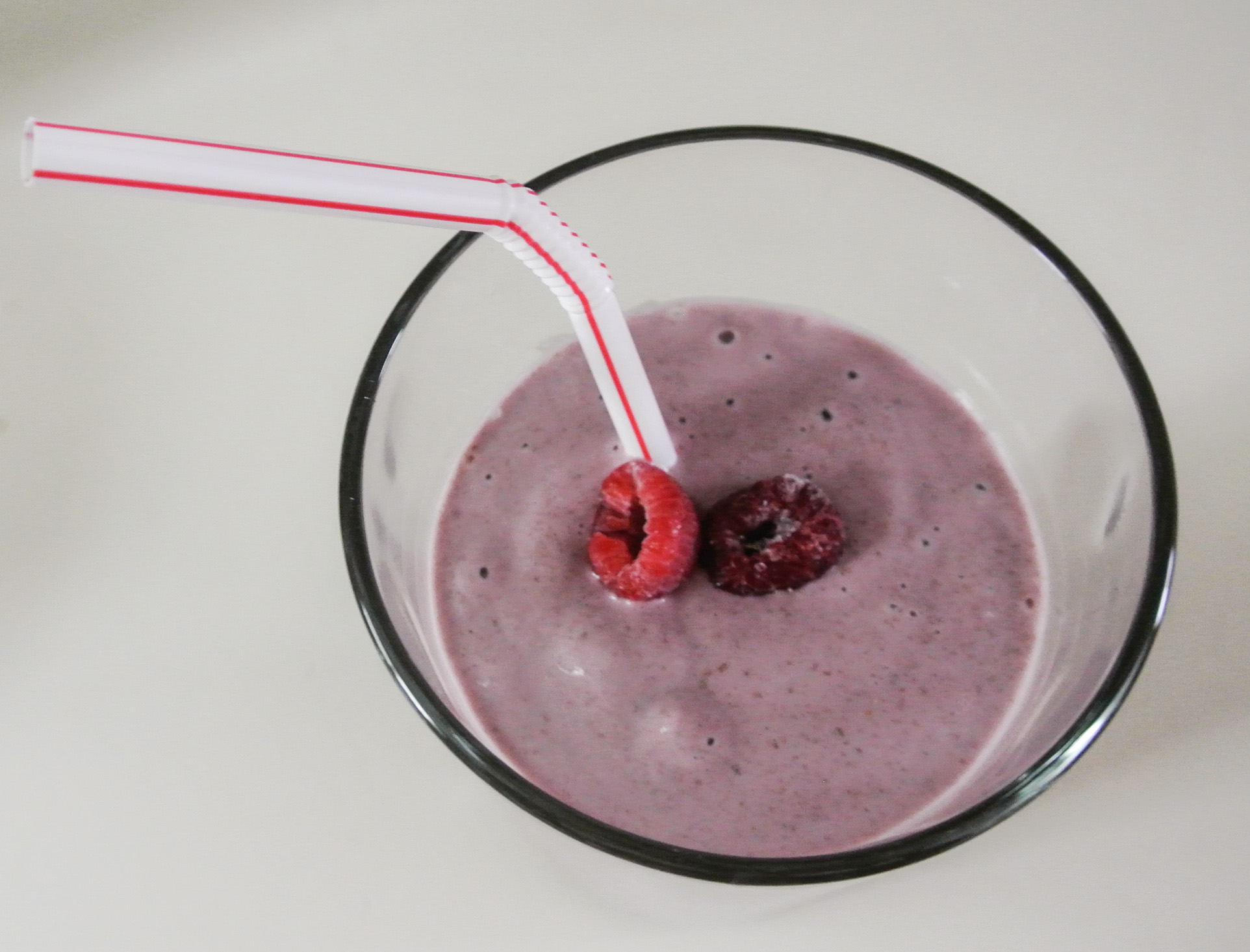
DSC_2033Like my chocolate peanut butter banana smoothie, you can enjoy this one for dessert, but it would make for a well-balanced breakfast or snack, too. Enjoy!

FORMULA BASE: DESSERT SMOOTHIE

Serves 2-3

  • 2 frozen bananas (or fresh bananas and ice)
  • ½-1 cup specialty ingredients –> I’m using ¾ cup frozen raspberries and ¼ cup peanut butter.*
  • 1 tbsp chia seeds
  • 1 tbsp ground flax seeds
  • 1 tbsp hulled hemp seeds
  • ¼-½ tsp extract of choice (optional, and amount depends on flavor intensity) –> I’m not using any.
  • Pitted medjool dates as needed for sweetness –> I’m not using any.
  • Juice or plant milk until desired consistency (start with 4 oz) –> I’m using almond.

*You could use any combination of berries and nut/seed butter.  🙂

Place all ingredients in a blender and puree until smooth, adjusting specialty ingredients as necessary.

DSC_2034 DSC_2036

My Simplest Formula Yet: Salt-Free Salsa

DSC_2028Salsa is an excellent way to eat a mix of great-for-you raw fruits and vegetables. With the combinations being endless, it’s no wonder that so many people love to dip in in front of the TV or at a party or restaurant.

Salsa should be one of those snacks that you don’t feel guilty about. However, if you buy it premade, there’s a chance that it will be loaded with salt. My salsa formula is so simply flavorful that I don’t add any salt at all…not even a pinch.

Why? Chances are, you are eating your salsa with tortilla chips. Most chips are salted to some degree, some more heavily than others. Because consuming minimal salt is a major premise of my plant-based lifestyle, my palate has become very sensitive to foods that are overly salty. Thus, the salt from the chips is enough for me in boosting the flavor of my already delicious salsa.

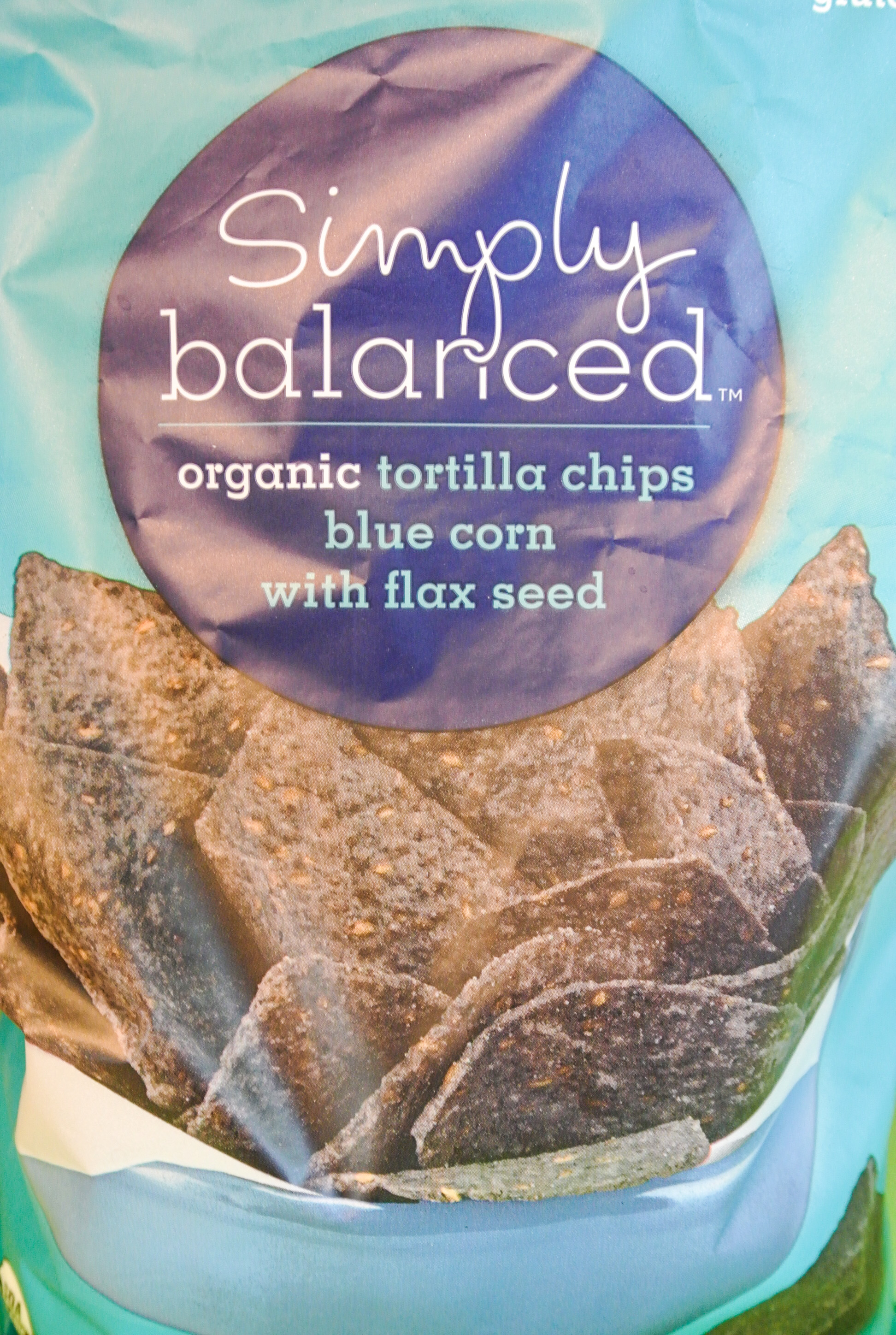
I really like these chips, from Target’s organic product line. The ingredients are listed as follows: Organic blue corn, organic sunflower oil, organic flax seed, sea salt, lime. (NOTE: If you didn’t already know this, when reading a food’s ingredients on a nutrition label, they are written from greatest to least presence in the product.) True to its name, Simply Balanced, I haven’t found a better premade chip. They are heartier than your average tortilla chip and not too salty, which is perfect for me.

DSC_2029Moving along, today’s formula rendition includes a few fresh ingredients that offer a ton of health benefits. Let’s take a look:

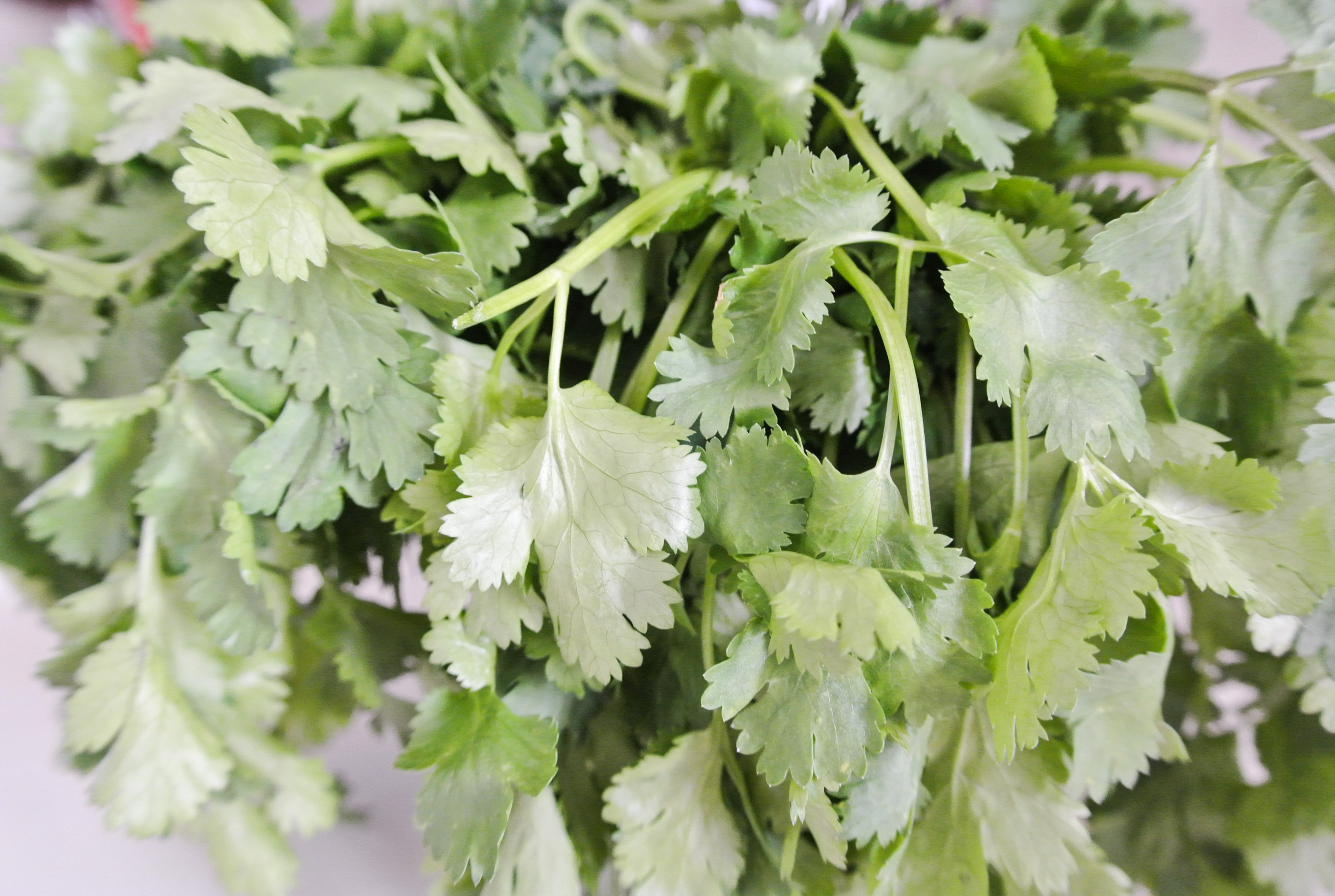
CILNATRO: This common salsa staple is high in antioxidants and prevents oxidation, allowing foods that it is mixed with to stay fresh longer.

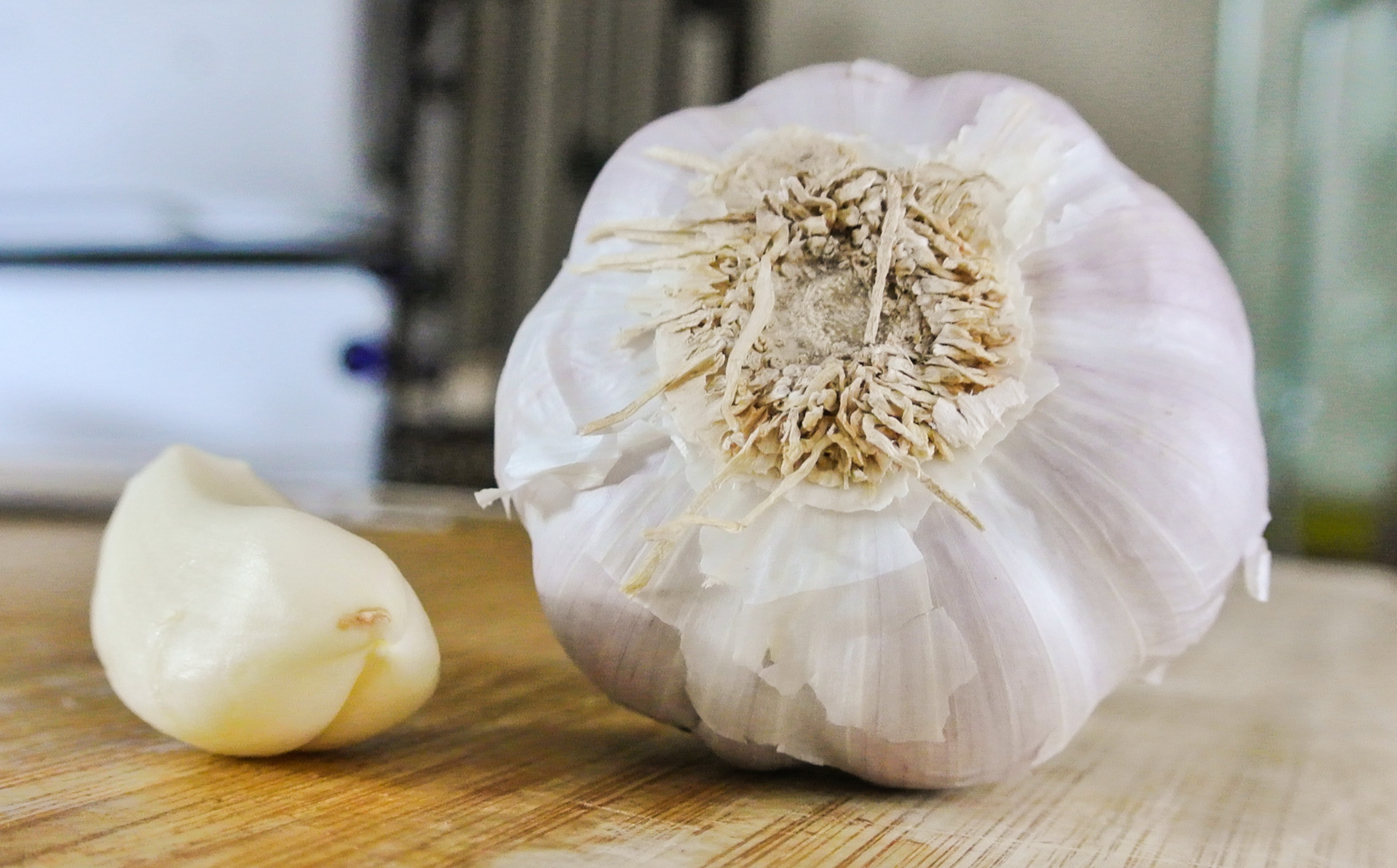
DSC_2017GARLIC: There’s a reason that you can buy garlic supplements in the vitamin aisle. Raw garlic, in particular, has anti-inflammatory effects and can lower cholesterol. Those of you who have read up on my health history know how important this is to me!

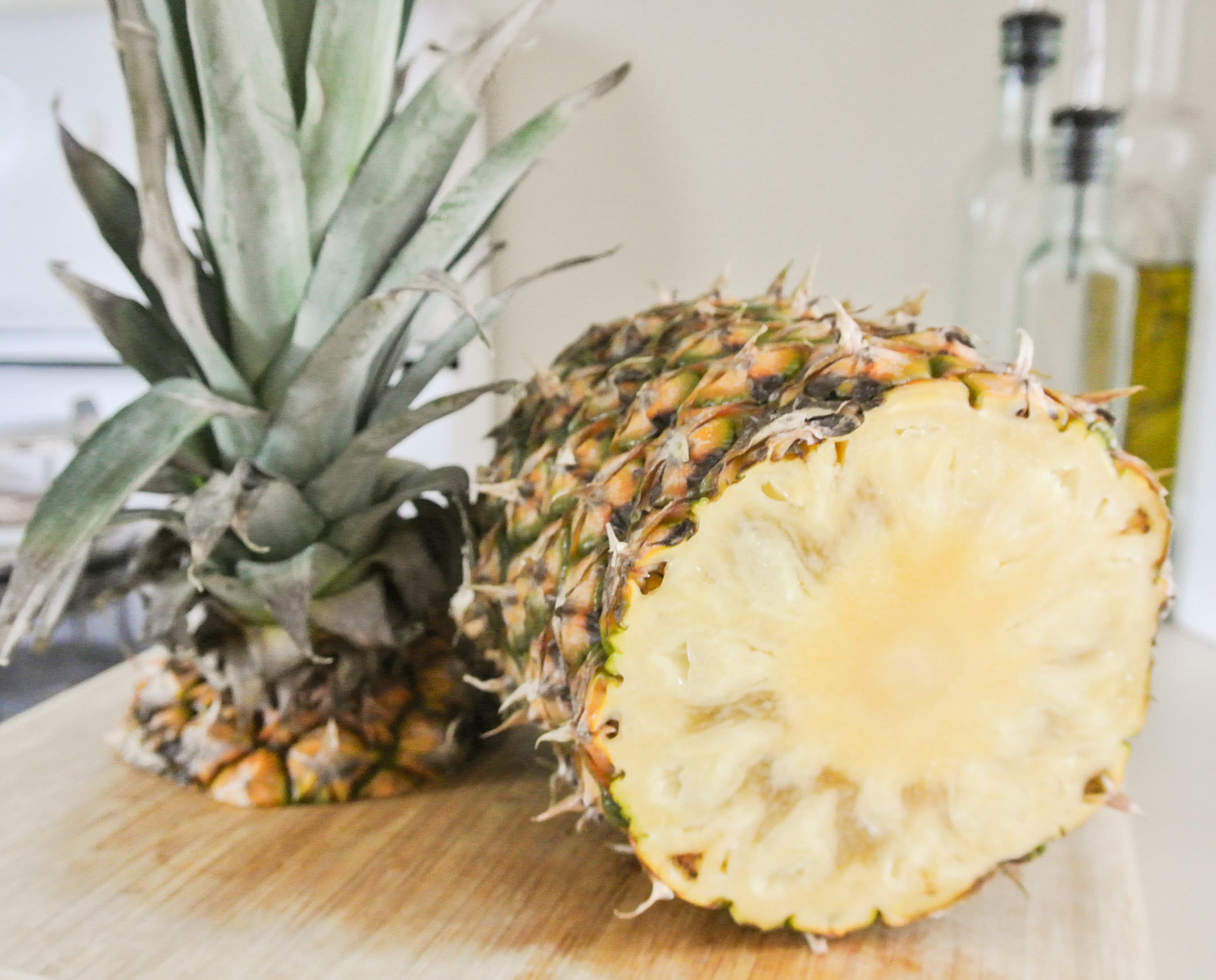
DSC_2021PINEAPPLE: Pineapple is nutrient-dense rather than energy-dense, meaning that it contains an abundance of nutrients for very few calories (I don’t count, but this may be important to you if you’re trying to lose weight). In one cup of pineapple, for instance, you can consume 40% of the recommended daily Vitamin C intake.

DSC_2023Since we’re on the subject, how do you cut a pineapple? Buying it precut or diced in a can is more expensive. Believe me, breaking it down yourself is easier than you’d expect. I have to give credit to Rachael Ray for my method, which I use for all melon-like fruits and also gourds. Follow these steps to cut a pineapple with ease in minutes:

  1. Lay the pineapple on its side.  Slice off the very bottom and the very top so that you are left with a cylinder that can easily stand flat on the cutting board in its upright position.
  2. While standing upright, take your knife around the perimeter of the pineapple and slice the skin off, top to bottom.  You’re essentially cutting it off in vertical strips until you’ve made it all the way around.
  3. Once the pineapple is peeled, remove the flesh surrounding the core.  While the pineapple is standing upright, put your knife close to the edge of the core and slice downward, effectively removing nearly half of the pineapple.  Repeat this process all around the core until you’ve done it a total of four times (the pieces will be uneven in size).  Your core should appear as a long, thin rectangle when all of the flesh is removed.
  4. Chop your pineapple according to its projected usage and discard the core.  If you happen to own a powerful juicer, you can juice it instead.

On to my simple salsa! Don’t like onions? Don’t use them and compensate with extra fruit and/or vegetables. Play around with different combinations, using your herb of choice as your guide. I’m envisioning a delicious cucumber mint with pita chips or strawberry basil atop crostini…Yum…

Serve as an appetizer or snack, or use it in a dish like my layered burrito bowl. Enjoy!
FORMULA BASE: SALSA

  • 4 cups diced raw fruit and/or vegetables –>  I’m using 2 ½ cups vine ripe tomatoes and 1 ½ cups pineapple.
  • ½ of a medium onion –>  I’m using yellow.
  • 1 large clove of garlic, minced
  • ½ cup finely chopped fresh herbs –>  I’m using cilantro.
  • ¼ cup acid (vinegar or citrus juice*) –>  I’m using the juice of two small limes.
  • Seasoning to taste –>  I’m using a dusting of chili powder, paprika, and cumin.

*Whenever possible, juice whole citrus fruits yourself. 🙂

DSC_2018

Chop your onion and garlic and get them soaking in your acid, just as you did in preparing my bean salad formula. The acidity will help to break them down so that their flavors are less abrasive and don’t monopolize the salsa.

Dice/chop all remaining ingredients, season, and stir. When it comes to salsa, I don’t typically measure seasonings. Once I have all of my produce in the bowl, I lightly sprinkle it with each of my preferred seasonings (if any) from one end of the bowl to another and that seems to work out nicely.

DSC_2024

Serve immediately or store in the fridge for a few days.

DSC_2026

Feel the No-Bake Power!

DSC_1996

When it comes to natural sources of protein and energy, the health-conscious are turning to homemade bars, balls, and bites. From what I’ve seen, creators are calling on dried fruit, nuts, seeds, and grains to put them together. My power ball formula also includes a classic crowd pleaser, chocolate!

I am not a fan of or advocate for protein powders or shakes. They are expensive, overly processed, and while some taste decent, many have a chalky aftertaste. I follow a blogger that is a dietician by day and athlete by night. She follows a mostly raw vegan diet, is totally opposed to powders and shakes, and is able to gain plenty of lean muscle mass (if that’s what you’re going for) using plant-based sources of protein and energy.

Her posts and my commitment to a minimally-processed, DIY plant-based lifestyle inspired me to create a power ball that my whole family will eat. Because they are dense, rich in flavor and consistency, and somewhat expensive to make, I only eat one or two a day when I have them in my fridge.

The base of any solid bar, ball, or bite is whole grains (often oats) and something sticky and gooey to hold the whole thing together. Creating the dough is quick and easy; rolling it into easy-to-grab-and-eat balls is a little more time-consuming, but yields you the perfect portion.

DSC_1995

Pop a power ball as a snack, eat one or two with fresh fruit for breakfast, or treat yourself to a super healthy mock dessert. You could even serve them at a party because they are just so darn cute…power lollipop anyone?! 🙂 In general, these remind me of truffles, without the animal fat, cholesterol, and excessive sugar. Enjoy!
FORMULA BASE: POWER BALLS

Makes 12-14 small balls

For the dough:

  • 1 cup nut or seed butter (nuts/seeds only) –>  I’m using peanut.
  • 1 cup uncooked whole grains –>  I’m using rolled oats.
  • ½ cup unsweetened dried fruit (without added oil) –>  I’m using 6 small pitted medjool dates.
  • 2 tbsps natural liquid sweetener –>  I’m using pure maple syrup.
  • 1 tbsp ground flaxseed
  • 1 tbsp unsweetened cocoa powder

Garnish ideas (approximately 4 tbsps):

  • Raw seeds*
  • Raw finely chopped nuts
  • Unsweetened coconut flakes
  • Unsweetened cocoa powder
  • Finely chopped unsweetened dried fruit bits (without added oil)
  • Melted dark chocolate (which will re-solidify after dipping)

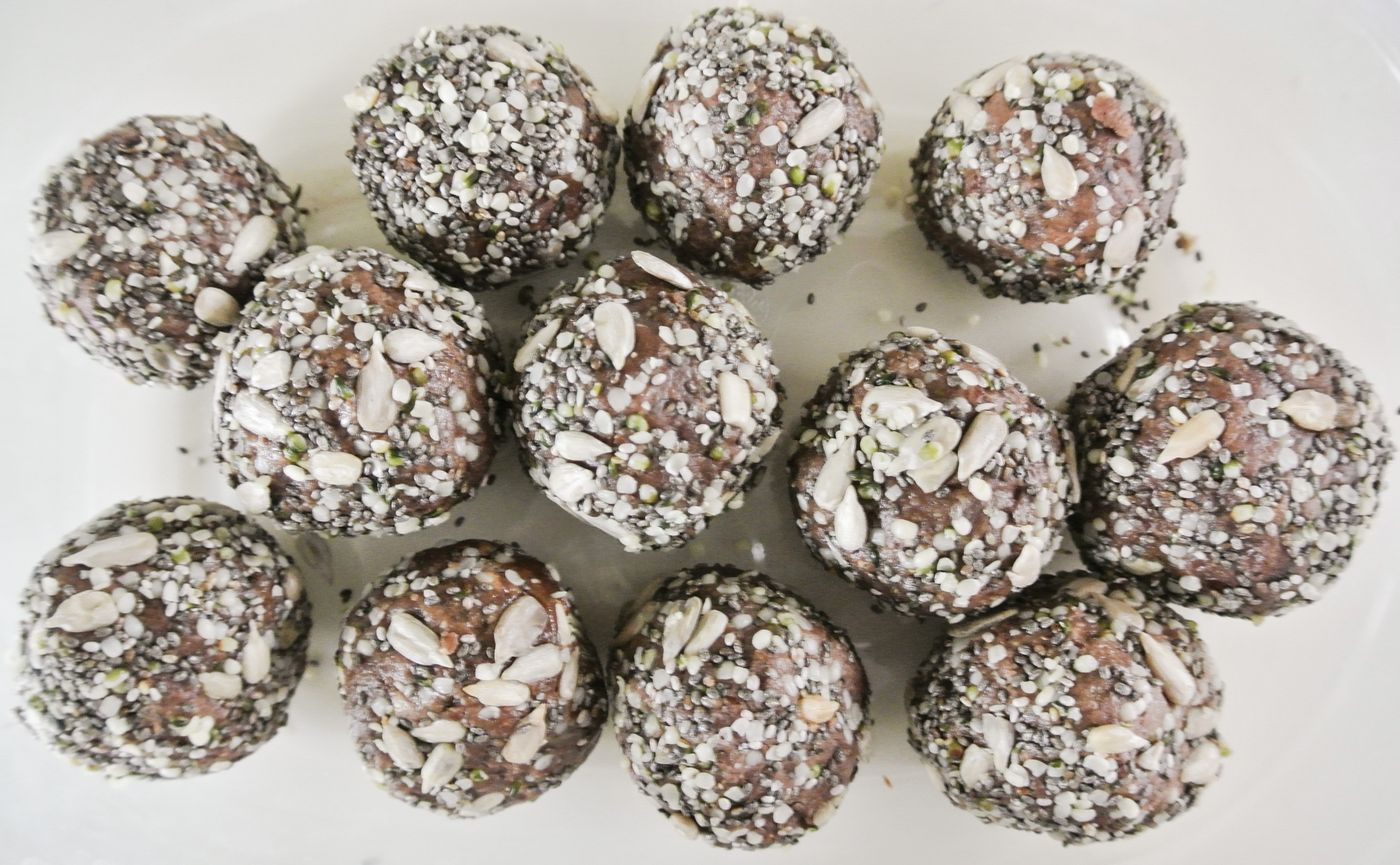
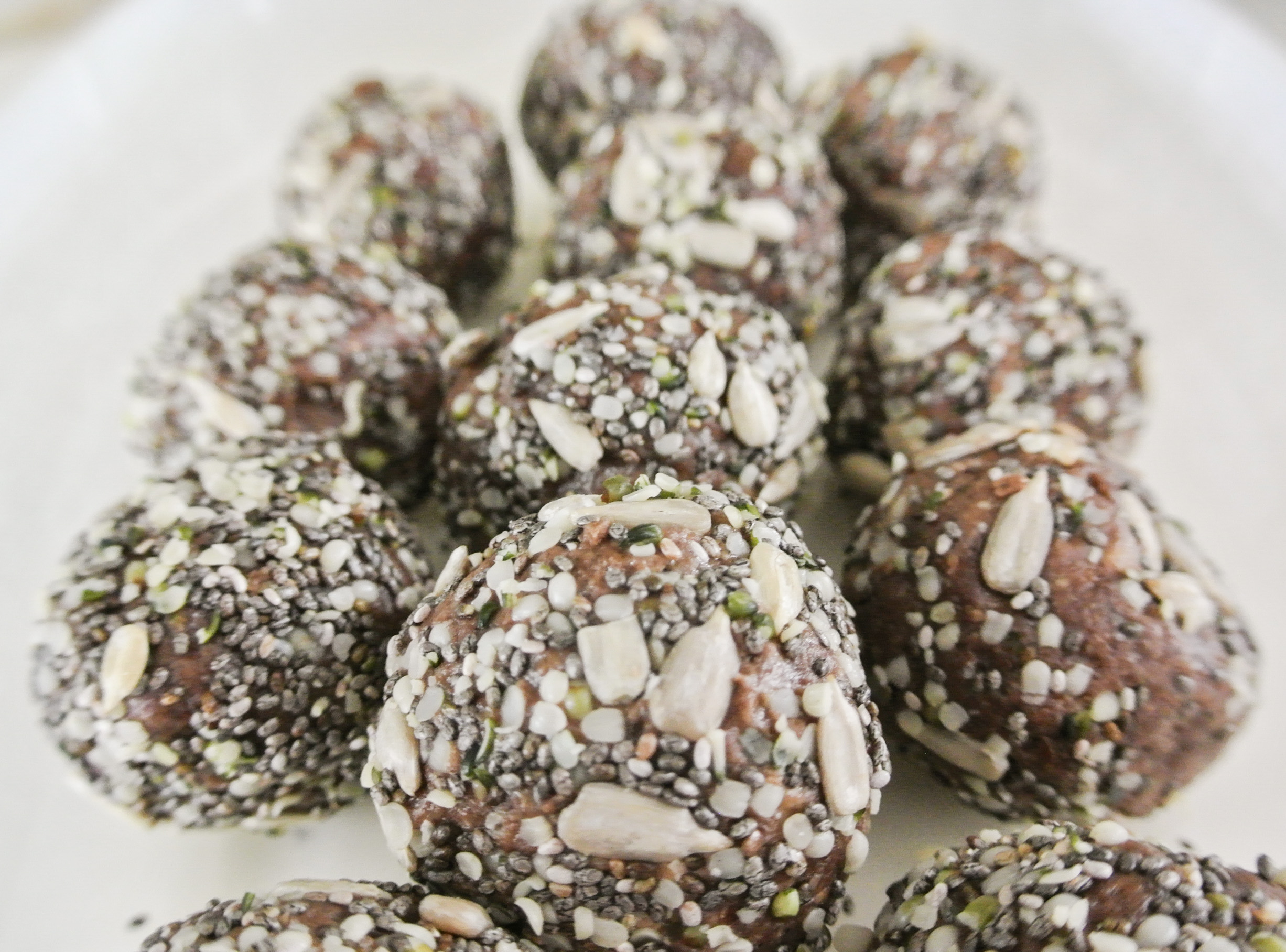
*Today, I’m using a combo of sunflower, chia, and hulled hemp.

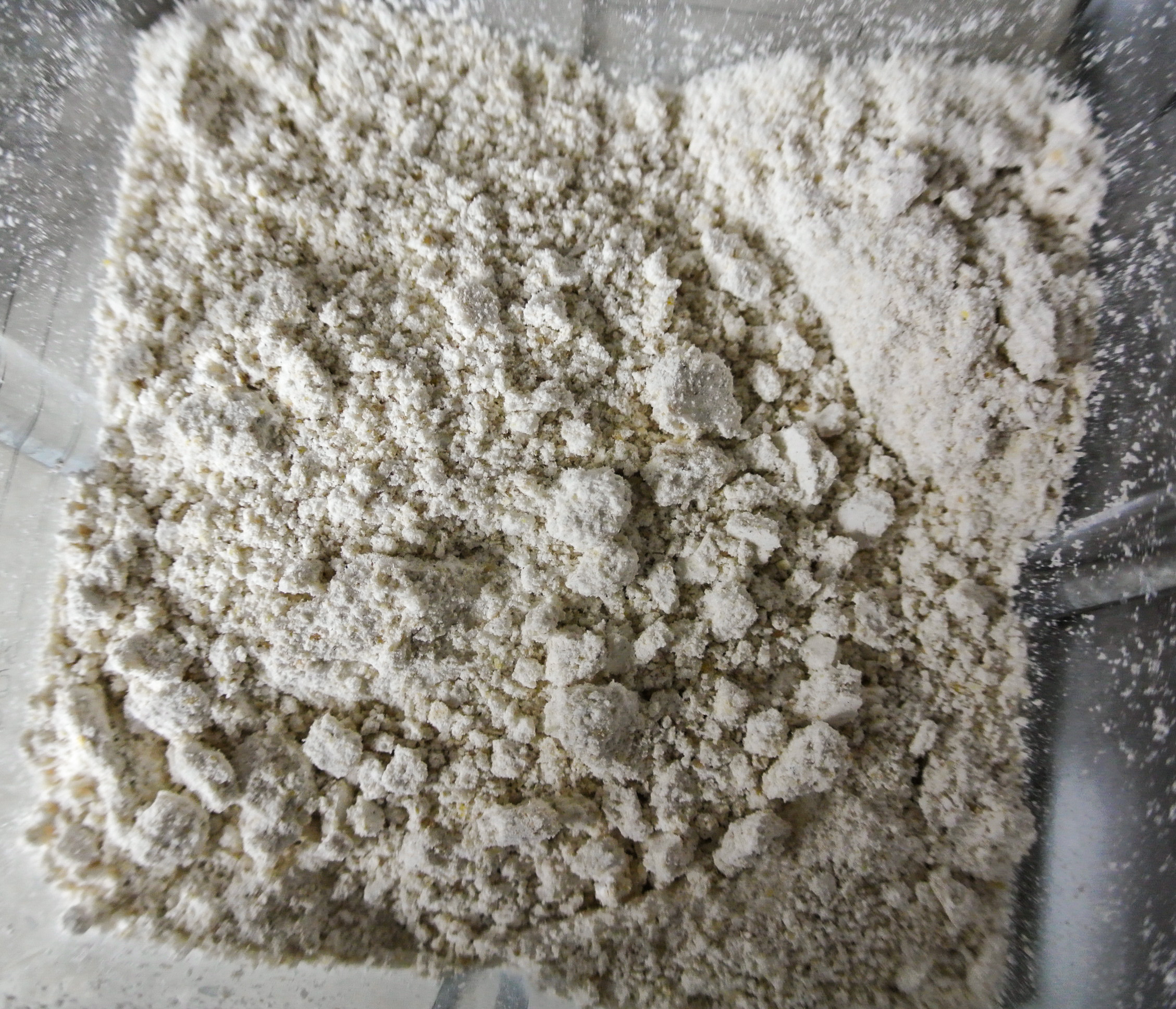
Turn your whole grains into flour using your food processor or blender. You could also use rolled oats as is. The texture of the balls will be different, but rolled oats are one of few grains soft enough to be palatable without becoming flour.

DSC_1986

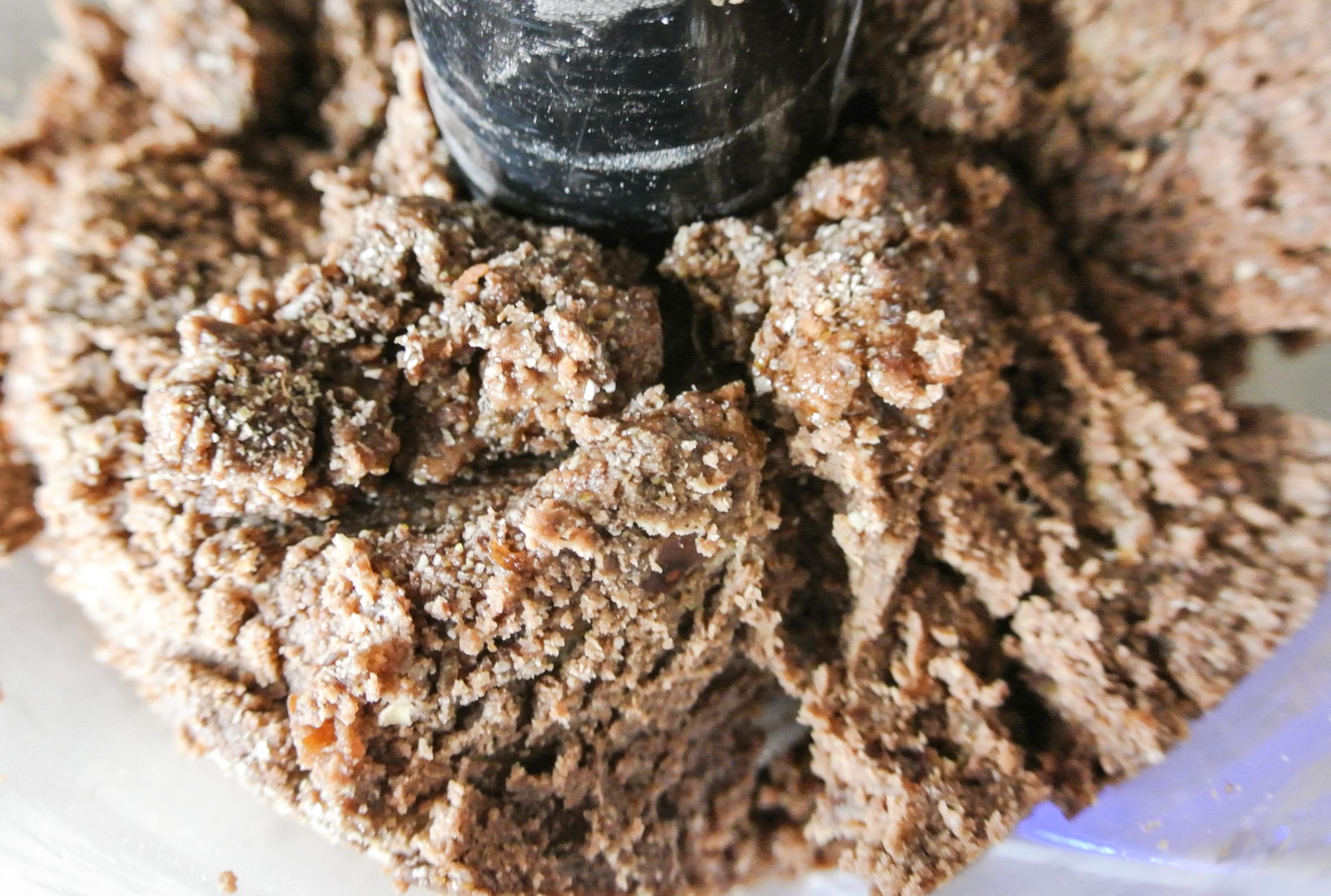
Combine the flour and your remaining ingredients in a food processor. Run until a thick, pliable dough forms. You will probably have to scrape down the sides of the processor with a spatula at least once.

DSC_1987

Shape the dough into 1-1 ½ inch balls and roll in garnish.

DSC_1990

Enjoy immediately or store in the fridge.

DSC_1997