Make Smart Substitutions

DSC_1985

I am excited to share with you that I completed my first Fresh Formula publication outside of my blog.  🙂  I completed an article for the Adjunct Faculty Association spring newsletter, The Connection, and was among only five adjuncts selected to write in the health and wellness section.  Today, I thought I’d share that article with you.

If you’re a regular subscriber of The Fresh Formula, some of the article’s content won’t be new information, but a refresher never hurts.  I also included the recipe for my chocolate peanut butter banana smoothie, which was one of my first blog posts.  Click the link above to see the original article or read the text below:

On my plant-based living blog, The Fresh Formula, I share information and recipes for healthy eating.  One of the easiest changes we can make to our diets is to consider healthier substitutes for the items that we are using regularly.  Below, I have listed some examples of substitutions that I have made in my own kitchen:

  • White flour –> Whole wheat flour, spelt flour, graham flour
  • White granulated sugar –> Turbinado sugar, maple syrup, agave syrup, medjool dates
  • Iodized table salt –> Pink Himalayan sea salt

DSC_1980

  • Nut butters with additives –> Nuts-only nut butters
  • Eggs –> Chia seeds or ground flaxseed (mixed with water), bananas, steamed apple puree
  • Dairy milk –> Unsweetened almond, cashew, coconut, grain, and hemp milks
  • Canned beans –> Dry beans or unsalted canned beans (beans only)
  • White rice –> Brown rice, farro, quinoa, wheat berries, cracked wheat, barley
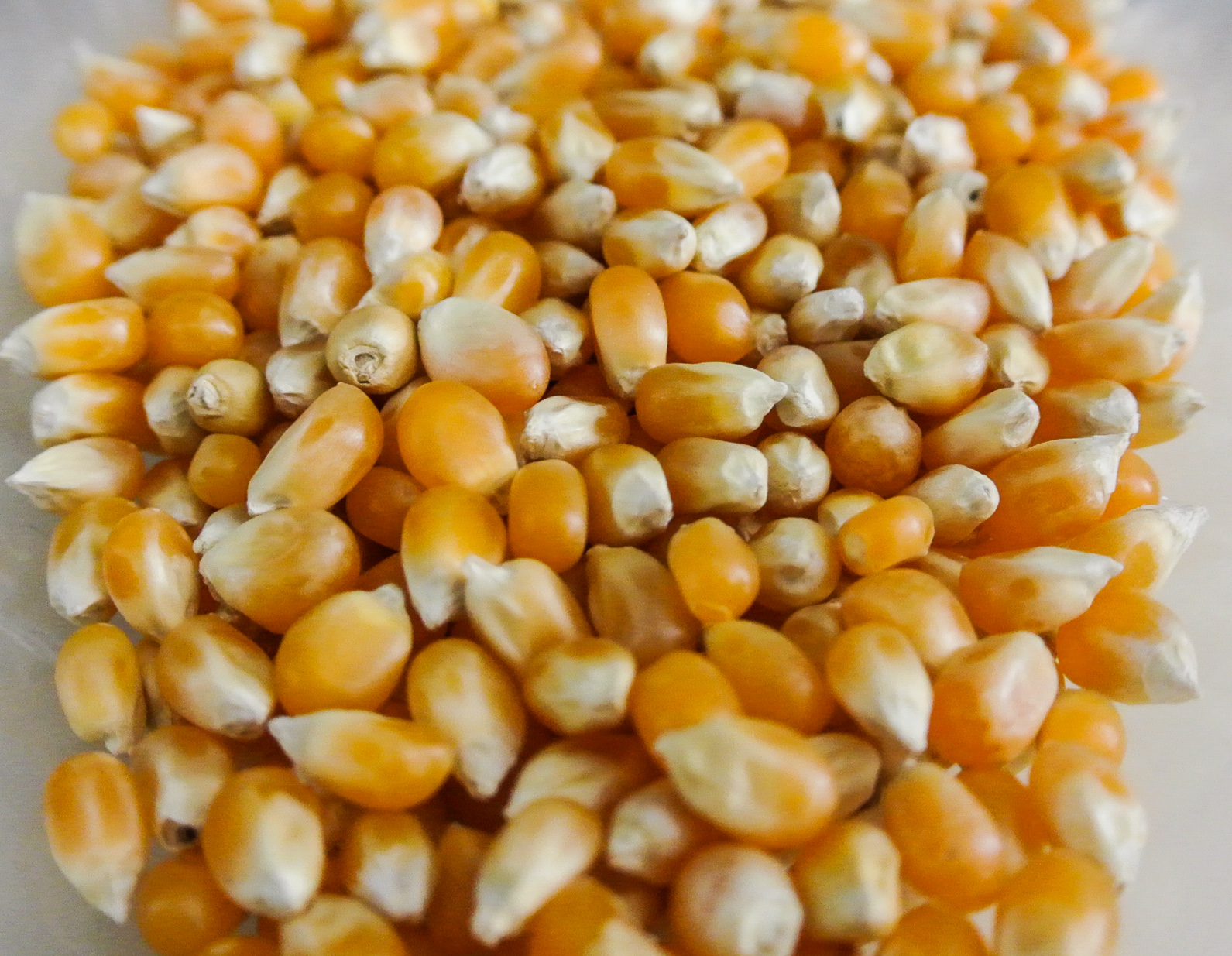
  • Prepackaged popcorn –> Bulk popping corn (made on the stovetop)
DSC_1982

  • Vegetable or canola oil –> Coconut, avocado, sesame, peanut, and olive oils
  • Boxed/canned stock/broth –> Unsalted homemade stock (can also be used as a flavorful substitute for water when cooking whole grains)

While many of these substitutions are more expensive, some are cheaper than their preservative-laden brethren; I believe that the health benefits are worth it either way.  I adopted a plant-based lifestyle because I had high cholesterol, so eggs, for example, were one of the first items to cross off of my shopping list.  Chia seeds, by contrast, are cholesterol-free sources of omega-3 fatty acids, protein, and calcium.

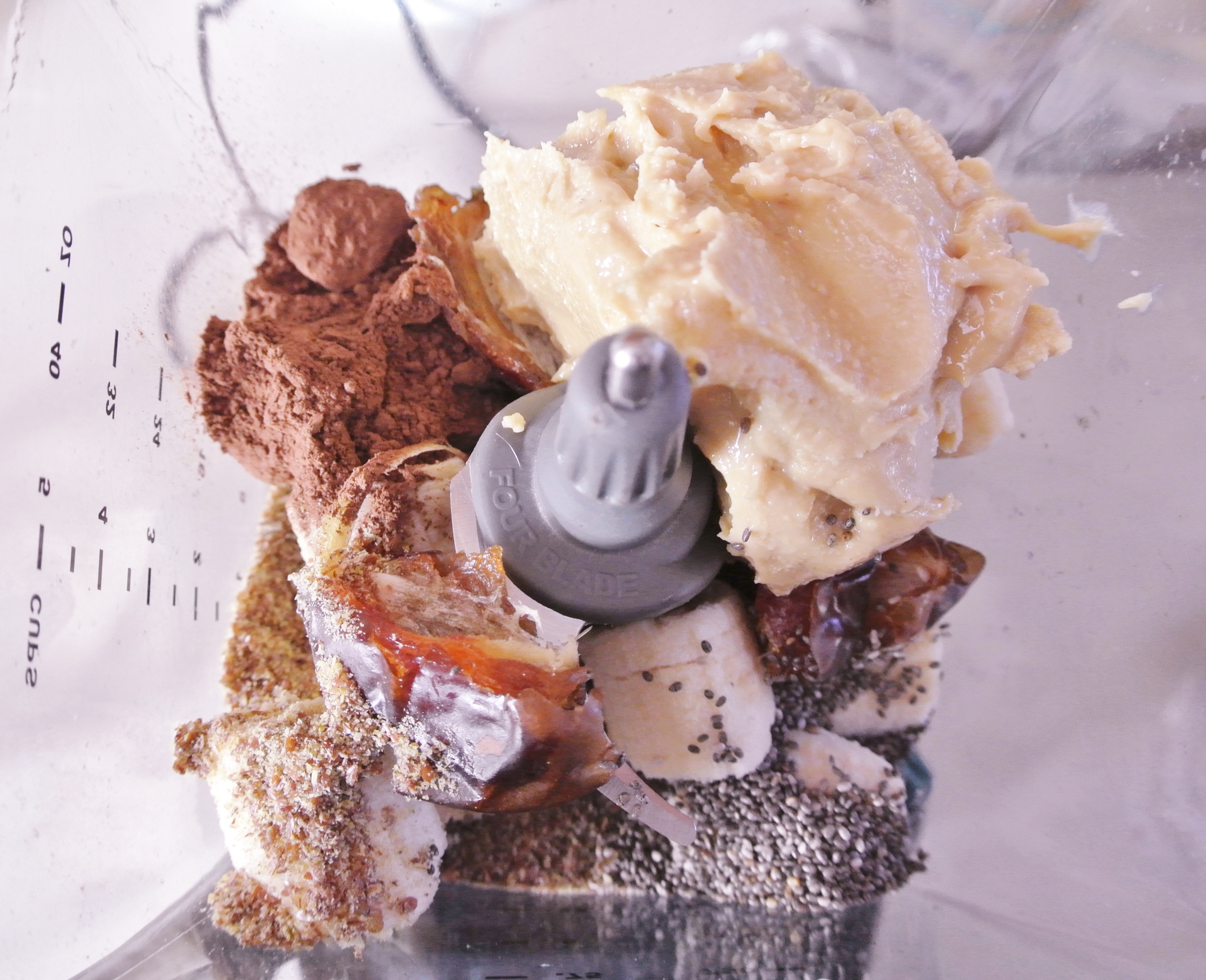
I have included my irresistible chocolate peanut butter banana smoothie recipe incorporating many of the aforementioned substitutions.  It is so decadent, it can serve as dessert, but is a healthy option for a meal or snack, too!

CHOCOLATE PEANUT BUTTER BANANA SMOOTHIE

Serves 2-3

  • 2 frozen bananas (or fresh bananas and a few ice cubes)
  • ½ cup peanut butter (nuts only)
  • 1 heaping tbsp of unsweetened cocoa powder
  • 1 tbsp chia seeds
  • 1 tbsp ground flaxseed
  • 2 pitted medjool dates
  • Unsweetened almond milk to achieve desired consistency (start with ½ cup)

Combine all ingredients in a blender and puree until silky smooth.
DSC_1505

For more valuable health tips, information on plant-based living and eating, and tons of delicious recipes, visit thefreshformula.com and subscribe for regular updates.  Cheers to good health!

How I Made the Switch

10860945_10105950389328904_2142054229820765234_o_edited

What I love about being an educator is my ability not only to teach students important academic content, but to help shape their lives.  I am thankful that my work habits trickle into my personal life, allowing me to reach those outside of the classroom, too.  Since adopting a plant-based lifestyle over three years ago, I’ve had many students, friends, and family members interested in making the switch themselves.  They’ve asked me for ideas and recipes, just wanting to live a healthier life.

As I’ve always stressed, I am not an expert in nutrition or dieting; I know what I know from old-fashioned research and experimentation.  For me, the proof of my lifestyle and Fresh Formula concept is in how I look, and more importantly, feel, in the day-to-day.  While I’ve never been overweight or unhealthy overall, I really believe that we can always improve, which is what I set out to do.

I also believe that the people in my life bring out the best in me, making me want to live as long and as healthy a life as I possibly can.  My husband and son in particular are what inspire me to make smart choices (as my mom always says!) each and every day.  I don’t want to watch my son ride his bike off to school; I want to ride my bike with him.

11001720_10204884344286016_940481854688695948_o_edited198628_10101096867216124_2241408_n_edited The most common question that students (and people in general) ask me once they learn that I don’t typically eat animal products is “What do you eat?”  I addressed this in a previous post, so I’m here today to answer the second most popular question:  “How do/did you do it?”
I’m an ordinary person with a busy lifestyle and like many people, occasionally make a really unhealthy food choice.  As a result, I knew that I would have to take baby steps in transitioning from a traditional, animal-laden American diet to one revolving around plants.

For me, the first step was doing away with cow’s milk.  Many varieties contain added sugar, hormones, and more (I’ll let you research that on your own).  I gave up cow’s milk over six years ago and should have done it sooner, being that I am mildly lactose-intolerant.  Skim milk never irritated my system much, but I knew that it wasn’t the healthiest milk option for me for a number of reasons.  So, I have since switched to plant milk.  I drink primarily almond, but I also like cashew, hemp, oat, and grain.

Less than two years later was when I was told I had high cholesterol.  Ugh!  My doctor advised me to give up red meat, pork, eggs, and butter.  I went without these for an entire year—not that I previously ate them much anyway—before I kicked all meat and most dairy to the curb.  Despite being lactose-intolerant, it’s been more difficult to give up dairy because it is often the staple ingredient in comfort foods:  ice cream, mac ‘n cheese, mashed potatoes, etc.  I am no different than the average person – sometimes, comfort food just sounds damn good.

Now, “comfort food” to me is a big salad or rich smoothie because that’s what I’ve come to crave.  I also really look forward to making customary animal-based comfort foods vegan, trying new things, and learning about the latest super foods.  That leads me to the next stage in my plant-based journey…

About six months after eliminating animal products, I decided to make it my mission to try new fruits and vegetables.  A friend that I used to teach high school with and I would head out to the farmer’s market and while I would buy plenty of familiars, I would also try to grab at least one or two items that I didn’t recognize.  While this sometimes wound up in failure (you can’t help what you like and don’t like!), 90% of the time I found some—or a lot of—success with new produce.

The last phase in my journey to plant-based living involved what I call, for no particular reason other than simplicity, “picky vegan things.”  I gave up honey, gelatin, white sugar, etc.  In other words, I gave up the foods that don’t outwardly say “I’m made with animal products,” or that we commonly associate with chickens cooped in their pens or salmon being fed corn, but foods that contain animals or are made by animals nonetheless.

Today, I am working on becoming even more dedicated to an imperfect model.  I am not above grabbing a slice of pizza at a party; I just choose not to eat like the majority 95% of the time.  For this, I am healthier than ever, with great blood work, loads of energy, reliable sleep habits, and a normal weight and heart rate.

I hope that taking a look into how I got where I am inspires you to make a healthy change in your lifestyle, however big or small.  There’s nothing wrong with baby steps and there is no perfect diet.  🙂  For more inspiration and ideas, read more about me, plant-based living, and my Fresh Formula concept.  As always, enjoy!

How to Start Your Own Garden

DSC_1883

I am often asked how Travis and I make a plant-based lifestyle affordable.  As I’ve mentioned before, although I spend less than I did in my omnivorous days, to purchase high quality, organic, GMO-free, all-natural, plant-based foodstuffs isn’t cheap, and that may be one of the reasons why more people don’t get on board.

First of all, let me reassure you that we are NOT perfect at this and I’m sure that there are some deals that we miss, but we are pretty diligent and creative.  In my post about Bountiful Baskets, I shared a few of the ways that we stock up and save for cheap.

Sometimes, we make compromises.  You can find lists in a number of places of the produce that is considered “dirty” if not purchased organic (we discovered one in a baby food cookbook ourselves).  These, we don’t compromise on; if the organic version of grapes is not available, we don’t buy them.  Other items, like bananas, we aim to buy organic, but if the organic is out, we will buy the non just because we love bananas so much and consider them crucial to our diet.

When I buy something that is processed—almond milk, for example—I try to avoid the “big” brands that are known for using GMOs.  The problem is, I don’t yet know what all of the those companies are, so I’m learning more and more each day that goes by.

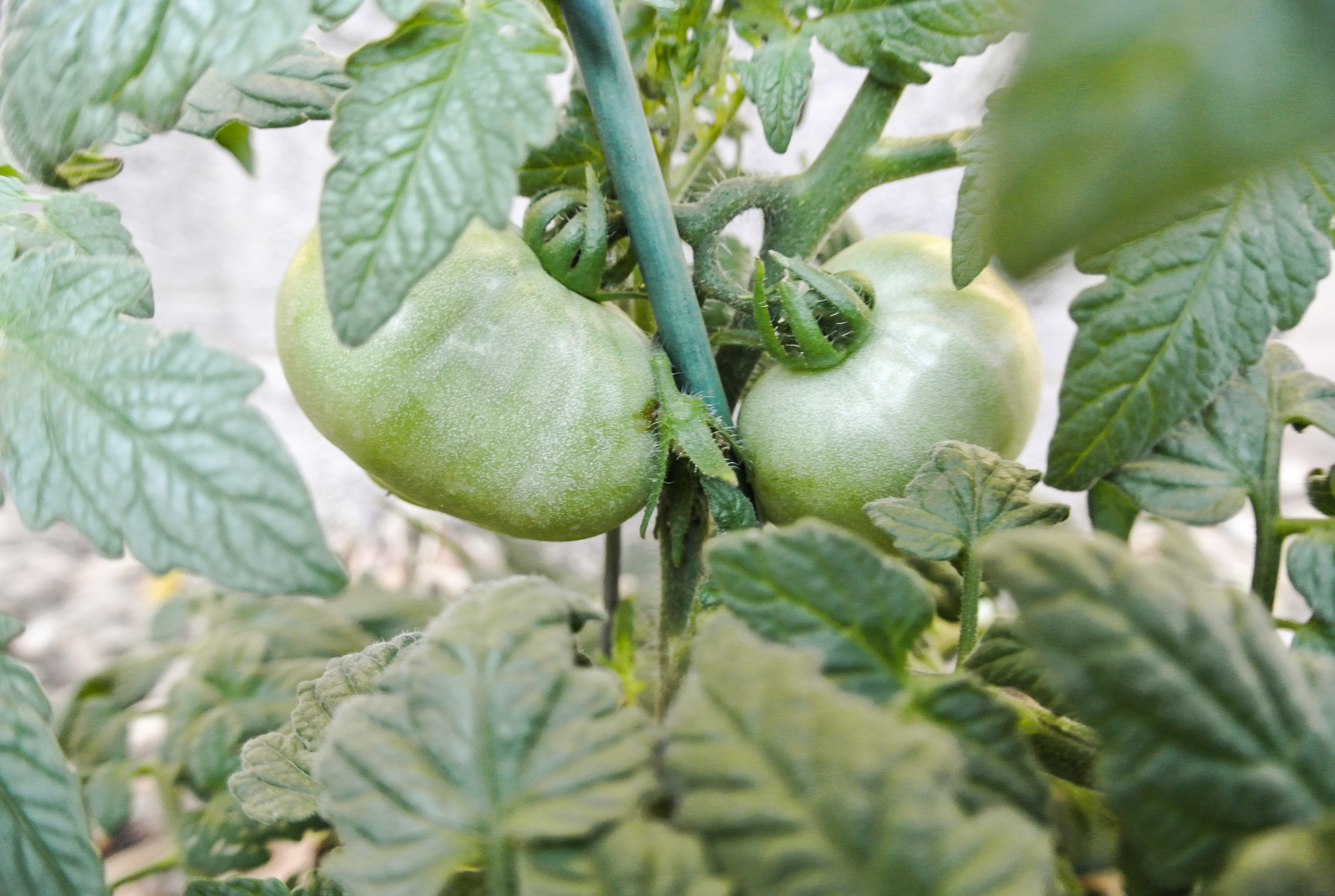
One way that I can guarantee the quality of our foodstuffs is by growing it myself.  If you pay your garden adequate attention, you can produce a great amount of produce for pennies on the dollar.  In addition, your backyard will look and smell wonderful.  🙂

Travis and I maintain an all-organic garden in our yard.  We started small—with fresh herbs (basil pictured below)—and grew to planting larger produce that takes longer to grow.  We also have a compost pile in one corner from which a number of surprises have grown.  We once through butternut squash seeds out there and without even consciously tending or watering that area ate a few delicious squashes months later.

DSC_1870

If you’re interested in starting your own garden, begin with research.

  • What type of soil do you have where you live?
  • What grows best in it?  In what season?

Then, plan.

  • What space in your yard will you designate for gardening only?  (No dog poop, no kids playing, etc.)
  • Will you plant from seeds or small plants?
  • Will you install an automatic watering/drip system or water by hand?
  • How much shade vs. sun do you have available?
  • What types of critters come through your yard that might help or hinder your garden’s growth?
  • Do you have room for a compost pile?
  • Do you have someone that can (and wants to!) tend to your garden if you go out of town often?

Finally, start small.  Here are the steps that Travis and I took to creating a garden in our backyard:

  • We started growing herbs from seeds in small pots in our house, just to get a feel for our gardening abilities.  Hey, some people can’t keep a simple house plant alive, so we had to make sure we could do this before we committed.
  • Next, we designated gardening space in our backyard.  The perimeter of the yard was made up of landscaping rocks with periodic trees.  We left the trees, cleared out the rocks, and tilled the soil beneath it to prep for planting.  One corner of this perimeter is our compost pile and the rest is space for growing shrubs, trees, and produce.  The entire area is surrounded by a short fence so that the dogs don’t poop back there and Nolan doesn’t play.  🙂
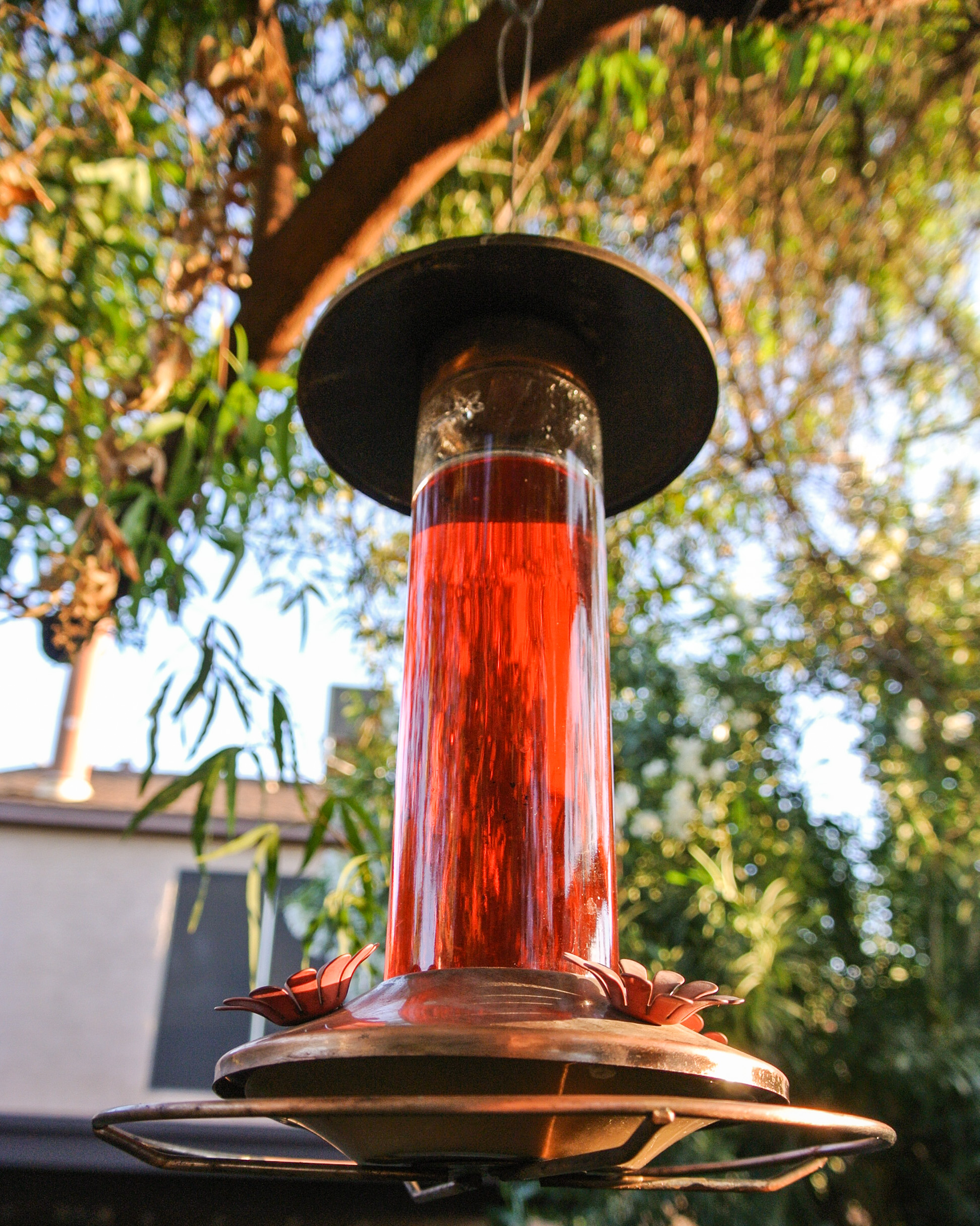
  • Then, we planted flowers and flowering shrubs and installed a hummingbird feeder to attract the birds and the bees.  They are essential to pollinating crops and spreading seeds for new growth.

DSC_1875 DSC_1879

  • Finally, we researched what crops grow best in Phoenix soil in various seasons and got to planting.  Sometimes we start with seeds and other times small plants.  The herbs that we started growing inside eventually grew big enough to be transferred to larger pots and then, to the ground.

Since we started gardening, we have reaped nearly ten different herbs, cilantro and basil in particular in large quantities that come back on their own every season.  We have also reaped tomatoes, cauliflower, kale, carrots, potatoes, squash, green onions, and lemongrass.  We have pomegranate bushes (pictured below…pardon all of the leaves that have fallen from our tree!  Trav insists we let them stay once they’ve fallen because they trap moisture for the soil underneath, which is certainly critical in Arizona!) that are growing from a pomegranate that we opened and stuck in the ground.  They are still years away from producing, but are going strong!

DSC_1874Due to the increased influx of birds and bees, we have also seen the growth of new trees, shrubs, and flowers that we didn’t plant ourselves…they really hold up their end of the bargain if you provide them some pollen and sugar water!

Our garden is evolving all the time and we have had plenty of failures, but we are getting better and better at it and have saved tons of money on herbs alone, which are quite pricy to purchase fresh in much smaller quantities than what we can grow ourselves.

Don’t be daunted – start with windowsill herbs and build up.  You’ll be growing your own organic produce and saving money in no time!

DSC_1880

Bountiful Baskets

DSC_1815

Plant-based living, in general, is not cheap. While I am still coming out ahead of my omnivorous days, no longer purchasing sirloins and brie, to eat high quality, fresh, organic “real food” can still be costly. Consuming sometimes twenty different fruits and vegetables in a day requires real diligence in seeking out the best prices for produce (as well as whole grains, beans, lentils, nuts, and seeds).

Travis’s parents introduced us to a farmers’ co-op called Bountiful Baskets. I’ve mentioned BB before, but today, plan to go into a bit further detail about what a value it really is.

DSC_1823

Each week, the sale opens online on Monday and closes on Tuesday for pickup on Saturday. Popular items—like the organic fruit and vegetable basket—sell out quickly, so you have to be on your game. We head over to the BB website to place our order. You have a choice between a regular basket ($15) or organic ($25), plus extra add-ons like whole grain bread, tortillas, granola, and bulk produce. These add-ons change each week, as do the contents of the baskets. You can count on a 50/50 mix of fruits and vegetables, but the rest is a surprise.

I love the surprise element of the basket because every once in a while, it contains a fruit or vegetable that I have never heard of before or at the very least, never eaten or prepared myself. This challenges me to research typical preparations and uses, as well as flavor and nutrition information. This week, there is nothing out of the ordinary, but I am elated to see beets in the organic basket…stay tuned for a beet hummus recipe that you just have to try. 🙂

DSC_1818

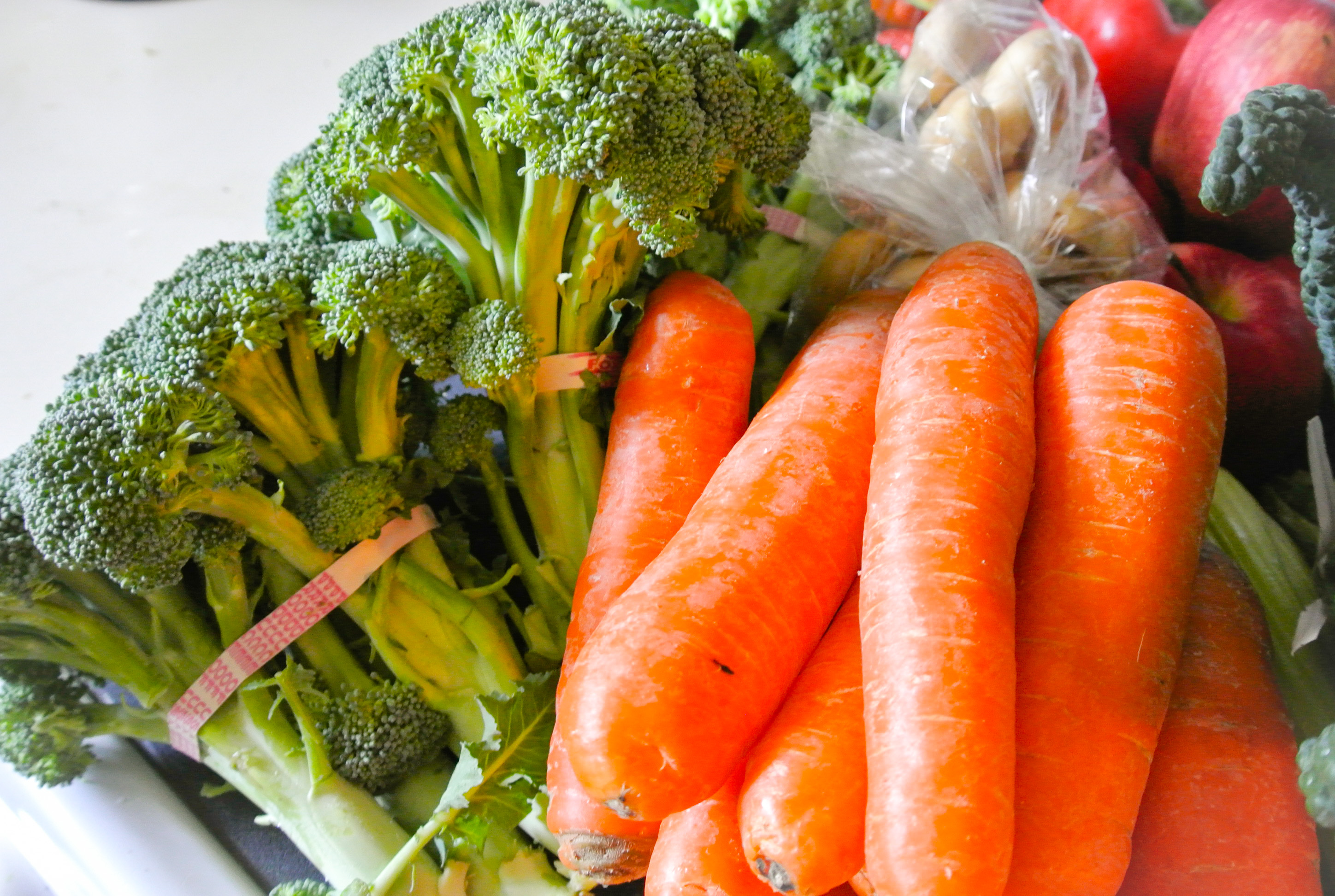
Anyway, the add-ons that we selected this week were pineapples (twenty-one pounds, to be exact) and what the BB website called a “Freezer Pack.” The FP contained a large quantity of broccoli, carrots, and asparagus. We are keeping half of these vegetables and two of the eight pineapples fresh in the fridge and chopping the rest to go in the freezer. Below, you can see that we filled one-gallon food storage bags with chopped vegetables that will be ready to dump into a pot of vegetable stock for a quick soup. The pineapple chunks, since they will inevitably freeze into one solid unit, are in smaller baggies, the perfect size for smoothies.

DSC_1826

DSC_1824

When add-ons like these—or similar bulk deals in the supermarket—come along, we always stock up and get creative. A couple of months ago, for example, we paid BB an extra $20 for twenty-five pounds of organic tomatoes which we promptly turned into homemade marinara sauce. This was frozen in food storage containers in perfect portions to accompany a box of pasta (or the equivalent in fresh eggless pasta). Today, we are cracking into the last one.

Living a plant-based lifestyle, for us, is still cheaper than being omnivores, in part because we seek out deals and find creative ways to preserve produce that we have stocked up on. Many of the deals come with the seasons and holidays. I don’t often purchase pecans and walnuts, for instance, because they are among the more expensive nuts, but my farmers’ market had longstanding sales on these around Thanksgiving and Christmas, at which point I bought a whole bunch that lasted us for months.

In addition, since we don’t buy prepackaged frozen food, our freezer typically always has room to store produce that we have peeled, chopped, or otherwise prepared ourselves. We freeze fruits and vegetables in convenient portions for the anticipated future application. This forethought comes in especially handy when it looks like there is “nothing to eat” and then I open the freezer and remember that I have soup-in-a-bag ready to go.

The photos in this post display $57 worth of produce, most of which is organic. The fresh produce will last us a week or two, but the frozen weeks or months beyond that. The fact that this is a smokin’ deal not enough for you? The extra produce and forgotten pickups are donated to local fire stations. 🙂 See if you can find a farmers’ co-op program in your area!

DSC_1817

The Answer to a Popular Question: What Do You Eat?

DSC_1752

If you’re a vegetarian or even more “extreme,” a vegan, you’ve probably had omnivores ask you questions like these: If you don’t eat meat or cheese, what do you eat? Wait, no eggs either? What’s left to eat? Before I knew what I know about plant-based living, I may have behaved just as incredulously. So, I think it would be helpful to spend a day in the life of a mostly-vegan to see exactly what I eat…and it’s a lot!

As you know, I very occasionally splurge on an item of my former omnivorous diet, be it a bowl of macaroni and cheese (of COURSE that’s what I craved when I was pregnant!) or baklava dripping with honey. On the regular, however, thanks to my getting-better-everyday discipline, these splurges don’t occur. Travis and I pretty strictly refrain from purchasing any animal products for our kitchen. At home, we eat totally vegan, 99% of the time. As I explained in my bio, animal products typically only make their way into our lifestyle when we are out and about, if then.

Parents may also be wondering what my two-year-old eats on a day-to-day basis. As you learned in my post about his second birthday party, he basically eats like we do, although is a little less adventurous with raw vegetables at this stage of the game. Here’s a sample of what I eat in a given day (this list is not exhaustive):

  • Breakfast: unsweetened green tea* and raw fruit:
  • Snacks (2-3 daily): more unsweetened green tea with one or more of the following:
    • raw nuts or seeds
    • dried or raw fruit/veggies
    • homemade trail mix
    • dark chocolate
    • popcorn –> popped on the stove from bulk seeds
    • rice cake with or without nut butter
    • homemade graham crackers
    • homemade hummus with raw veggies, pita bread, etc.
    • super food muffin
  • Lunch: more unsweetened green tea with salad, as is, wrapped in a tortilla, or sandwiched between slices of homemade bread:
  • Dinner: another salad or a cooked or partially cooked plant-based meal:
    • veggie curry
    • chili
    • soup/stew
    • veggie burgers
    • pasta
    • homemade cheese-less pizza
    • veggie stir fry
    • roasted vegetables
  • **Dessert: raw fruit, dark chocolate, or homemade vegan dessert (e.g. cookies, brownies, etc.)

*I drink 3-4 cups of unsweetened green tea daily. I’m sure you’ve heard greatness about this superfood, but just in case you haven’t, you should know that it is jam-packed with antioxidants, has healing properties, and can even help you to lose weight.

**On a regular basis, I don’t eat a traditional dessert like cookies or brownies…not because I don’t like them, just because I can’t always make a dessert as healthy I can a square meal or snack. If I do have a craving for something sweet, I make it myself and you guessed it: it’s vegan and made with smart substitutes (i.e. whole wheat flour and flax seeds for white flour, maple syrup for white granulated sugar, etc.). I will very often, however, have more raw fruit and/or dark chocolate near the end of the day.

DSC_1779

This typical menu may look like a lot or a little bit of food to you. As I’ve mentioned before, because I am eating mostly raw fruits and veggies and whole grains, I can basically eat as much as I want. When I eat a salad, for example, it is often the size of a large mixing bowl, just to give you an idea. The energy level I maintain is such that I am hungry more often and am burning a lot of calories, even when not exercising very intensely. As a result, I eat when I want to eat and as much as I want to, depending on what I plan to consume, of course.

DSC_1764 Here’s a day in Nolan’s life, which you will notice is not much unlike my own:

  • Breakfast: super food muffin and raw fruit and/or togurt (so far, he will eat any fruit in any capacity and the muffins are a great way to hide vegetables that he isn’t willing to try yet)
  • Snacks (2-3 daily): see above (finely chopped/small pieces)
  • Lunch: will sometimes eat the same salad that I make for myself or will munch on cubes of marinated tofu, baked veggie fries, or any one of the cooked meals above
  • Dinner: will sometimes eat another mostly vegetable or bean salad, but is typically always up for a salad made with grains (e.g. quinoa, wheat berries, etc.) or one of the above cooked meals
  • Dessert: raw fruit, every night before bed

DSC_1733

Lately, I’ve been trying to track what I eat so that I can give you the most realistic picture of my lifestyle possible. These are just rough estimates, and amounts certainly vary from day to day based on what is available at the store, what we have in stock, and what’s on our schedule, but here are more of my food stats:

  • I eat 60-70% raw plant-based foods in a day; the rest are partially or fully sautéed, steamed, boiled, or baked.
  • I eat 3-4 different whole grains daily (e.g. farro, quinoa, brown rice, wheat berries, cracked wheat, rolled oats, etc.).
  • I eat 7-10 different fruits daily, in varying amounts.
  • I eat 10-15 different vegetables daily, in varying amounts.
  • I eat 2-3 significant sources of protein daily (e.g. beans, seeds, nuts, etc.).
  • I eat 2-4 significant sources of calcium daily (e.g. plant milk, seeds, green vegetables, etc.).
  • I eat 6-7 times per day, be it snacks or meals.
  • I drink only water, tea, plant milk, or 100% juice with no sugar added (plus alcohol in reasonable amounts, although not daily).
  • I do not count calories, carbs, or fat grams, but do pay attention to amounts of protein, fiber, and iron, vitamins, calcium, etc. and thoroughly read the list of ingredients when I am considering eating something that is packaged.
  • I eat within an hour of waking up and within 90 minutes of going to bed.

DSC_1765

This certainly isn’t the entire picture and life circumstances can change any strong or poor diet at a moment’s notice, but I wanted you to see how fulfilling it can be to subsist primarily on plants. There are endless combinations and methods and I can assure you that there is, definitely, plenty to eat. 🙂

DSC_1758

Vegan Eats at Sage Kitchen

OutisdeWhile my plant-based, mostly vegan lifestyle isn’t perfect, family members and friends that come to visit me in Arizona look forward to eating clean when they stay at my house. I can’t even count the number of times a visitor has exclaimed about living plant-based for their stay in hopes of feeling refreshed and energized and even, losing weight. So, when I have an eager-to-be-temporarily-vegan visitor, I don’t disappoint! I prepare vegan dishes at home and try to maintain my plant-based lifestyle when heading out for local grub (except when we’re out for authentic Mexican food…that’s one time that I will, against my better judgment, eat copious amounts of cheese!).

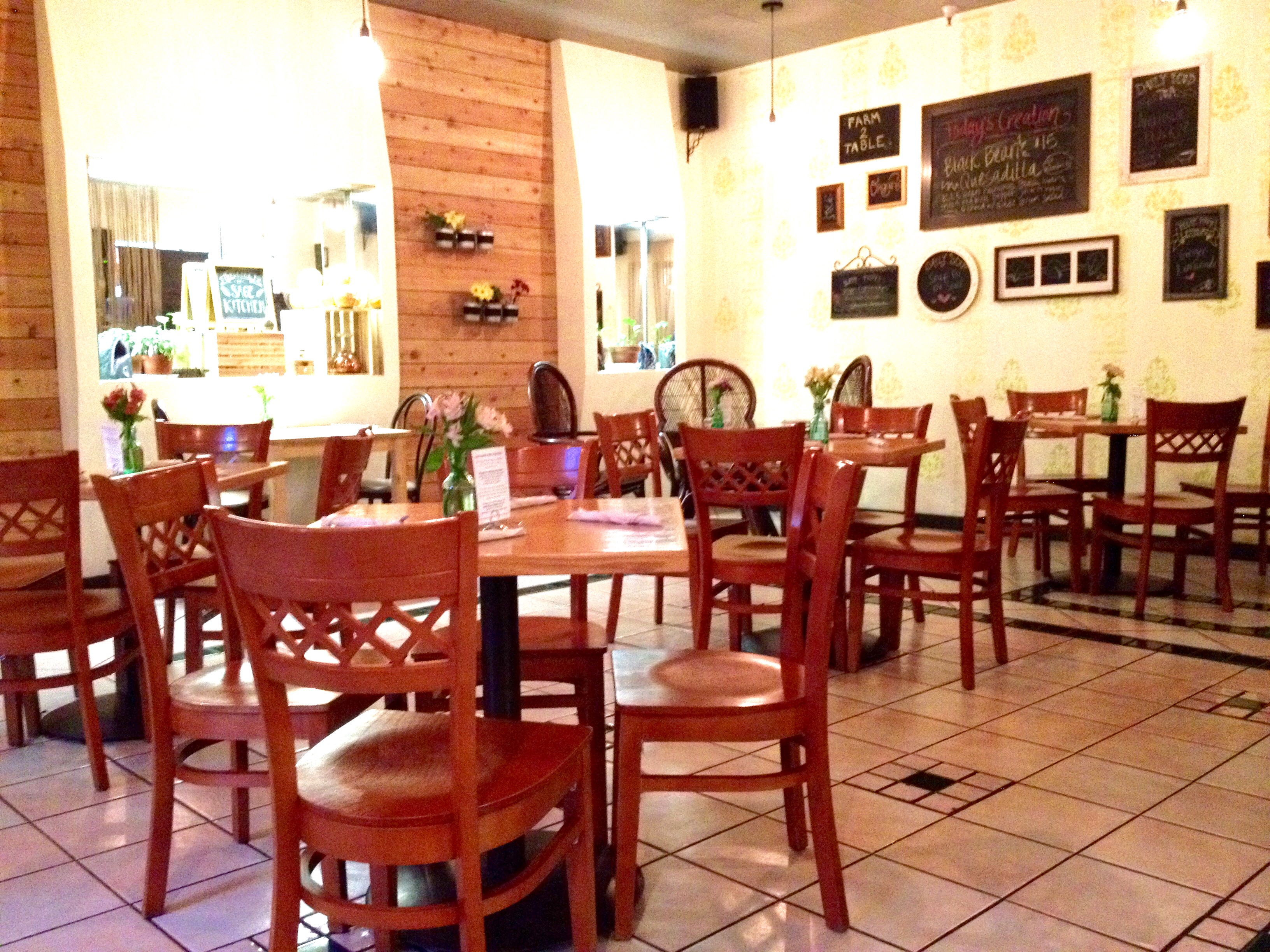
My mom was recently in town for Nolan’s birthday and offered to treat my little family to dinner on her last night in Arizona. I perused the web to find a restaurant in the Phoenix area that I hadn’t yet tried and came across Sage Kitchen, an organic, non-GMO, gluten-free, vegetarian eatery. The food was so yummy I can practically still taste it and I’m excited to share my review of the restaurant with you.

Sage Kitchen is located next to Chakra 4 Herb and Tea House, which shares its owner. As a result, the menu features a variety of teas and herbal remedies that I just had to try. Although I still dislike coffee, after our trip to Japan this past summer, I have recently grown very fond of tea. I sampled a blueberry kukicha green tea over ice that was subtly flavored and not too sweet, which is how I prefer it. Teas at Sage Kitchen are sold hot or cold by the cup, glass, pot, or carafe.

Next, it was time for an appetizer. We ordered a trio of dips with marinated raw veggie sticks and homemade, gluten-free flatbread. Pictured below is an avocado dip with sunflower seeds and pepitas, a black bean hummus, and a lemon herb hummus. We were afraid of becoming too full for dinner, so we ate about half of the dips and took the rest home (they were just as delicious, if not more so, the next day).

FullSizeRender (2) As indicated on the card you see below, Sage Kitchen avoids unnecessarily processed vegan “meats” and “cheeses,” opting for those made in house with nuts, vegetables, and spices. While the menu contains no actual meat products, many menu options offer real or homemade vegan cheese (as well as homemade meat substitutes) that I wanted to taste for myself.

Card In the description of my creamy sauce formula, I admit that there really is no completely satisfying substitute for dairy cheese, but Sage Kitchen definitely came darn close to making it happen. While Travis opted for real cheese in his veggie enchiladas, my mom ordered a black bean quesadilla and I ordered a “sausage and mozzarella” pizza, both containing different varieties of Sage Kitchen’s signature vegan cheeses. Let me tell you, they were so good, I didn’t miss the real thing for a second and am determined to figure out how they did it so that I can try to make these cheeses (and the sausage) on my own.

Enchilladas FullSizeRender[3] (2) FullSizeRender[2] (2) The kids’ menu is not featured on the Sage Kitchen website, but I was happy to see that it offered simple vegetarian/vegan food that is kid-friendly in ingredients and presentation. We ordered Nolan this adorable sunflower butter and apple flatbread. He couldn’t finish it and had to twist our arms to polish it off for dessert. Poor us. 🙂

FullSizeRender[1] (2) The only downside to our dining experience at Sage Kitchen was that the restaurant seemed a bit dead for a Saturday night. Travis and I concluded that this was probably a result of the early hours (it closes at 8:00) and lack of alcohol. The restaurant is a BYOB and does not serve booze of its own. I’m sure that during the weekday lunch rush, Sage Kitchen is packed.

Overall, no complaints. Grab a bottle of your favorite wine and go to Sage Kitchen to get your vegan eat on!

Inside

Fruit Scraps Turned Scented Candles

DSC_1539

When it comes to expensive organic produce, I don’t like to waste a single scrap. If you have a compost pile, you can always put your fruit and veggie scraps there. Otherwise, I’ve come up with a few solutions to maximize every inch of your plants.

With my veggie scraps—which include items like carrot tops and kale ribs—I like to make my own veggie stock. You can read more about how I collect and transform the scraps under Basic Formulas.

Coming up with an edible use for fruit scraps—peels, cores, pits, etc.—has proved much more difficult. I was reminded of a time that I visited a candy factory in France. The chocolatiers had candied orange peels and they were pretty tasty. I figure I can experiment with candying other types of peels, but being that I like to keep my lifestyle low in added sugars, I’m not eager to do this any time soon.

I decided to go another route. My husband bought me a bouquet of winter plants on Christmas Eve and we thought that it would be neat to do something with the pine needles since they smelled so wonderful. We researched online how to make scented oil candles and then it hit me: If I could make candles out of pine needles, flowers, and herbs, why couldn’t I use my fruit scraps to do the same?

Alas, I started deliberately saving my fruit scraps (while still allocating many of them to my compost pile in the backyard). I placed a food storage container in the fridge and added to it every time I peeled or cored a new fruit. It took me only a couple of hours to accumulate the scraps that you see here, which include peels from oranges, lemons, grapefruit, kiwis, and mangoes, and the core of a Red Delicious apple.

DSC_1511

There was no rhyme or reason to this combination of scraps and a happy aromatic accident resulted. While my fruit scraps continued to marry their flavors in the fridge, I collected the necessary candle-making supplies: mason jars, oil wicks, and vegetable oil. I already had mason jars in several sizes, and you can find them many places, including the dollar store. For the wicks, I perused Amazon and found these pretty glass wicks; they are available in many metal varieties, too.

DSC_1513

As for the oil, I selected vegetable simply because it is economical and pale in color – I really wanted to be able to clearly see all of my colorful fruit scraps. Being new to candle making, I’m not sure if one oil is preferred over another for the best scent or longest burn time. In my limited research, I found that you can use just about any oil you’d like, but I imagine it will take me many an attempt to figure out which one is truly the best. For example, I made the candles you see in this post almost two weeks ago and upon lighting today, they are just starting to smell. The length of time it takes for different scents to infuse the oil probably has to do with their intensity and the oil selected. Only time will tell, but in the meantime, I am enjoying the appearance of my fruit scrap candles while I wait for them to smell even more delicious.  🙂

AT HOME FORMULA: FRUIT SCRAP CANDLE

What you’ll need:

  • Fruit scraps of any variety (accumulate in the fridge over the course of a day or two) –> I’m using citrus, kiwi, mango, and apple.
  • Oil –> I’m using vegetable.
  • Mason jars of any size
  • Oil wicks –> You can make your own or purchase in store or online. I’m using wicks with a glass covering.

How to make:

  • Puncture a hole in the lid of your mason jar. The size will depend on the type of wick that you are using. The lid of a mason jar is easy to puncture with just a screwdriver or other metal tool with a semi-sharp tip.
  • Fill the mason jar with your fruit scraps. Cram them in tightly, leaving a small gap in the middle to accommodate your wick. You can arrange them with your fingers or a variety of different kitchen tools. I squished the scraps down with an ice cream scoop myself.
  • Fill the remaining space in the mason jar with oil. Keep in mind that you will need to add the wick, so don’t fill it quite to the brim.

DSC_1529

  • Thread your wick through the hole you created in the lid and gently push the end of it into the candle itself. I used a skewer to do this.
  • Screw on the lid and wait an hour or two for the wick to absorb the oil before lighting.  Don’t expect the candles to be immediately scented, although it could happen.

Here, you can see my fruit scrap candles front and center, as well as the pine needle candles mentioned earlier, and some red rose candles made from dried roses from the hubby. Fresh would have been better, but I didn’t have this oil candle brainchild until long after they had been dried over the years. You can intensify and expedite the scent experience by adding complimentary essential oils (you can purchase these in many places that sell candles, oil burners, etc.), which I did with the roses since they weren’t fresh. Enjoy!

DSC_1532

Must-Haves from the Arizona Vegetarian Food Festival

FullSizeRender

When the ALS Ice Bucket Challenge was at its peak, I decided to take the act of charity to the next level and complete weekly acts of charity for an entire year. This weekend, my personal IBC led me to the Arizona Vegetarian Food Festival in Scottsdale to benefit Evolve for Animals.

The festival was teeming with eager vegans, vegetarians, animal rights activists, and environmentalists. While typical festival/carnival/state fair crowds tend to damper the experience for me, this time, I was thrilled to be surrounded with like-minded people who care about animals, sustainability, and of course, their health.

Various booths with information and most importantly, free samples (woo!), peppered the perimeter of the Scottsdale Civic Center Amphitheater. The first booth that my husband, Travis, and I stopped at, Arizona Microgreens, featured an assortment of organic baby greens, which are easily my new favorite salad base and sandwich filler. I had had microgreens before, but didn’t realize just how many varieties existed. As you can see, they look adorable when compared with something like iceberg lettuce (I do believe that presentation matters when it comes to eating) and taste absolutely delicious. Many samples and $15 later, we walked away with broccoli and pea shoot micros.

FullSizeRender(4)

Up next, we stopped at a clothing booth that specializes in tops made from organic cotton and bearing catchy vegetarian and animal-friendly phrases. Geeky for some, but I was smitten and had to have one of Herbivore Clothing’s creations. Like many things organic, the long sleeve shirt I selected wasn’t cheap, but $30 well-spent to advocate for causes that I believe in without even trying.

FullSizeRender(3)

Who doesn’t love a soft pretzel?! As if being 100% vegan weren’t amazing enough, these pretzels were shaped like mustaches! Scrumptious and fun to eat, I now understand why the line was 30 minutes long at Mustache Pretzels. After all, “great mustaches aren’t born – they’re bread.”

FullSizeRender(2)

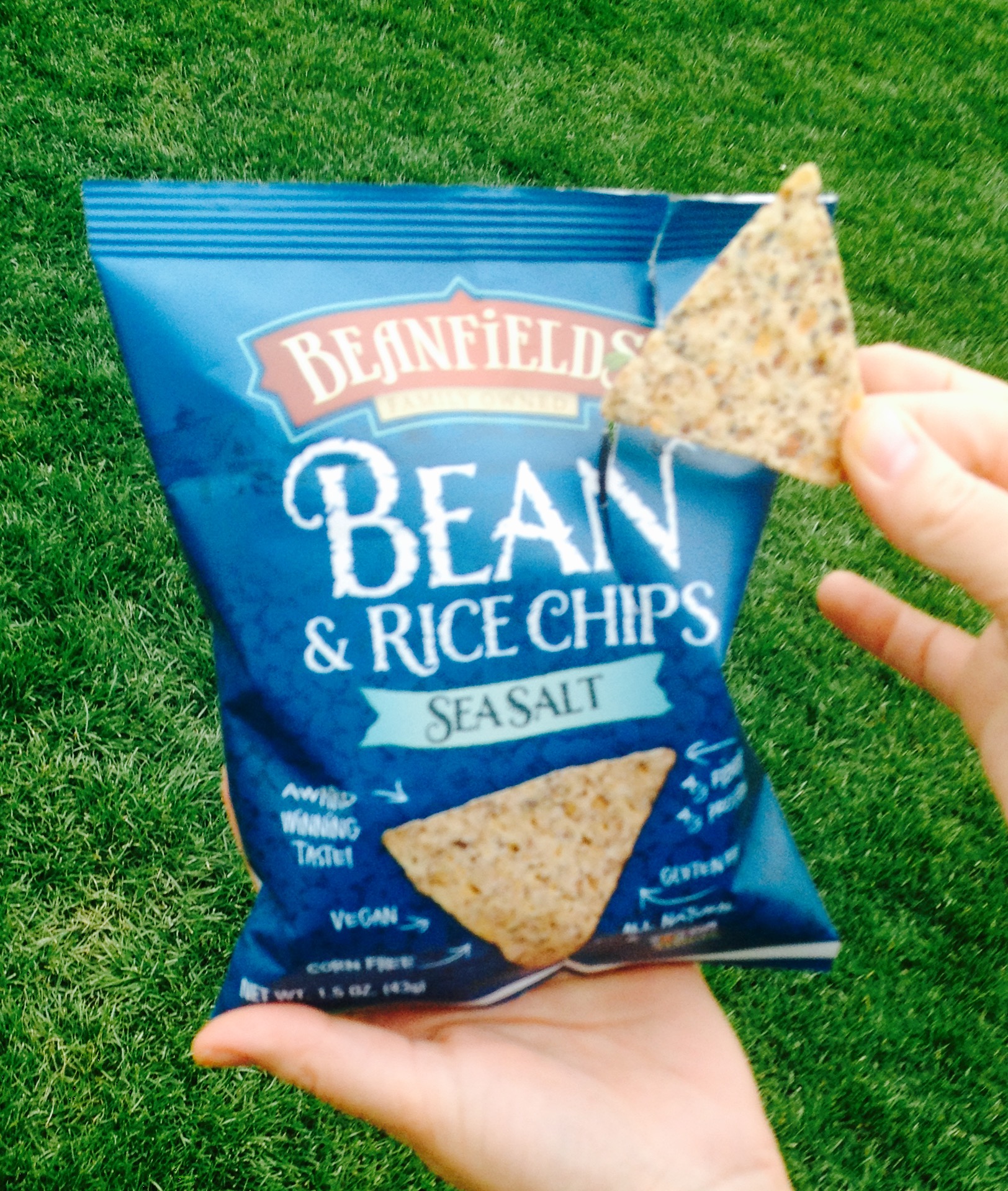
Lastly, Travis and I hit up a tortilla chip booth that had really long lines when we first arrived. By this point in the festival, it was raining, so we were able to make it to the front of Beanfields in just a few minutes. These tortilla chips–which were fantastic–are made from beans and brown rice. I’m not a big proponent of processed foods, but there are some gems out there are these are one of them.

FullSizeRender(1)

They were the perfect snack to end a fulfilling day doing one of the things I love most: living a plant-based lifestyle. Good for me, good for animals.


What’s in YOUR Kitchen?

DSC_1420

Welcome back! As plant-based living may be new for you – or perhaps you just need new ideas – I thought it would be helpful to give you a tour of my kitchen so that you can see the types of produce I buy and some of the nonperishables that I regularly keep on hand.

The photo that you see at the top of this post is a shot of my countertop, which is often overflowing with produce that does not require refrigeration. I maintain a plentiful stock of bananas, as I use them in many of my recipes and they are among my son, Nolan’s, favorite fruits for snacking. This time of year, I also have an array of citrus, much of which I obtain from neighbors for free. Citrus fruits are ripe for the picking during Arizona’s winter.

You’ll also see in this photo that I have fresh vanilla beans on hand to use in various recipes and to make homemade extract. The basic formula for an extract is the flavor agent plus vodka and involves a long soaking period (another post, another day). Moral of the story? If you have the opportunity to make your own extracts, you’ll find that they are purer and higher in quality than many of the store-bought, imitation varieties. I digress…

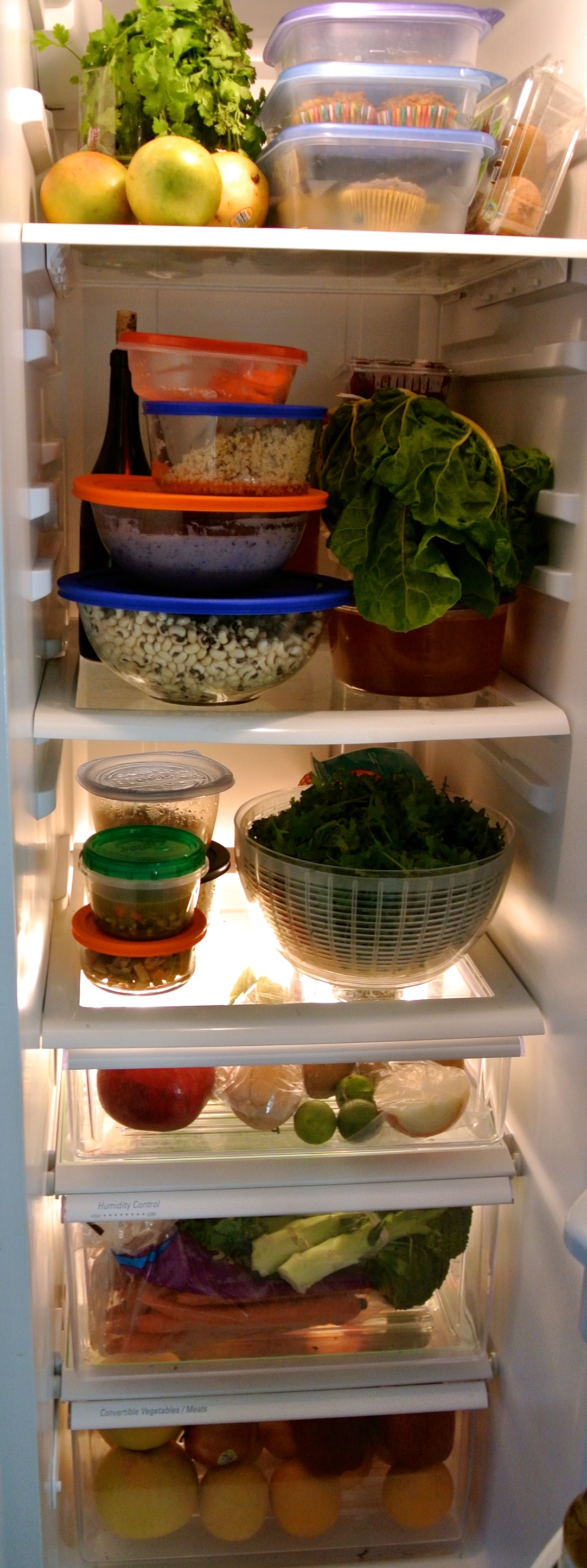
Next, we move into my fridge, where you can spy everything from a batch of homemade veggie stock (located under Basic Formulas), to black-eyed peas that have been soaked and are ready for further cooking, a bowl of triple berry togurt (located under Breakfast Formulas), and of course, more produce. We always have a ton of it and get the biggest bang for our buck with a local food co-op called Bountiful Baskets. Through this organization, weekly, we have the opportunity to pay a flat rate of $25 to obtain approximately $50 worth of organic produce. The offerings are seasonal and often local and the contents of the basket are always a surprise. Check out the bountifulbaskets.org or conduct a web search to see if your state offers a similar program.

DSC_1421

On to my spice cabinet, which is my husband, Travis’s, pride and joy in our kitchen! Although the spices and herbs sometimes get misplaced during quick cooking, my hubby generally has them organized by ethnic application (e.g. Italian, Mexican, etc.) or other similarities. For example, mace is located on the exterior of the nutmeg shell; although different spices, they are part of the same fruit and often used together in cooking/baking, so they are grouped together. Yea, I know – our cabinet organization is a bit over-the-top, but with over 60 spices and herbs to choose from, it does well to have them arranged in a way that allows for easy selection.

DSC_1422

When we travel we stock up on herbs and spices that are native to the area and end up saving a ton, as those in jars in the supermarket can be pricey. We are still using, for instance, cinnamon sticks that we purchased during our honeymoon on the British Virgin Island, Tortola, in July of 2011, and turmeric that we bought the following summer when touring a spice farm in Zanzibar, an island off of the coast of Tanzania in East Africa.

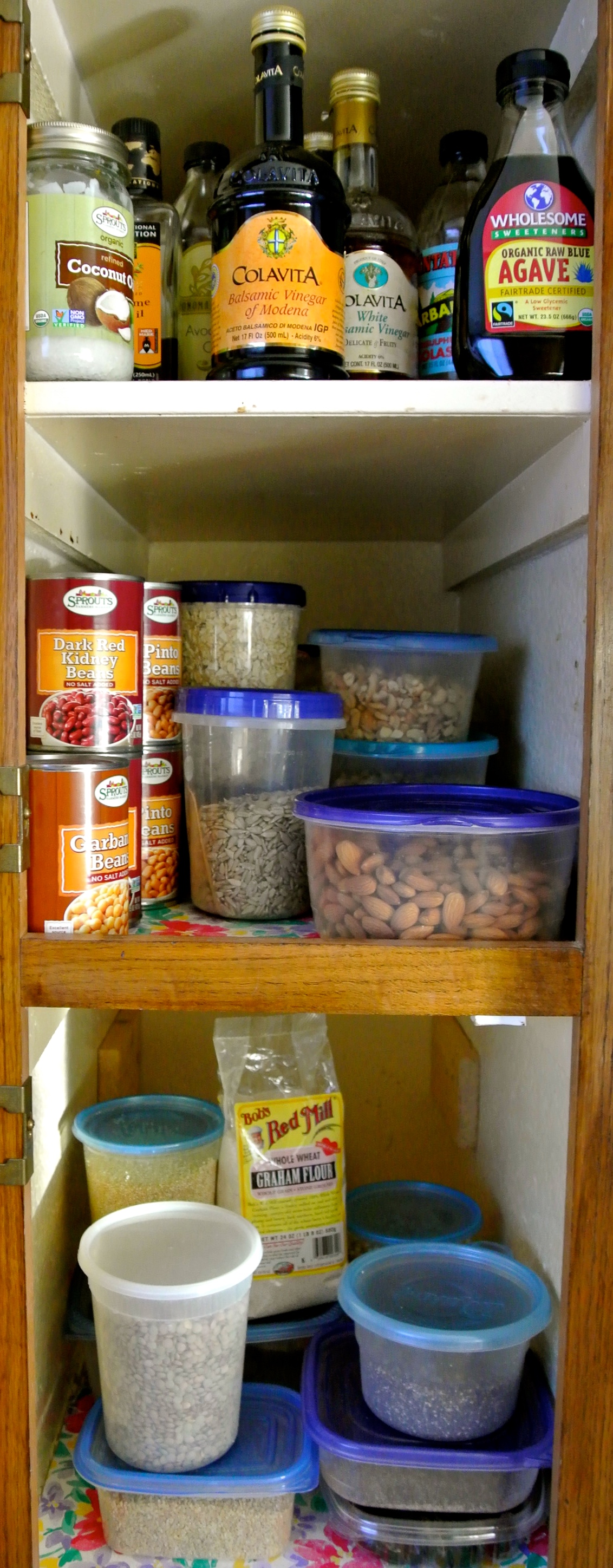
Finally, here’s a look into my pantry. First, you can see a variety of oils, vinegars, and sweeteners. It is amazing what these products can do in the way of flavor, even in very small amounts. On the two shelves below those you’ll find staples like beans (dried and canned, no sodium added), seeds, and grains. While I always have quinoa and oats, for example, regardless of price, more expensive items like nuts, dried fruits, and dark chocolate I purchase and stock up on when they are on sale. The flexibility of my formulas and my willingness to experiment with new combinations allow me to create a delicious bite out of whatever I obtain. The very top shelf (not pictured) includes standard baking supplies like cornstarch and baking powder.

DSC_1424

If your kitchen needs a plant-based makeover, consider starting with one or two target areas and make changes slowly, especially if you’re trying to get a meat-and-potatoes spouse or some picky little ones on board. When Travis and I decided to start eating more healthily, the first item we did away with was cow’s milk, which we replaced with almond. Travis, who was a diehard whole milk drinker for years, now swears by almond and I, being lactose intolerant, couldn’t have found a better milk match. Nolan is even more adventurous, drinking coconut and oat milks on a regular basis. If those do not appeal to you, you could try soy, flax, rice, grain, cashew, sunflower, etc. There are lots of options that don’t include added sugar, hormones, or cholesterol and are often higher in calcium than the dairy variety. Plus, you can easily make your own plant milk (we’ll cover that another day, too)!

I hope that a private tour of my humble cooking headquarters has given you some ideas and inspiration so that you are prepared to tackle my formulas (and plant-based living in general) head on. Happy shopping and stocking!